
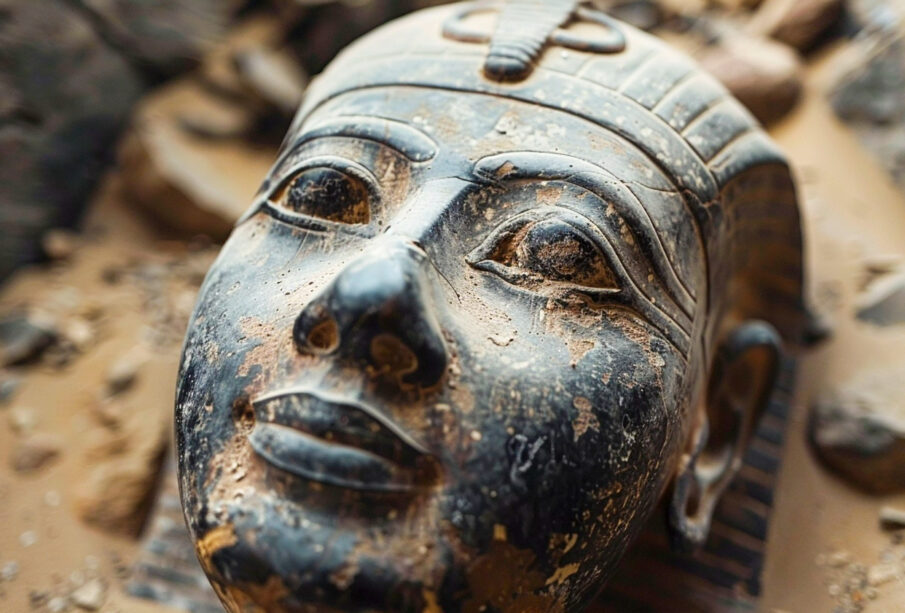
When we imagine ancient civilizations, it is easy to picture primitive tools, simple lifestyles, and limited scientific understanding.
Popular culture often portrays the ancient world as a slow stepping stone toward modern progress. Yet history tells a very different story. Many early societies developed technologies, systems of governance, scientific knowledge, and urban planning techniques that were astonishingly sophisticated, sometimes rivaling ideas we still use today.
Across Africa, Asia, Europe, and the Americas, ancient peoples solved complex problems with creativity and innovation. Their achievements remind us that progress is not only modern; it is deeply rooted in humanity’s past.
🏺 Ancient Egypt: Masters of Engineering and Medicine
Over 4,000 years ago, Ancient Egypt demonstrated remarkable technological and scientific understanding. The construction of the pyramids remains one of history’s greatest engineering accomplishments. Without modern machinery, Egyptian architects precisely aligned massive stone structures with astronomical directions — a feat that still fascinates engineers today.
But Egypt’s advancement went far beyond monuments:
-
Medical knowledge: Egyptian physicians performed surgeries, set broken bones, and documented treatments in medical papyri.
-
Mathematics: They used geometry to measure land after Nile floods, forming early foundations of applied mathematics.
-
Public administration: A structured bureaucracy managed taxation, agriculture, and large labor forces efficiently.
Their innovations show that organized science and governance existed long before modern universities or laboratories.
🌆 Indus Valley Civilization: Urban Planning Ahead of Its Time
Flourishing around 2600 BCE in present-day Pakistan and northwest India, the Indus Valley Civilization built cities that would impress many modern planners.
Cities like Mohenjo-daro featured:
-
Grid-based street layouts
-
Standardized brick construction
-
Advanced drainage and sewage systems connected to homes
-
Public baths and water management systems
Remarkably, many houses had indoor bathrooms, something uncommon in parts of the world even thousands of years later. The civilization also used standardized weights and measures, suggesting regulated trade and economic sophistication.
🌿 Maya civilization: Astronomers and Mathematicians Without Telescopes
The Maya of Central America achieved extraordinary intellectual breakthroughs despite lacking metal tools or wheeled transport.
Their accomplishments included:
-
Accurate calendars based on detailed astronomical observations
-
Concept of zero in mathematics, developed independently of other civilizations
-
Precise eclipse predictions
-
Monumental architecture aligned with celestial events
Mayan astronomers tracked planetary movements with stunning accuracy using only naked-eye observation, demonstrating deep scientific reasoning.
🏛️ Ancient Greece: The Birthplace of Scientific Thinking
Ancient Greece is often remembered for philosophy, but its contributions extended into science, engineering, and political theory.
Greek thinkers introduced ideas that shaped modern civilization:
-
Early forms of democracy
-
Logical reasoning and formal debate
-
Advances in geometry and physics
-
Mechanical inventions like early analog computers
Greek scholars emphasized observation and rational explanation instead of myth alone, a shift that laid the groundwork for modern scientific inquiry.
🦅 Roman Empire: Infrastructure on a Massive Scale
The Roman Empire demonstrated how engineering and organization could sustain a vast, multicultural society.
Roman innovations included:
-
Extensive road networks connecting continents
-
Concrete construction techniques still studied today
-
Aqueduct systems delivering clean water to cities
-
Legal frameworks influencing modern law
Some Roman roads and bridges remain usable today, proving the durability of their engineering methods.
🌍 Kingdom of Kush: Africa’s Overlooked Technological Power
Located south of Egypt in modern Sudan, the Kingdom of Kush was one of Africa’s most advanced ancient states, though often overlooked in global history discussions.
Kushite achievements included:
-
Advanced iron smelting technologies
-
Monumental pyramids at Meroë
-
Strong trade networks linking Central Africa, Egypt, and the Mediterranean
-
Powerful queens known as Kandakes who ruled independently
Their mastery of metallurgy helped drive regional economic growth and military strength.
🧭 Han Dynasty: Innovation and Statecraft in Ancient China
During the Han Dynasty (206 BCE–220 CE), China experienced a technological and cultural golden age.
Key innovations included:
-
Paper production, revolutionizing communication and education
-
Seismographs capable of detecting earthquakes
-
Advanced metallurgy and agricultural tools
-
Civil service examinations based on merit rather than birth
These systems helped maintain one of the most stable and organized empires of the ancient world.
Why Ancient Civilizations Were So Innovative
Several factors explain why ancient societies achieved such impressive progress:
-
Necessity drove invention — survival required creative solutions.
-
Close observation of nature informed agriculture, astronomy, and medicine.
-
Collective knowledge passed through oral traditions, apprenticeships, and early writing systems.
-
Long-term thinking — many projects were designed to last generations, not years.
Unlike today’s rapid innovation cycles, ancient civilizations focused on sustainability and durability.
Lessons for the Modern World
Modern society often assumes technological superiority equals greater wisdom. Yet ancient civilizations teach powerful lessons:
-
Innovation does not require advanced machines, only curiosity and problem-solving.
-
Sustainable design can outlast rapid industrial solutions.
-
Knowledge thrives when shared across cultures and generations.
Many modern breakthroughs are not entirely new ideas; they are rediscoveries or refinements of ancient knowledge.
Final Thoughts
Ancient civilizations were not primitive beginnings but sophisticated societies filled with scientists, engineers, thinkers, and visionaries. From African kingdoms to American astronomers and Asian inventors, humanity’s ancestors built systems that continue to influence our daily lives.
Understanding their achievements reshapes how we see history, not as a story of gradual intelligence, but as a long continuum of human ingenuity. The past was far more advanced than we often give it credit for, and in many ways, it still guides the future we are building today.




Leave a reply







Africa’s Source for Breaking News | Entertainments | Health | Finance | Sports | Lifestyle and Business News.


