
DNA Basics: The Tiny Code That Makes You Who You Are
Every human being begins as a single microscopic cell.
Within that tiny cell lies a remarkable instruction manual, a biological code so detailed that it determines everything from your eye color to how your body grows and functions. This instruction manual is called DNA. Although invisible to the naked eye, DNA is one of the most important molecules in life. It connects generations, carries the story of evolution, and shapes the diversity we see across all living things.
But what exactly is DNA, and how does it work?
What Is DNA?
DNA stands for Deoxyribonucleic Acid, a long molecule found inside nearly every cell of living organisms. It contains the genetic instructions that guide how an organism develops, survives, and reproduces.
You can think of DNA as a biological blueprint or recipe book. Just as a recipe tells you how to bake a cake, DNA tells cells how to build proteins, the essential components that keep the body functioning.
Without DNA, cells would not know what to do.
Where Is DNA Found?
Most DNA is stored in the nucleus, the control center of the cell. Here, DNA is tightly packed into structures called chromosomes.
Humans typically have 23 pairs of chromosomes, receiving half from their mother and half from their father. This combination explains why children often resemble both parents while still being genetically unique.
DNA also exists in small amounts outside the nucleus, inside structures called mitochondria, which help produce energy for cells.
The Shape of DNA: The Double Helix
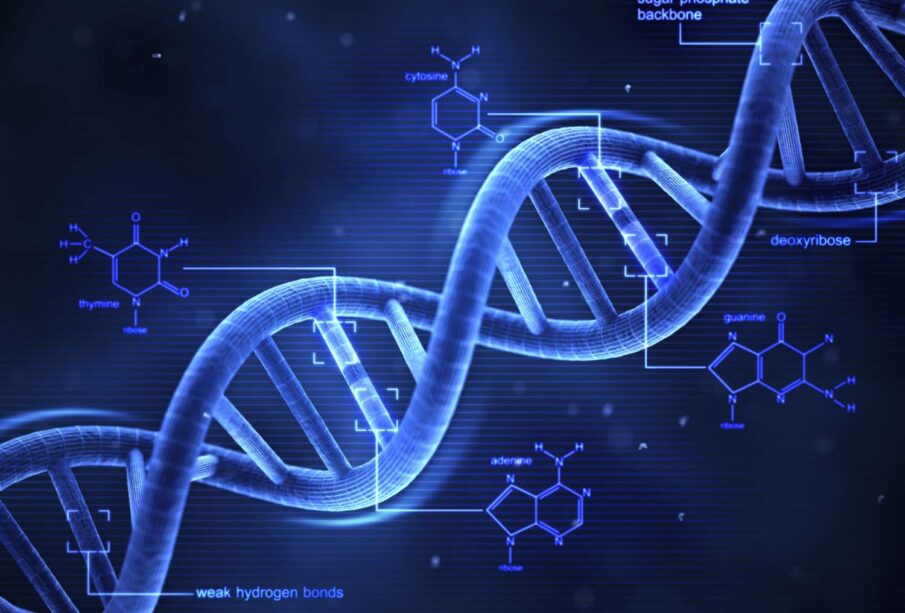
One of the most fascinating aspects of DNA is its structure. DNA looks like a twisted ladder, often described as a double helix.
-
The sides of the ladder are made of sugar and phosphate molecules.
-
The steps of the ladder consist of chemical bases paired together.
There are four bases that form DNA’s “alphabet”:
-
Adenine (A)
-
Thymine (T)
-
Cytosine (C)
-
Guanine (G)
These bases always pair in specific ways:
-
A pairs with T
-
C pairs with G
The sequence of these letters forms a code, much like letters forming words and sentences.
Genes: Instructions Within DNA
DNA is extremely long, but only certain sections carry specific instructions. These sections are called genes.
Each gene provides instructions for making a particular protein. Proteins control many processes in the body, including:
-
Growth and development
-
Eye and hair color
-
Immune system function
-
Metabolism
Humans have roughly 20,000–25,000 genes, working together like parts of a complex system.
How DNA Is Passed Down
DNA explains heredity, why traits pass from parents to children. During reproduction, each parent contributes half of their genetic material. The combination creates a unique genetic identity for every individual (except identical twins).
This genetic mixing ensures variation within populations, which helps species adapt and survive over time.
DNA in Everyday Life
DNA may sound like something only scientists study in laboratories, but it plays a role in many areas of daily life.
Medicine
Doctors use genetic information to understand inherited diseases and develop personalized treatments.
Forensics
DNA evidence helps identify individuals in criminal investigations and disaster recovery.
Agriculture
Scientists improve crops by studying plant DNA to increase resistance to pests and drought.
Ancestry and Heritage
DNA testing can reveal family origins and migration patterns across generations.
Mutations: When the Code Changes
Sometimes DNA changes slightly. These changes are called mutations.
Not all mutations are harmful. Some have no effect, while others can lead to new traits or adaptations. Over long periods, beneficial mutations contribute to evolution, helping species survive changing environments.
However, certain mutations can also cause genetic disorders, which is why DNA repair mechanisms inside cells are22581-2 essential.
Why DNA Matters
DNA is more than a molecule; it is the foundation of life itself. It links every organism on Earth through shared biological chemistry while also making each individual unique. Understanding DNA helps scientists fight diseases, improve food security, and learn more about human history and evolution.
Perhaps most importantly, DNA reminds us that life is both incredibly complex and beautifully interconnected.
Final Thoughts
Inside every cell of your body lies a microscopic code written billions of years ago through evolution. This code shapes who you are, connects you to your ancestors, and influences future generations.
DNA may be tiny, but its impact is enormous — a silent language that tells the story of life itself.




Leave a reply




Africa’s Source for Breaking News | Entertainments | Health | Finance | Sports | Lifestyle and Business News.


