
Everyday Physics Around You
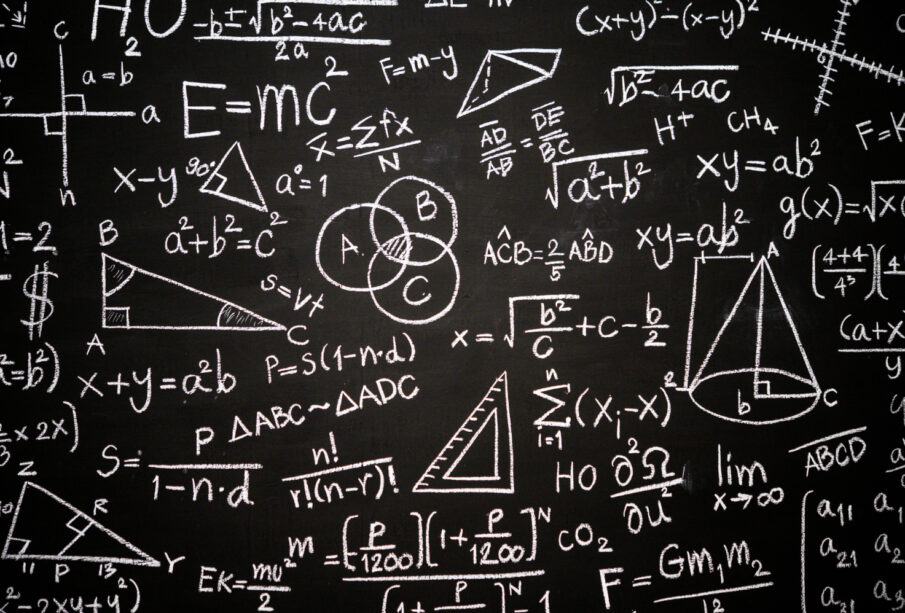
Physics is often imagined as a subject reserved for laboratories, space missions, or complicated equations on a chalkboard.
In reality, physics is happening all around us every single day. From the moment you wake up to the moment you go to sleep, countless physical principles shape your actions and the world around you. Understanding everyday physics helps us see ordinary activities; walking, cooking, driving, or using a phone, in a completely new light.
The Physics of Motion in Daily Life
Every movement you make follows the laws of motion. When you push a door open, kick a football, or ride a bicycle, forces are involved. The relationship between force, mass, and acceleration explains why heavier objects are harder to push and why a stronger push makes something move faster.
F=maF = ma
This principle explains many everyday experiences. For example, pushing an empty shopping cart is easier than pushing a full one because the mass is smaller. Similarly, when a car accelerates quickly, it means the engine is producing a larger force.
Gravity: The Invisible Force
Gravity is one of the most noticeable forces in everyday life. It keeps our feet firmly on the ground, causes objects to fall when dropped, and even controls the flow of water from a faucet. When you toss a ball into the air, gravity pulls it back down.
Without gravity, simple activities like walking or pouring a drink would be impossible. The same force that pulls your keys to the floor also keeps the Moon orbiting the Earth.
Energy in Daily Activities
Energy is constantly being transformed around us. When you eat food, your body converts chemical energy into motion and heat. When you ride a bicycle downhill, gravitational potential energy converts into kinetic energy, making you move faster.
KE=12mv2KE = \tfrac{1}{2}mv^2
This principle explains why a fast-moving bicycle or car is harder to stop, the energy of motion increases with speed.
Electricity in Household Devices
Every time you switch on a light, charge your phone, or watch television, you are using electricity. Electrical devices operate based on the relationship between voltage, current, and resistance.
V=IRV = IR
This rule explains why some appliances require more power than others. Devices with higher electrical resistance or greater energy needs require different voltage and current levels to function properly.
Waves and Sound Around Us
Sound travels in waves through air. When you speak, your vocal cords vibrate and create sound waves that travel through the air until they reach someone else’s ears.
v=fλv = f\lambda
This relationship explains why different sounds have different pitches. High-frequency waves produce high-pitched sounds, while low-frequency waves create deeper tones.
Friction: Friend and Enemy
Friction is the force that resists motion when two surfaces touch. It allows you to walk without slipping and helps car tires grip the road. However, friction can also cause problems by wearing down machinery or slowing moving objects.
For example, the heat produced when you rub your hands together comes from friction converting motion into thermal energy.
Heat and Temperature in Cooking
Cooking is another everyday example of physics in action. When you place a pot on a stove, heat transfers from the burner to the pot and then to the food. This heat transfer occurs through conduction, convection, and radiation.
Boiling water, baking bread, and frying eggs all depend on these physical processes.
Why Everyday Physics Matters
Recognizing physics in everyday life helps us better understand how the world works. It explains why cars need brakes, why airplanes can fly, and why smartphones function the way they do. More importantly, it encourages curiosity, turning ordinary experiences into opportunities for discovery.
Physics is not just a classroom subject. It is a lens through which we can observe the world, revealing the science hidden in the simplest actions we perform every day.



Leave a reply






Africa’s Source for Breaking News | Entertainments | Health | Finance | Sports | Lifestyle and Business News.


