
Hidden Stories in History
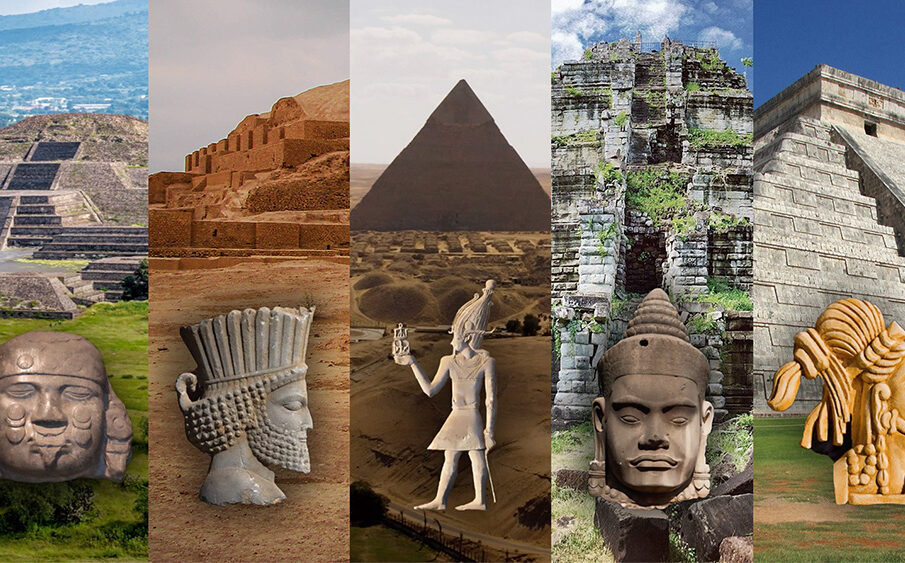
Hidden Stories in History You Probably Never Learned in School.
History classes often feel predictable: dates to memorize, wars to remember, and famous leaders whose names dominate textbooks. But history is far bigger, and far more fascinating, than the simplified version many of us learned in school.
Behind the well-known timelines lie forgotten innovations, overlooked heroes, and surprising moments that quietly shaped the world we live in today. These hidden stories remind us that history isn’t just about kings and conquerors; it’s about ordinary people, unexpected breakthroughs, and truths that didn’t always fit traditional narratives.
Let’s uncover some of the remarkable stories history almost left behind.
When Libraries Were More Powerful Than Armies
Long before modern universities existed, centers of learning thrived across different parts of the world. Scholars traveled thousands of kilometers not for conquest, but for knowledge. In many ancient cities, libraries were considered symbols of power and prestige. Manuscripts on astronomy, medicine, mathematics, and philosophy circulated across continents through trade routes. Knowledge moved alongside goods, shaping science and culture quietly but profoundly.
These intellectual exchanges helped lay the foundation for modern education systems, yet they rarely receive the same attention as battles or political revolutions.
The Women Who Changed History Without Recognition
Many historical achievements credited to famous men were supported, and sometimes driven, by women whose contributions were minimized or erased. Women served as diplomats, traders, inventors, healers, and strategists across civilizations. Some ruled kingdoms indirectly through advisory roles; others preserved knowledge through oral traditions when written records were destroyed.
Their stories challenge the idea that history was shaped only by male leadership. Instead, they reveal a more complex reality: progress has always been collaborative, even when recognition was not.
Trade Routes That Connected the World Before Globalization
Globalization did not begin with airplanes or the internet. Centuries ago, vast trade networks connected distant cultures across deserts, oceans, and forests. Merchants exchanged gold, salt, spices, textiles, and ideas. Languages mixed. Religions spread. Technologies traveled from one society to another long before modern borders existed.
These routes didn’t just move goods, they moved knowledge. Agricultural techniques, navigation skills, and scientific discoveries often spread through trade rather than conquest, shaping civilizations in subtle ways rarely emphasized in classrooms.
Ordinary People Who Sparked Extraordinary Change
History books often focus on powerful rulers, yet many turning points began with everyday individuals. Farmers who resisted unfair systems, workers who organized for rights, students who challenged authority, and writers who questioned social norms all played roles in shaping political and social change. Their names may not appear in major chapters, but their actions influenced reforms that later generations benefited from.
History, at its core, is not only the story of leaders, it is the story of collective courage.
Innovations That Appeared Centuries Ahead of Their Time
Across ancient societies, inventors created technologies that seemed far beyond their era. Early surgical practices, complex irrigation systems, advanced architecture, and precise astronomical observations existed long before modern scientific tools.
Some civilizations developed sustainable farming methods still studied today. Others built cities designed around climate adaptation, ventilation, and water management; ideas modern urban planners are rediscovering. These forgotten innovations remind us that progress is rarely linear. Humanity has advanced, lost knowledge, and rediscovered it many times throughout history.
Why These Stories Were Left Out
If these stories are so important, why weren’t they widely taught?
History education has often been shaped by limited perspectives, political priorities, and the availability of written records. Societies that relied on oral storytelling or whose archives were destroyed were frequently underrepresented in global narratives. Simplifying history also made it easier to teach, but simplicity sometimes came at the cost of accuracy and diversity of perspective.
Today, historians are revisiting overlooked sources; oral traditions, archaeological discoveries, and local records, to reconstruct a fuller picture of humanity’s shared past.
What Hidden History Teaches Us Today
Learning these lesser-known stories changes how we see the world.
It teaches us that:
-
Progress comes from many cultures, not just a few.
-
Innovation often happens outside the spotlight.
-
Ordinary people can shape extraordinary outcomes.
-
Knowledge has always been global.
Most importantly, hidden history encourages curiosity. It reminds us to question incomplete narratives and remain open to stories still waiting to be told.
Rediscovering the Past, Reimagining the Future
History is not fixed; it evolves as new discoveries are made and forgotten voices are heard again. Every uncovered story adds depth to humanity’s collective memory. The past is richer, more diverse, and more surprising than any textbook summary. And perhaps the greatest lesson hidden history offers is this: the world has always been shaped by more people, places, and ideas than we were taught to see.
There are still countless stories waiting beneath the surface, and discovering them may change how we understand both history and ourselves.


Leave a reply




Africa’s Source for Breaking News | Entertainments | Health | Finance | Sports | Lifestyle and Business News.


