Throughout history, certain events have dramatically altered the direction of countries and even the world.
These moments, often called historical turning points, reshape political systems, economies, and societies. Sometimes they arise from revolutions, wars, discoveries, or bold decisions by leaders. In many cases, these turning points influence generations long after the events themselves.
Understanding these moments helps us see how nations evolve and why the modern world looks the way it does today.
The Power of Revolutions
Revolutions are among the most powerful turning points in history. They occur when people challenge existing systems and demand change.
One well-known example is the French Revolution. Before the revolution, France was ruled by a monarchy with deep social inequality. However, growing economic hardship and political frustration pushed citizens to revolt. The revolution overthrew the monarchy and introduced ideas such as liberty, equality, and popular sovereignty. These ideas later influenced democratic movements across the world.
Another major example is the American Revolution. Thirteen colonies fought for independence from Britain. Their victory led to the creation of the United States and inspired other nations to pursue self-governance.
Wars That Reshaped the World
Wars often become defining moments in national histories. While they bring destruction, they can also redraw borders and transform political systems. The World War I changed the global balance of power. Several powerful empires collapsed, including the Austro-Hungarian and Ottoman empires. New nations emerged, and political tensions set the stage for future conflicts.
Even more transformative was the World War II. After the war, the world saw the rise of the United States and the Soviet Union as superpowers. International institutions such as the United Nations were created to promote peace and cooperation.
These changes influenced global politics for decades.
Political Decisions That Redefined Nations
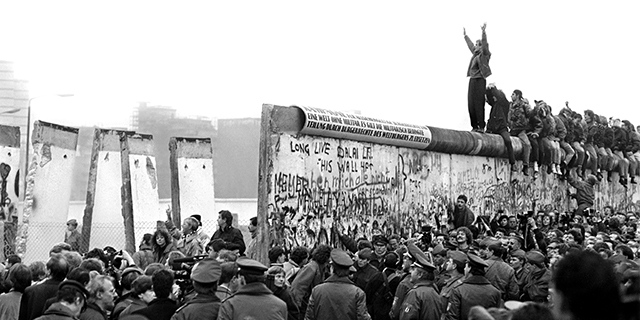
Sometimes a single political decision can alter a country’s path. A major example is the fall of the Berlin Wall in 1989. The wall had divided East and West Berlin for nearly three decades. When it finally fell, it symbolized the collapse of communist regimes in Eastern Europe. Soon after, Germany reunified, and the Cold War era began to end.
Another turning point occurred with the End of Apartheid in the early 1990s. After decades of racial segregation and discrimination, South Africa moved toward a democratic system. The election of Nelson Mandela in 1994 marked a new chapter for the country.
Technological and Economic Shifts
Not all turning points come from politics or conflict. Some arise from technological and economic transformations.
The Industrial Revolution dramatically changed societies. Factories, machines, and new transportation systems transformed economies that once relied on agriculture. Cities expanded rapidly, and global trade increased.
Later, the Digital Revolution reshaped communication, business, and everyday life. Computers, the internet, and smartphones created new industries and connected people across continents.
These shifts continue to influence how nations compete and collaborate.
Why Turning Points Matter
Historical turning points remind us that nations are not static. Instead, they evolve through crises, innovations, and collective decisions. A revolution may give birth to democracy. A war may redraw borders. A technological breakthrough may transform an entire economy.
By studying these events, societies can better understand their past and make wiser choices for the future.
In the end, history shows that even a single moment can redirect the destiny of a nation.