

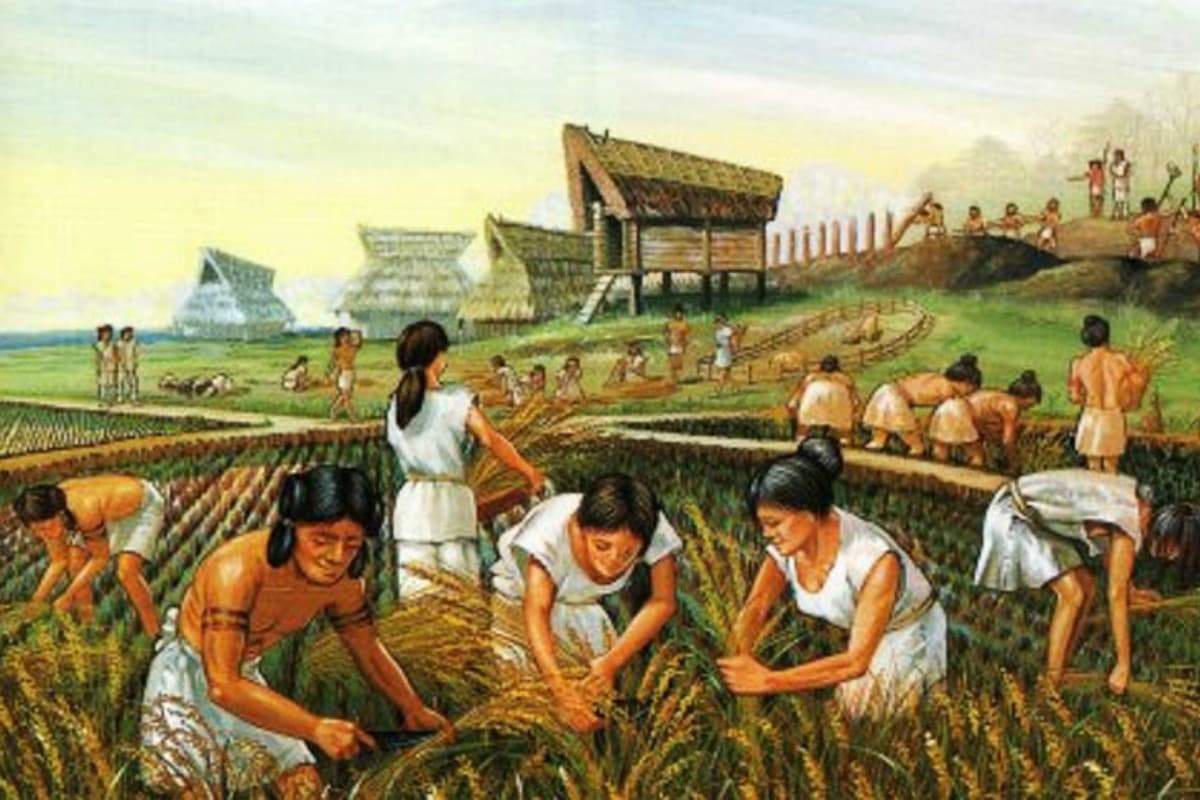
Human civilization has undergone many transformations throughout history, but few developments have been as significant as the rise of agriculture.
The shift from hunting and gathering to farming marked a turning point that reshaped how humans lived, worked, and organized their societies. Through agriculture, stable communities were formed, population growth accelerated, and the foundations of modern civilization were established.
The Transition from Hunting to Farming
Before agriculture emerged, early humans lived as nomadic hunter-gatherers. They relied on hunting animals and gathering wild plants for food. Because food sources were constantly changing, people had to move frequently in search of resources. This lifestyle limited the size of communities and prevented the development of permanent settlements.
Around 10,000 years ago, during what historians call the Neolithic Revolution, humans began to domesticate plants and animals. Crops such as wheat and barley were cultivated, while animals like sheep and goat were domesticated. As a result, people were able to produce their own food rather than rely entirely on nature.
The Rise of Permanent Settlements
Because farming required people to stay near their fields, permanent settlements gradually began to appear. Villages and towns developed around fertile land and water sources. Over time, these settlements expanded into large cities.


One of the earliest examples of an agricultural civilization was Mesopotamian civilization, which developed between the Tigris River and the Euphrates River. Fertile soil and irrigation systems allowed farmers to grow crops in large quantities, supporting growing populations.
Population Growth and Social Organization
Agriculture created a more stable food supply, which led to significant population growth. When communities produced surplus food, not everyone had to farm. Some people became artisans, traders, builders, or leaders.
Understand your relationship. Fix what matters.
Practical, structured relationship courses built for lasting clarity.
Start learningAs societies grew more complex, social structures began to form. Governments, laws, and organized religions developed to manage larger populations. Specialized roles emerged, including merchants, soldiers, and administrators.
Technological and Economic Development
The agricultural lifestyle encouraged innovation. Tools such as plows, irrigation canals, and storage systems were developed to increase productivity. These advancements improved farming efficiency and allowed societies to support even larger populations.
Trade also expanded as communities exchanged agricultural products and crafted goods. Farming societies eventually laid the groundwork for early economies and long-distance trade networks.
Cultural and Intellectual Growth
Agriculture also contributed to cultural and intellectual development. As societies became more stable, people had time to focus on art, architecture, and education. Early writing systems were created to keep records of harvests, trade, and governance.
For example, the Cuneiform writing system emerged in ancient Sumer to record agricultural transactions and administrative activities.
Lasting Impact on Modern Civilization
The influence of agriculture can still be seen today. Modern cities, economic systems, and political structures all have roots in early farming societies. Although technology has transformed agriculture through mechanization and scientific innovation, its role in shaping human civilization remains undeniable.
In conclusion, agriculture fundamentally changed the course of human history. By enabling permanent settlements, population growth, and complex societies, farming laid the foundation for the civilizations that exist today. Without the agricultural revolution, the world as we know it would be vastly different.






Comments (0)
No comments yet. Be the first to share your perspective!