

Space Missions That Changed History: When Humanity Reached Beyond Earth.
On a quiet October night in 1957, people around the world looked up at the sky and listened. A small beeping sound, faint but revolutionary was traveling overhead. It came from Sputnik 1, the first human-made object to orbit the Earth. In that moment, space stopped being the realm of imagination and became a destination.
From cold-war rivalry to global cooperation, space missions have reshaped science, politics, and how humanity understands its place in the universe. Some missions did more than explore space, they changed history.
Sputnik 1 (1957): The Dawn of the Space Age
When the Soviet Union launched Sputnik 1, the world entered the Space Age. The satellite itself was simple, but its impact was enormous.
Sputnik proved that Earth could be orbited, sparking rapid investment in science education, engineering, and aerospace research. It also ignited the space race, pushing nations to think beyond borders and toward the stars.



Historical impact:
-
Laid the foundation for satellite communication
Your brand here. Reach a focused African audience.
Partner with Anttention Media Africa across high-trust business and tech reporting.
Advertise with usAccelerated scientific research worldwide
Changed global political dynamics
Apollo 11 (1969): Humanity Walks on the Moon
“That’s one small step for man, one giant leap for mankind.”
With these words, astronaut Neil Armstrong became the first human to walk on the Moon.
Apollo 11 was more than a technological achievement, it was a symbol of human ambition and cooperation among thousands of scientists, engineers, and mathematicians.
Historical impact:
-
Proved humans could travel to and explore another world
Advanced computing, materials science, and navigation
Inspired generations to pursue science and engineering
Voyager 1 & 2 (1977): Messages to the Cosmos
Launched to study the outer planets, the Voyager missions far exceeded expectations. They provided the first detailed images of Jupiter, Saturn, Uranus, and Neptune, revealing active moons, powerful storms, and complex planetary systems.
Each spacecraft carries a Golden Record, a message from Earth containing sounds, images, and music meant for any intelligent life that might find it.
Historical impact:
-
Expanded understanding of the solar system
Became humanity’s farthest-traveling objects
Redefined long-term space exploration
Hubble Space Telescope (1990): A New Way to See the Universe
Orbiting above Earth’s atmosphere, the Hubble Space Telescope gave humanity its clearest view of the universe.
Hubble revealed distant galaxies, measured the expansion rate of the universe, and helped confirm the existence of dark energy. Its images brought science into homes and classrooms, making the universe feel both vast and personal.
Historical impact:
-
Revolutionized astronomy
Improved understanding of cosmic evolution
Made space science visually accessible to the public
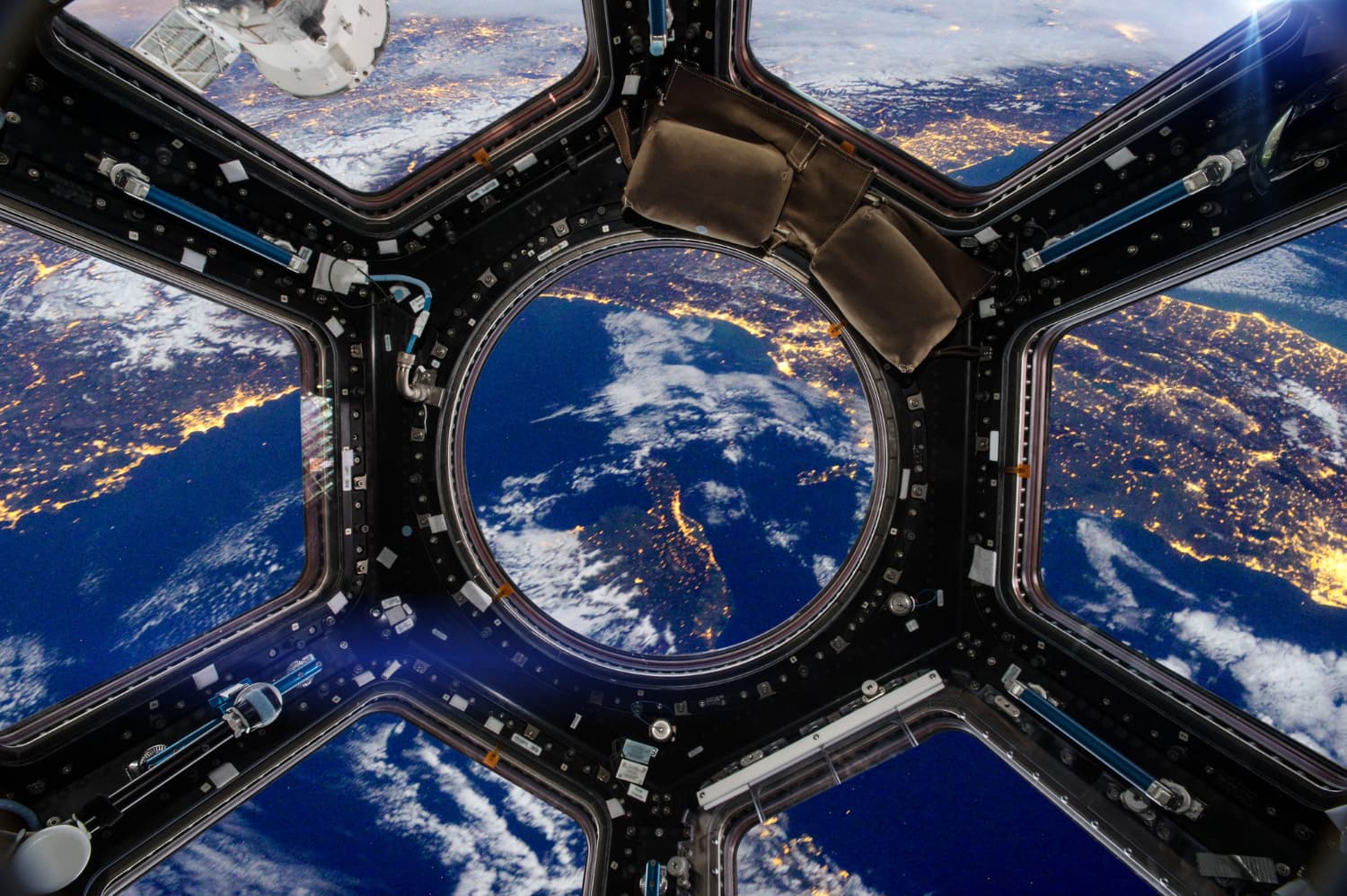
International Space Station (1998–Present): Science Without Borders
The International Space Station (ISS) represents one of the greatest examples of global cooperation. Built and operated by multiple countries, it serves as a floating laboratory where astronauts live and work for months at a time.
Experiments aboard the ISS have advanced medicine, materials science, and our understanding of how the human body responds to long-term space travel.
Historical impact:
-
Promoted international scientific collaboration
Advanced space medicine and technology
Prepared humanity for future deep-space missions
Mars Rovers (1997–Present): Searching for Life Beyond Earth
From Sojourner to Curiosity and Perseverance, Mars rovers have transformed our understanding of the Red Planet.
They have found evidence of ancient rivers, lakes, and conditions that may once have supported life. Each rover extended humanity’s reach, turning Mars from a distant red dot into a studied world.
Historical impact:
-
Confirmed Mars once had water
Advanced robotic exploration
Strengthened the search for life beyond Earth
Why These Missions Matter
Space missions are not just about exploration—they shape technology, education, and international relations. Innovations developed for space have led to advancements in communication, navigation, medicine, and environmental monitoring.
More importantly, these missions remind humanity of its shared curiosity. From every country and culture, people look up at the same sky.
Final Thoughts
Space missions that changed history did so because they combined curiosity, courage, and collaboration. They challenged what was believed possible and expanded the boundaries of human knowledge.
As new missions aim for the Moon, Mars, and beyond, one thing remains clear: every journey into space is also a journey into understanding ourselves.






Comments (0)
No comments yet. Be the first to share your perspective!