
The Hidden Wounds Behind Crime in Africa
Trauma, Abuse, and Criminal Behavior: The Hidden Wounds Behind Crime in Africa
Explore how childhood trauma and abuse shape criminal behavior in African communities. Learn about the psychological roots of crime and healing-centered approaches to prevention.
On a dusty street in a low-income neighborhood on the outskirts of Lagos, a teenage boy sits on a broken plastic chair, watching the day pass. His school uniform hangs unused in his room. Iis mother sells vegetables by the roadside. An absent father.
By seventeen, he will be arrested for involvement in phone theft. To the public, he becomes another criminal.
To the justice system, another case file. But few will ask about the years he spent witnessing violence at home, the hunger that kept him awake at night, or the emotional neglect that shaped his idea of survival.
Across Africa, crime is often discussed as a law-and-order problem. Yet beneath many criminal acts lie invisible stories of trauma, abuse, and unresolved psychological pain.
Understanding this connection does not excuse crime. It explains it, and explanation is the foundation of prevention.
Understanding Trauma: More Than Painful Memories
Trauma is not simply something bad that happened in the past. It is what happens inside the mind and body as a result of overwhelming stress or danger.
Common sources of trauma in African contexts include:
-
Physical and sexual abuse
-
Childhood neglect
-
Armed conflict and insurgency
-
Communal clashes
-
Forced displacement
-
Chronic poverty
In regions affected by conflict, such as parts of northeastern Nigeria, South Sudan, eastern Democratic Republic of Congo, or northern Mozambique, many children grow up surrounded by violence before they learn how to read.
In urban informal settlements across Nairobi, Accra, Johannesburg, and Lagos, children may regularly witness robbery, assault, or police raids.
These experiences shape the developing brain.
A traumatized brain learns one central lesson:
The world is dangerous. Stay alert.
This constant state of alertness can later appear as aggression, impulsivity, or emotional numbness.
How Abuse Shapes Self-Image and Worldview
Abuse does more than injure the body. It reshapes identity.
Many survivors internalize beliefs such as:
-
I am not valuable
-
I cannot trust anyone
-
Violence is normal
-
Power comes from fear
When a child grows up being beaten, insulted, or ignored, they often learn that love and pain coexist.
In some communities, harsh corporal punishment is normalized as discipline. While discipline aims to correct behavior, repeated violent punishment can teach children that force is an acceptable way to solve problems.
Over time, violence becomes familiar.
Familiarity becomes normalization.
Normalization becomes behavior.
The Pathway from Trauma to Criminal Behavior
There is no single cause of crime. However, research and lived experience reveal common patterns linking trauma to offending:
Early Exposure to Violence
Children who witness violence are more likely to replicate it.
Poor Emotional Regulation
Trauma disrupts the brain’s ability to manage anger and fear.
Educational Disruption
Traumatized children struggle with concentration, leading to school failure or dropout.
Social Exclusion
Rejected by mainstream institutions, youth seek belonging elsewhere.
Association with High-Risk Groups
Gangs and criminal networks offer identity, protection, and income.
Criminal Activity
Crime becomes a coping mechanism, survival strategy, or status symbol.
In some urban neighborhoods, young people join cult groups, street gangs, or cybercrime rings not only for money but for belonging.
The crime is visible.
The pain beneath it is not.
Cybercrime and Digital Survival
In parts of West Africa, online fraud has become a major concern. Public narratives often portray young scammers as greedy or morally corrupt.
Yet behind some of these stories are young men who:
-
Dropped out of school due to poverty
-
Grew up in unstable homes
-
Experienced humiliation and social exclusion
For some, cybercrime represents a path to financial dignity in a society where legitimate opportunities feel inaccessible.
Again, this does not justify crime.
But it highlights how unresolved trauma combined with structural inequality fuels illegal choices.
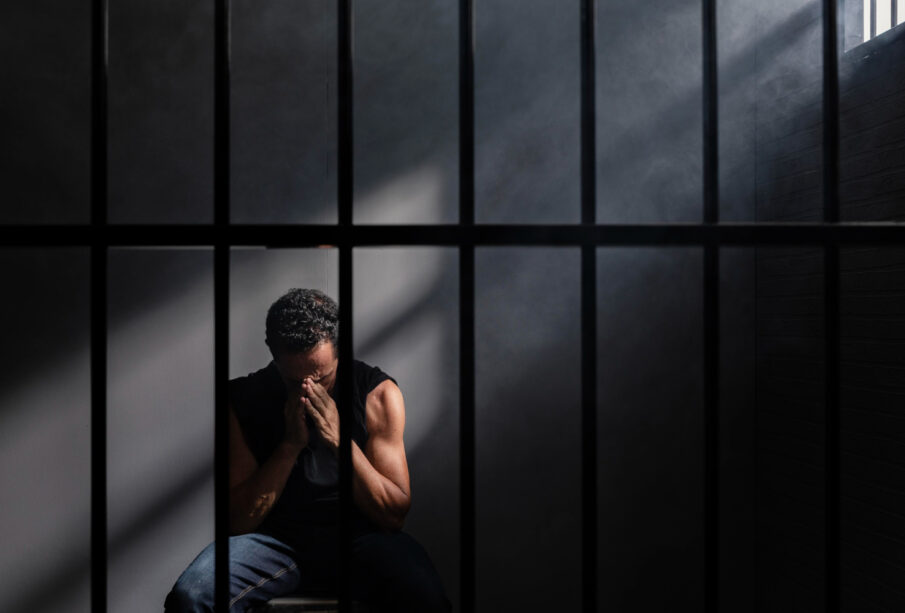
Stories Behind Prison Walls
Visit a correctional facility in Ghana, Kenya, or Nigeria and you will hear similar stories:
-
A man abused by an uncle as a child
-
A woman forced into prostitution at thirteen
-
A youth who watched his parents killed during conflict
These are not isolated cases, they are patterns. Many incarcerated individuals experienced multiple forms of trauma long before their first arrest. Prison becomes the first place their stories are documented — long after intervention could have made a difference.
Trauma Does Not Automatically Create Criminals
It is important to emphasize: Most traumatized people do not become criminals. Many become resilient adults, caregivers, entrepreneurs, teachers, and community leaders.
Protective factors make a critical difference:
-
Supportive family members
-
Mentors
-
Access to education
-
Counseling or therapy
-
Safe community spaces
Trauma increases risk.
Support reduces risk.
Mental Health Gaps in African Societies
Mental health services remain underfunded and stigmatized across much of the continent.
People experiencing:
-
Depression
-
Post-traumatic stress
-
Substance dependence
are often told to “be strong” or seek spiritual solutions alone.
While faith can be supportive, untreated psychological conditions frequently worsen.
Without care, emotional pain leaks out through behavior.
Sometimes that behavior becomes criminal.
Why Punishment Alone Cannot Solve Crime
Longer prison sentences do not heal trauma.
Harsh punishment does not teach emotional regulation.
Isolation does not rebuild identity.
When traumatized individuals leave prison without treatment, they return to society with the same wounds — often deeper.
This fuels repeat offending.
True crime prevention must include healing.
Trauma-Informed Crime Prevention in Africa
Some promising approaches include:
-
School-based counseling programs
-
Youth mentorship and life-skills training
-
Parenting education
-
Community mental health clinics
-
Prison rehabilitation programs
-
Restorative justice initiatives
Countries experimenting with rehabilitation-focused models are beginning to see reductions in reoffending.
Healing works.
Rethinking Crime: From Blame to Understanding
A trauma-informed lens asks a different question:
Not only, “What did this person do?”
But also, “What happened to this person?”
This shift does not remove accountability.
It expands responsibility to society.
Because every unprotected child is a future risk.
Every ignored trauma is a potential crisis.
Conclusion: Building Safer Societies Through Healing
Behind many criminals stand wounded children.
Behind many violent acts lie histories of violence endured.
If African societies invest in:
-
Child protection
-
Mental health care
-
Education
-
Economic opportunity
we reduce crime at its roots.
The path to safer communities does not begin in prisons.
It begins in homes, schools, and hearts.



Leave a reply





Africa’s Source for Breaking News | Entertainments | Health | Finance | Sports | Lifestyle and Business News.


