Throughout history, revolutions have reshaped societies, overturned powerful institutions, and transformed the way people live and govern themselves.
These dramatic shifts often arise from deep dissatisfaction with political systems, economic inequality, or social injustice. While revolutions can bring instability and conflict, they also have the power to inspire reforms, expand rights, and redefine national identities. Several revolutions stand out for their lasting global impact.
The French Revolution
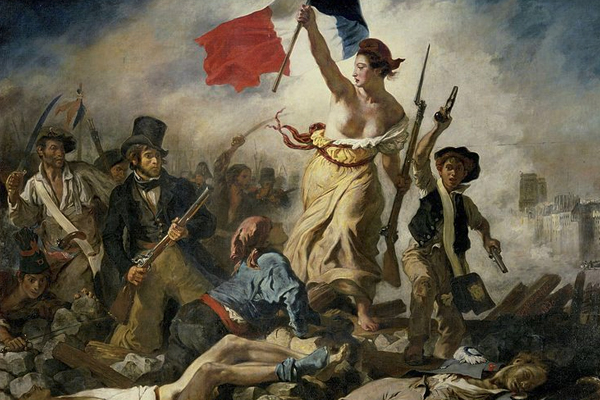
One of the most influential revolutions in history is the French Revolution (1789–1799). Before the revolution, France was ruled by an absolute monarchy under Louis XVI. Severe economic hardship, heavy taxation on common citizens, and widespread inequality between social classes fueled anger across the country.
The revolution led to the overthrow of the monarchy and the establishment of a republic. It introduced powerful ideas such as liberty, equality, and fraternity, which spread across Europe and beyond. Although the revolution became violent during the period known as the Reign of Terror under Maximilien Robespierre, its long-term legacy included modern democratic ideals and legal reforms.
The American Revolution
Another transformative event was the American Revolution (1775–1783). The thirteen British colonies in North America rebelled against the rule of George III, largely due to disputes over taxation and governance.
Colonial leaders such as George Washington and Thomas Jefferson played key roles in the struggle for independence. The revolution led to the creation of the United States and the adoption of democratic principles that later influenced many political systems around the world. Documents such as the Declaration of Independence helped promote the idea that governments should derive their authority from the consent of the governed.
The Russian Revolution
The Russian Revolution of 1917 dramatically altered the political landscape of the 20th century. For centuries, Russia had been ruled by the Romanov dynasty, including the last tsar, Nicholas II. Economic hardship, military failures during World War I, and growing political unrest pushed the nation toward revolution.
Led by figures such as Vladimir Lenin, the Bolsheviks seized power and established the world’s first large-scale communist state. This revolution eventually led to the formation of the Soviet Union, which would become one of the most powerful countries in the world and play a central role in global politics during the Cold War.
The Chinese Revolution
Another major transformation occurred during the Chinese Communist Revolution, which culminated in 1949. After years of civil war between the Nationalists and Communist forces, the Communists led by Mao Zedong gained control of mainland China.
The revolution resulted in the creation of the People’s Republic of China. It drastically changed China’s political structure, economy, and social policies. Over time, China would evolve into one of the world’s most influential global powers.
The Industrial Revolution
Unlike the others, the Industrial Revolution was not a political uprising but an economic and technological transformation that began in the late 18th century in United Kingdom.
New inventions, mechanized manufacturing, and improved transportation systems changed how goods were produced and distributed. Factories replaced many traditional forms of labor, and cities expanded rapidly as people moved from rural areas to urban centers. The Industrial Revolution laid the foundation for modern economies, global trade, and technological progress.
Lessons From Historical Revolutions
Historical revolutions demonstrate how powerful collective action can reshape societies. While many revolutions arise from injustice and inequality, their outcomes can vary widely. Some lead to democratic reforms, while others replace one form of authority with another.
Understanding these events helps us see how social movements, leadership, and economic conditions interact to create major historical turning points. Revolutions remind us that societies are constantly evolving, and that the desire for change has played a crucial role in shaping the modern world.
In the end, the revolutions that changed history did more than topple governments—they reshaped ideas about freedom, power, and the rights of ordinary people.