
How Nature Stays Connected
Food Chains vs Food Webs Explained Simply: How Nature Stays Connected
Imagine standing in a forest at sunrise. Birds are searching for insects, insects feed on plants, and somewhere nearby a predator quietly watches its next meal. Every living thing depends on another for energy and survival. Nature is not random, it is deeply connected.
Scientists use the ideas of food chains and food webs to explain how energy moves through ecosystems. While the concepts sound scientific, they describe something beautifully simple: who eats whom, and how life stays balanced on Earth.
What Is a Food Chain?
A food chain is a straight-line pathway that shows how energy passes from one living organism to another.
It begins with the sun, the ultimate source of energy for almost all life on Earth.
A Simple Example
Sun → Grass → Grasshopper → Frog → Snake → Hawk
Here’s how it works:
-
Plants (Producers) use sunlight to make their own food through photosynthesis.
-
Herbivores (Primary consumers) eat plants.
-
Carnivores (Secondary and tertiary consumers) eat other animals.
-
Decomposers eventually break down remains and return nutrients to the soil.
A food chain helps us understand energy flow step by step.
Why Food Chains Are Important
Food chains show that survival depends on balance. If one link disappears, the entire chain can be affected.
For example, if insects decline due to pollution:
-
Birds lose a food source.
-
Predators that eat birds may also struggle.
-
The ecosystem becomes unstable.
However, real ecosystems are rarely this simple.
What Is a Food Web?
A food web is a network of interconnected food chains. Instead of a single path, it shows multiple feeding relationships within an ecosystem.
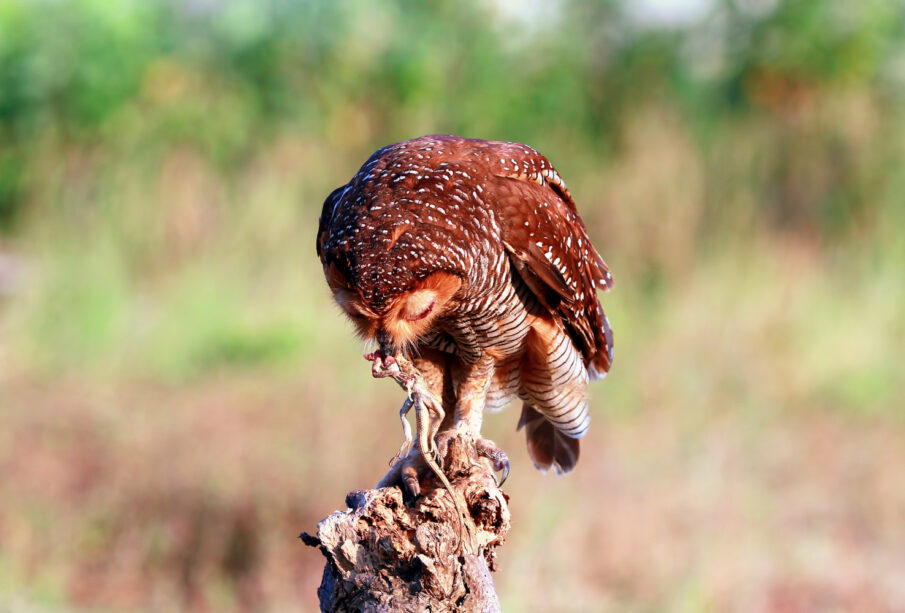
In nature, animals rarely eat only one type of food. A bird might eat insects, fruits, and seeds. A predator may hunt different prey depending on availability.
Because of this complexity, ecosystems function more like webs than straight lines.
Example of a Food Web (Savanna Ecosystem)
-
Grass feeds grasshoppers, zebras, and antelopes.
-
Grasshoppers are eaten by birds and frogs.
-
Antelopes may be hunted by lions or hyenas.
-
Birds can also become prey for larger predators.
All these connections form a web of relationships that keeps energy flowing even if one food source changes.
Food Chain vs Food Web: Key Differences
| Feature | Food Chain | Food Web |
|---|---|---|
| Structure | Single pathway | Multiple interconnected pathways |
| Complexity | Simple | Complex and realistic |
| Energy Flow | One direction | Many directions |
| Stability | Less stable | More stable |
| Example | Grass → Goat → Lion | Many animals connected through feeding relationships |
Why Food Webs Make Ecosystems Stronger
Food webs provide flexibility. If one food source disappears, animals can switch to another. This adaptability helps ecosystems survive environmental changes such as drought, seasonal shifts, or human activity.
Think of a food chain as a single road, while a food web is a network of roads. If one road closes, travelers can still reach their destination using another route.
The Role of Humans in Food Systems
Humans are also part of food webs. Farming, fishing, deforestation, and pollution can disrupt natural feeding relationships.
For example:
-
Overfishing reduces predator populations.
-
Habitat loss removes food sources for wildlife.
-
Climate change alters migration and feeding patterns.
Understanding food webs helps scientists design conservation strategies that protect entire ecosystems rather than just individual species.
The Hidden Heroes: Decomposers
Often overlooked, decomposers such as fungi, bacteria, and earthworms play a crucial role. They break down dead plants and animals, returning nutrients to the soil. Without decomposers, ecosystems would run out of usable nutrients, and food chains would collapse.
In many ways, they are nature’s recyclers.
Final Thoughts
Food chains and food webs remind us that life on Earth is interconnected. Every plant, insect, animal, and micro-organism plays a role in maintaining balance.
A food chain helps us understand energy flow in simple steps, while a food web reveals the true complexity of nature’s relationships. Together, they show that survival is not about isolation, but connection.
The next time you see a bird catching an insect or a goat grazing in a field, remember: you are witnessing a living network that has sustained life for millions of years.


Leave a reply




Africa’s Source for Breaking News | Entertainments | Health | Finance | Sports | Lifestyle and Business News.


