
Leadership Lessons From Sports
Leadership is often associated with business, politics, or management, but some of the most powerful leadership lessons come from sports.
Athletes and coaches operate in environments filled with pressure, competition, teamwork, and constant evaluation. Because of this, sports provide clear examples of what effective leadership looks like in action.
From championship-winning coaches to iconic athletes, the world of sports has produced many individuals whose leadership styles inspire people far beyond the field. Leaders such as Lionel Messi, Michael Jordan, Serena Williams, and Cristiano Ronaldo demonstrate qualities that apply not only to sports but also to business, education, and everyday life.
Below are several leadership lessons that sports consistently teach.
1. Lead by Example
Great leaders rarely rely only on words. Instead, they demonstrate the standards they expect from others. In sports, players respect leaders who show dedication during training, give maximum effort during games, and remain disciplined even under pressure. Lionel Messi became famous not just for his talent but for his relentless work ethic. His commitment pushed teammates to perform at higher levels.
Leaders in any field can apply this principle. When leaders show consistency, responsibility, and determination, others naturally follow.
2. Teamwork Matters More Than Individual Talent
Even the most talented athlete cannot win alone. Successful teams depend on cooperation, trust, and clear roles. Consider teams like the Golden State Warriors in the National Basketball Association. Their success has often been credited to teamwork, ball movement, and shared responsibility rather than relying on a single star player.
Effective leaders recognize that every team member has value. They focus on building collaboration instead of encouraging unhealthy competition within the group.
3. Resilience Is Essential
Sports constantly test mental strength. Teams lose games, athletes face injuries, and champions sometimes experience failure before success.
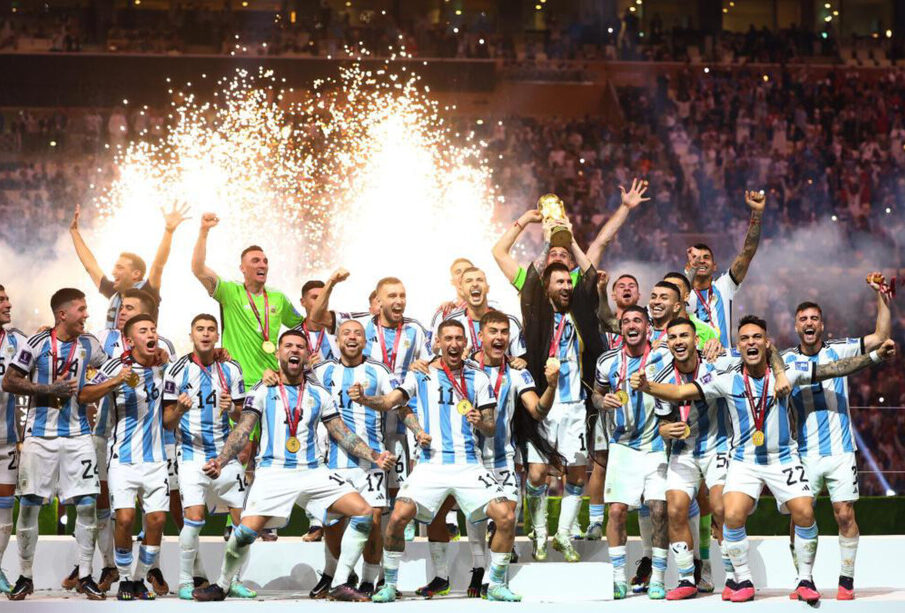
Football superstar Lionel Messi faced repeated setbacks with Argentina’s national team, including several near misses in major tournaments, but he persevered and ultimately led his team to victory in the Copa América (2021) and the FIFA World Cup (2022). His resilience and determination became defining features of his leadership on and off the field.
Leaders must learn to remain calm during setbacks. Challenges should be treated as learning opportunities rather than permanent defeats.
4. Clear Communication Builds Strong Teams
Successful teams communicate constantly during games, training sessions, and strategic planning. Miscommunication can lead to mistakes, missed opportunities, and confusion.
Great coaches emphasize clear instructions and open feedback. Players are encouraged to communicate with each other during critical moments.
In leadership roles outside sports, communication helps align goals, clarify expectations, and resolve conflicts before they escalate.
5. Adaptability Wins Championships
Sports are unpredictable. Opponents change strategies, conditions shift, and unexpected events occur during competitions. Elite athletes such as Cristiano Ronaldo have remained successful for many years because they constantly adapt their playing style, training methods, and mindset.
Leaders must also adapt. Markets change, technology evolves, and organizations face new challenges. Those who remain flexible are more likely to succeed in the long run.
6. Accountability Builds Trust
In sports, strong leaders take responsibility for both victories and losses. They do not blame teammates, referees, or circumstances.
When leaders accept responsibility, they build trust within their teams. Team members feel safe acknowledging mistakes and focusing on improvement rather than assigning blame.
Accountability encourages a culture of honesty and continuous growth.
7. Motivation Drives Performance
One of the most important roles of a leader is to inspire others. In sports, motivation often determines whether a team performs at an average level or achieves greatness. Successful leaders understand how to encourage their teammates, maintain morale during difficult moments, and celebrate achievements when goals are reached.
Motivation can come from recognition, shared purpose, or a clear vision of success.
Conclusion
Sports provide a powerful laboratory for leadership. The lessons learned on the field; discipline, teamwork, resilience, communication, adaptability, accountability, and motivation, apply to nearly every area of life.
Whether in business, education, or community leadership, individuals who adopt these principles often build stronger teams and achieve better results. The stories of athletes like Lionel Messi, Michael Jordan, and Serena Williams, remind us that true leadership is not just about winning—it is about inspiring others to perform at their very best.




Leave a reply







Africa’s Source for Breaking News | Entertainments | Health | Finance | Sports | Lifestyle and Business News.


