
Lost Cities of Ancient History
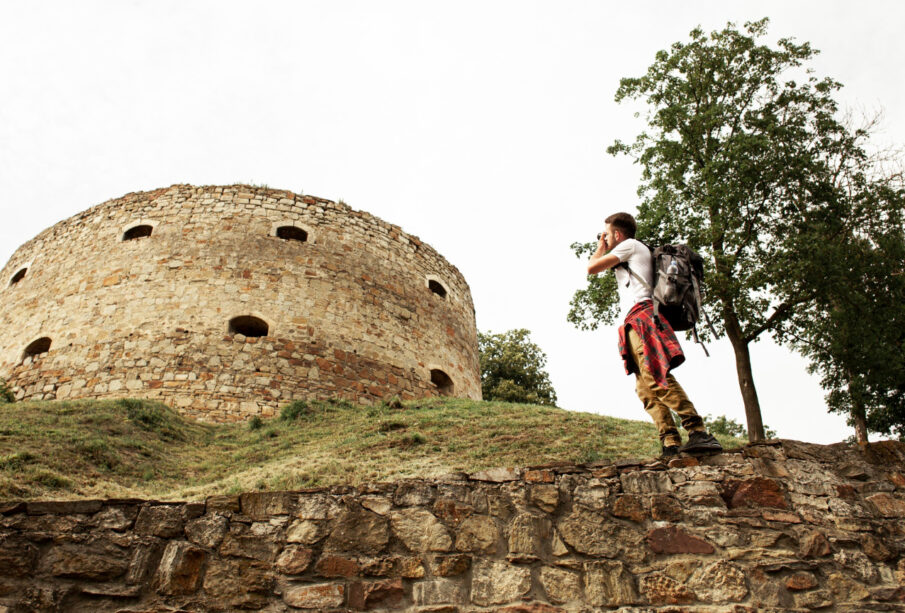
Throughout human history, entire cities have risen to greatness, only to disappear from the map.
Over time, some were abandoned after natural disasters, while others collapsed due to war, climate change, or economic decline. Eventually, forests, deserts, and oceans swallowed these once-thriving civilizations. Today, many of these lost cities are being rediscovered, providing remarkable insights about ancient societies.
Lost cities capture the imagination because they demonstrate that even the most powerful civilizations can fade into obscurity. Moreover, their rediscovery allows historians to understand how people lived, traded, governed, and survived centuries ago.
Why Cities Become “Lost”
Cities do not usually vanish overnight. Instead, they are often abandoned gradually due to a combination of factors:
Natural Disasters: Earthquakes, volcanic eruptions, floods, or droughts can force people to leave their homes.
Wars and Invasions: Cities can be destroyed or depopulated by conquests.
Economic Collapse: When trade routes shift or resources are depleted, cities may lose their importance.
Environmental Changes: Desertification, deforestation, or rising sea levels can render areas uninhabitable.
Disease or Migration: Epidemics or population movements can leave cities empty.
Consequently, once abandoned, time and nature slowly erase the physical traces of these places.
Famous Lost Cities of the Ancient World
Machu Picchu
High in the Andes Mountains lies Machu Picchu, one of the most famous lost cities in the world. It was built by the Inca Empire in the 15th century and was subsequently abandoned before the arrival of Spanish conquistadors. Surrounded by dense jungle and steep mountains, it remained unknown until it was brought to global attention by American explorer Hiram Bingham III in 1911.
Today, Machu Picchu is admired for its remarkable engineering and architectural achievements.
Petra
Petra, carved into pink sandstone cliffs, was once recognized as a major trading hub in the Middle East. Built by the Nabataean Kingdom around the 4th century BCE, it prospered because trade routes for spices, silk, and incense passed through it. However, shifting trade and earthquakes eventually led to its decline. Petra was later rediscovered by Swiss explorer Johann Ludwig Burckhardt in 1812, revealing its iconic rock-cut monument, Al-Khazneh.
Pompeii
Unlike many lost cities, Pompeii was destroyed suddenly. In 79 CE, the nearby volcano Mount Vesuvius erupted violently, burying the city under ash and debris. Thousands of residents were trapped, and the city was lost beneath layers of volcanic material. Ironically, this disaster preserved Pompeii remarkably well. Buildings, artwork, and even the positions of victims were frozen in time, providing historians with one of the most detailed views of daily life in the Roman Empire.
Angkor
The city of Angkor was once considered the center of the powerful Khmer Empire. Between the 9th and 15th centuries, it may have been one of the largest cities in the world. Its most famous structure, Angkor Wat, was constructed as a monumental temple complex.
Nevertheless, environmental challenges, political conflict, and changing trade routes contributed to the city’s gradual abandonment. For centuries, the surrounding jungle engulfed much of Angkor before modern archaeologists began restoring it.
Troy
Troy was long considered mythical, famous for the legendary Trojan War. In the late 19th century, German archaeologist Heinrich Schliemann excavated a site believed to be the real Troy, confirming the existence of a powerful city thousands of years ago. The site revealed multiple layers of cities built on top of each other, illustrating how civilizations can rise and fall repeatedly in the same location.
How Lost Cities Are Rediscovered
Modern technology has transformed the search for ancient cities. Archaeologists now use tools such as:
-
Satellite imagery to identify unusual shapes hidden beneath vegetation.
-
Ground-penetrating radar to detect buried structures.
-
LIDAR scanning, which uses lasers to map landscapes concealed under dense forests.
As a result, entire ancient urban networks that were previously invisible have been uncovered.
Why Lost Cities Matter
Indeed, lost cities are more than historical curiosities, they are valuable windows into the past. By studying them, historians and archaeologists can gain insights into:
-
Ancient trade networks
-
Social structures and governance
-
Architecture and engineering techniques
-
Cultural and religious practices
-
Causes of civilizational collapse
Furthermore, some of these discoveries help modern societies understand the long-term effects of environmental change, urban growth, and political instability.
Conclusion
Over the centuries, empires rise, flourish, and eventually decline, leaving behind ruins and mysteries waiting to be rediscovered. Thus, the lost cities of ancient history remind us that even the greatest civilizations are not permanent. As technology continues to improve, more lost cities will likely emerge from jungles, deserts, and ocean floors, each providing lessons from the past that can be applied to the present and future.


Leave a reply






Africa’s Source for Breaking News | Entertainments | Health | Finance | Sports | Lifestyle and Business News.


