
The Science Behind Everyday Technology
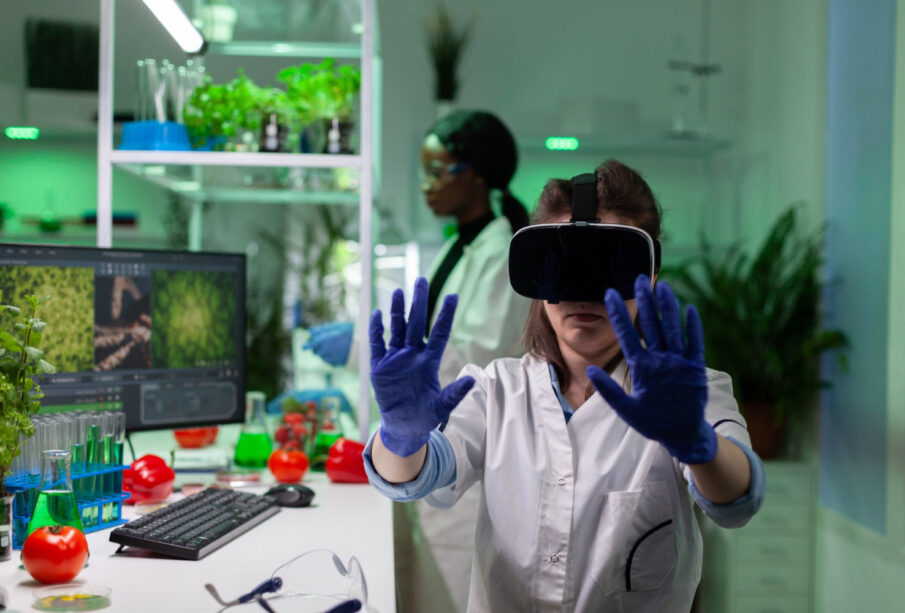
Technology surrounds us from the moment we wake up to the time we go to bed.
Smartphones buzz with notifications, refrigerators keep food fresh, and the internet connects people across continents instantly. While these tools feel routine, the science behind them is anything but simple. Understanding how everyday technology works not only deepens appreciation but also reveals how innovation continues to shape our world.
1. Smartphones: Tiny Computers in Your Pocket
At the heart of every smartphone lies a powerful combination of physics, chemistry, and computer science. The touchscreen operates through capacitive sensing, which detects the electrical properties of your fingers. When you tap the screen, it disrupts an electric field, allowing the device to register your touch.
Inside, a microprocessor performs billions of calculations per second. These processors rely on semiconductors, materials that can control electrical flow. Silicon chips, etched with microscopic circuits, act as the brain of the device.
The battery uses lithium-ion chemistry, where lithium ions move between electrodes to store and release energy. This process allows your phone to power up quickly and last for hours.
2. The Internet: Invisible Highways of Data
The internet may feel abstract, but it is built on very physical systems. Data travels through fiber-optic cables as pulses of light. These cables use the principle of total internal reflection, which keeps light signals bouncing within the cable over long distances without significant loss.
Wireless connections, such as Wi-Fi, rely on radio waves. Your router sends signals through the air, and devices decode them into usable information. This process happens in milliseconds, enabling streaming, messaging, and browsing in real time.
3. Refrigerators: Keeping Food Fresh with Thermodynamics
Refrigerators work based on the principles of thermodynamics, particularly heat transfer. A refrigerant fluid circulates through coils, absorbing heat from inside the fridge and releasing it outside.
The cycle involves compression and expansion:
- The refrigerant is compressed into a hot, high-pressure gas.
- It then cools and becomes a liquid.
- When it expands, it absorbs heat, cooling the interior.
This continuous loop maintains a low temperature, slowing down bacterial growth and preserving food.
4. GPS: Navigation Through Satellites
Global Positioning System (GPS) technology depends on a network of satellites orbiting Earth. Each satellite sends signals containing its position and time. Your device receives signals from multiple satellites and calculates your location using triangulation.
This process relies on extremely precise timing, often using atomic clocks. Even a tiny error in timing could lead to large inaccuracies in location.
5. Electric Appliances: Powering Daily Life
From kettles to washing machines, most household appliances rely on electric circuits. Electricity flows through conductive materials, converting energy into heat, motion, or light.
For example:
- Electric kettles use resistive heating, where electrical energy turns into heat.
- Washing machines use electric motors, converting electrical energy into mechanical motion.
- Light bulbs convert electricity into light through different methods, such as incandescence or LEDs.
6. Artificial Intelligence: Learning from Data
Many modern technologies, like voice assistants and recommendation systems, are powered by artificial intelligence (AI). AI systems use algorithms to analyze large amounts of data and identify patterns.
Machine learning, a branch of AI, allows systems to improve over time. For instance, when a streaming service suggests movies, it uses your past behavior to predict what you might like next.
7. Batteries and Energy Storage
Beyond smartphones, batteries power countless devices. The science behind them involves electrochemistry, where chemical reactions produce electrical energy.
Different types of batteries serve different purposes:
- Lithium-ion batteries for portable devices
- Lead-acid batteries for cars
- Alkaline batteries for everyday gadgets
Advancements in battery technology continue to focus on making them safer, longer-lasting, and more environmentally friendly.
Conclusion
Everyday technology may seem simple on the surface, but it is built on layers of scientific principles working together seamlessly. Physics governs how signals travel, chemistry powers our devices, and computer science enables intelligent systems.
As technology evolves, these scientific foundations remain crucial. By understanding them, we gain insight into not just how devices work, but also how innovation will continue to transform our daily lives.




Leave a reply






Africa’s Source for Breaking News | Entertainments | Health | Finance | Sports | Lifestyle and Business News.


