
What Animals Can Teach Humans
What Animals Can Teach Humans About Survival and Resilience
Life in the wild is rarely predictable. Every day presents new dangers, changing weather, scarcity of food, predators, and competition for survival. Yet across forests, deserts, oceans, and savannahs, animals continue to adapt, endure, and thrive. Their survival is not built on comfort or certainty but on resilience, the ability to adjust, recover, and keep moving forward.
Interestingly, the same lessons that help animals survive in nature can also guide humans through personal struggles, uncertainty, and change. When we observe the natural world closely, we begin to see that resilience is not just a human trait; it is a universal language of survival.
Adaptability Is the First Rule of Survival
Animals survive because they adapt quickly to changing environments. When seasons shift or resources become scarce, many species adjust their behavior rather than resist reality. Some animals migrate long distances in search of better conditions. Others change their diets when preferred food becomes unavailable. Desert animals conserve water efficiently, while animals in colder regions grow thicker coats to survive harsh temperatures.
The lesson for humans is clear: survival often depends on flexibility. Life rarely follows a fixed plan — careers change, opportunities disappear, and unexpected challenges arise. Resilient people, like resilient animals, do not waste energy wishing circumstances were different. Instead, they ask: How can I adjust to what is happening now?
Adaptability turns obstacles into new paths forward.
Persistence Matters More Than Strength
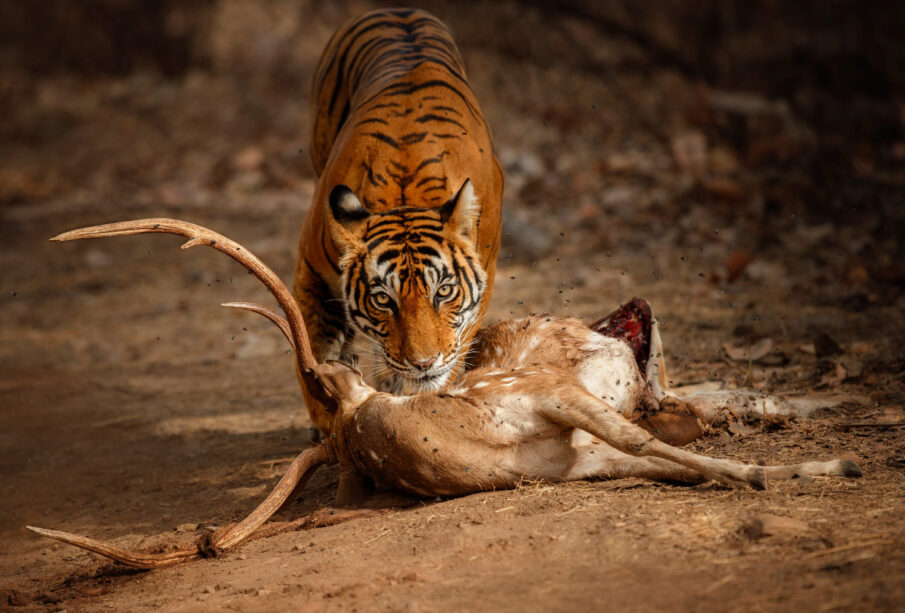
In nature, the strongest animal does not always win, the most persistent one often does. Predators may fail multiple hunts before succeeding. A hunting attempt can take hours, sometimes days, and success is never guaranteed.
Failure is part of survival, not proof of weakness.
Humans often interpret setbacks as signs to quit, yet animals demonstrate the opposite approach. Persistence increases the odds of survival. Every failed attempt provides feedback about timing, strategy, or environment.
Resilience grows when we stop seeing failure as an ending and begin seeing it as preparation.
Energy Management Is Essential
Animals understand something humans frequently forget: energy is limited and must be used wisely. Many animals rest strategically, conserving strength for moments that truly matter, hunting, escaping danger, or protecting their young. They do not operate at maximum intensity all the time.
Modern human culture often glorifies constant productivity, yet burnout weakens resilience. Survival requires rhythm — periods of effort balanced with recovery. Rest is not laziness; it is a survival strategy. Learning when to pause can be just as important as knowing when to act.
Community Increases Chances of Survival
In the wild, cooperation often determines survival. Herd animals protect one another by staying together. Some species take turns watching for danger while others rest. Social animals groom, communicate, and support members of their group.
Isolation increases vulnerability.
Humans are similar. During difficult times, support systems; family, friends, and community, provide emotional strength and practical help. Resilience is rarely built alone. Sharing burdens reduces stress and increases problem-solving capacity.
Nature reminds us that connection is not a luxury; it is a survival advantage.
Awareness and Presence Keep Animals Safe
Animals live fully in the present moment. Their survival depends on awareness, noticing subtle sounds, movements, or environmental changes. This attentiveness allows them to react quickly to threats or opportunities.
Humans, however, often dwell on past regrets or future worries, missing important signals in the present.
Resilience improves when we develop awareness of our surroundings, emotions, and circumstances. Being present helps us make clearer decisions and respond effectively instead of reacting impulsively.
Resourcefulness Over Perfection
Animals rarely have ideal conditions. They work with what is available. Birds build nests from nearby materials. Small animals create shelters using natural structures. Even in difficult environments, life finds creative solutions. This teaches an important human lesson: waiting for perfect conditions can delay growth. Resilient individuals learn to use available resources; skills, networks, and opportunities: even when they seem limited.
Progress often begins with improvisation.
Resilience Includes Recovery
After danger passes, animals return to calm remarkably quickly. They do not carry prolonged stress once a threat has ended. This ability to recover allows them to conserve energy and remain mentally prepared for future challenges.
Humans, on the other hand, may replay stressful experiences repeatedly, prolonging emotional strain. Resilience is not just enduring hardship; it is learning how to recover afterward. Reflection, rest, and emotional release help restore balance and prepare us for what comes next.
The Bigger Lesson: Survival Is Continuous Growth
Perhaps the greatest lesson animals teach is that survival is not a single victory. It is a continuous process of learning, adjusting, and evolving. Every season brings new tests, and resilience grows through repeated adaptation.
In human life, challenges often feel personal or unfair. Yet nature shows that struggle is not an exception, it is part of existence itself. What matters is not avoiding difficulty but developing the ability to move through it.
Animals survive because they remain responsive to life rather than resistant to it.
Final Thoughts
When we observe animals closely, we see resilience in its purest form: adaptability, persistence, balance, cooperation, awareness, and recovery. These qualities are not extraordinary talents reserved for a few; they are practical survival skills available to everyone. Nature quietly reminds us that resilience is not about never falling. It is about continuing to move, adjust, and grow; even after setbacks.
Just as animals navigate uncertain environments every day, humans too can learn to face life’s challenges with patience, flexibility, and courage. Survival, after all, is not only about staying alive. It is about learning how to live stronger with each experience.



Leave a reply







Africa’s Source for Breaking News | Entertainments | Health | Finance | Sports | Lifestyle and Business News.


