Cost of Living in Lagos: What You Need to Know
Lagos, Nigeria’s commercial capital, is a city of energy, opportunity, and relentless movement. As one of Africa’s fastest-growing urban centers, it attracts millions seeking better jobs and business prospects. However, with its opportunities comes a complex and often high cost of living that varies widely depending on lifestyle, income, and location.
1. Housing: The Biggest Expense
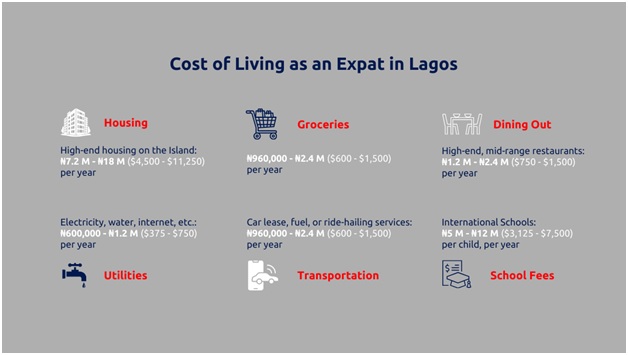
Housing is typically the most significant cost for residents in Lagos. Rent varies sharply based on location:
- High-end areas (Ikoyi, Victoria Island, Lekki Phase 1): Premium apartments and serviced homes can cost millions of naira annually.
- Mid-range areas (Yaba, Surulere, Gbagada): More affordable but still relatively expensive due to demand.
- Lower-income areas (Agege, Ikorodu, Ajegunle): Cheaper rent, though often with fewer amenities.
A major challenge is that landlords usually demand 1–2 years’ rent upfront, which can be financially demanding for many residents.
2. Food and Groceries
Food costs in Lagos depend heavily on your habits:
- Local markets offer affordable options for staples like rice, beans, garri, and vegetables.
- Supermarkets provide convenience but are significantly more expensive, especially for imported goods.
- Eating out regularly, especially in restaurants or fast-food chains, can quickly increase monthly expenses.
Many residents save money by buying food in bulk or cooking at home.
3. Transportation
Getting around Lagos can be both time-consuming and costly:
- Public transport (danfo buses, BRT, okadas where allowed) is relatively cheap but can be stressful and unpredictable.
- Ride-hailing services offer comfort but are more expensive, especially with rising fuel prices.
- Private car ownership comes with fuel, maintenance, and traffic-related costs.
Traffic congestion also indirectly increases living costs through lost time and productivity.
4. Utilities and Bills
Basic utilities can add up:
- Electricity is inconsistent, leading many households to rely on generators or inverters. Fuel costs can be significant.
- Internet and data are essential for work and communication but vary in price depending on provider and speed.
- Water and waste disposal may also require additional spending, especially in areas without reliable infrastructure.
5. Healthcare and Education
- Healthcare ranges from affordable public hospitals to expensive private clinics. Many middle- and high-income residents prefer private care due to quality concerns.
- Education costs vary widely. Public schools are cheaper, but private schools, especially international ones, can be very expensive.
6. Lifestyle and Entertainment
Lagos offers a vibrant social scene:
- Nightlife, events, cinemas, and restaurants can significantly increase spending.
- Gyms, clubs, and leisure activities vary from budget-friendly to luxury options.
Your lifestyle choices will heavily influence your overall cost of living.
7. Inflation and Economic Factors
Nigeria’s inflation rate plays a major role in shaping living costs. Prices of food, fuel, and basic goods can rise quickly, making it difficult for residents to maintain a stable budget. Currency fluctuations and policy changes also impact everyday expenses.
8. Average Monthly Estimate
While costs vary widely, a rough breakdown might look like:
- Low-income lifestyle: ₦80,000 – ₦200,000
- Middle-class lifestyle: ₦200,000 – ₦700,000
- High-end lifestyle: ₦700,000 and above
These figures depend heavily on rent, transportation, and personal habits.
Final Thoughts
Living in Lagos can be expensive, but it is also a city of immense opportunity. Many residents adapt by budgeting carefully, finding creative ways to save, and building multiple income streams. Ultimately, the cost of living in Lagos is less about a fixed number and more about how you choose to live within the city’s dynamic environment.