
Agricultural Innovations Improving Harvests
Agricultural Innovations Improving Harvests
Agriculture remains one of Africa’s most important economic activities, supporting millions of households and providing food for growing populations.
However, farmers across the continent face challenges such as unpredictable weather, pests, soil degradation, limited access to irrigation, and rising production costs.
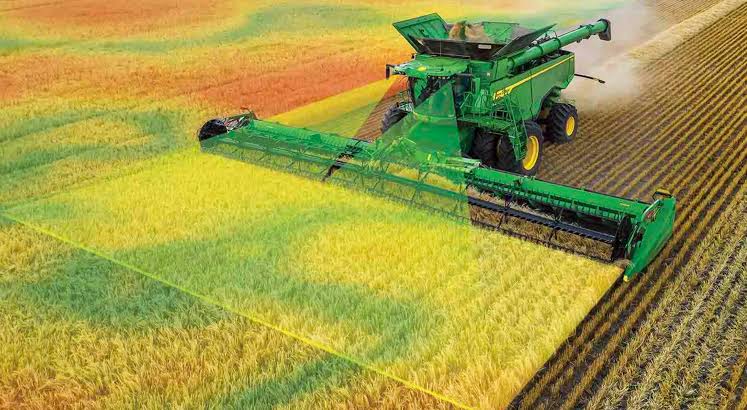
Agricultural innovation is helping address some of these challenges. From improved seeds and smart irrigation systems to digital farming tools and modern machinery, new technologies are giving farmers better ways to increase productivity and reduce losses.
Improved Seeds for Better Yields
One of the simplest but most important agricultural innovations is the development of improved crop varieties.
Farmers can now access seeds designed to provide higher yields, mature faster, or withstand particular environmental challenges. Some varieties are developed to tolerate drought, resist certain pests, or perform better under local growing conditions.
For farmers dealing with changing weather patterns, resilient crop varieties can provide greater stability and reduce the risk of losing an entire harvest.
Smart Irrigation Systems
Water management is critical to successful farming, particularly in areas where rainfall is unreliable.
Modern irrigation technologies allow farmers to deliver water directly to crops while reducing unnecessary water use. Drip irrigation, for example, supplies controlled amounts of water close to plant roots.
Solar-powered irrigation systems are also becoming increasingly attractive in some rural communities because they can reduce dependence on expensive fuel-powered pumps.
Better irrigation allows farmers to extend growing seasons and maintain more consistent production.
Agricultural Drones
Drones are introducing new possibilities for monitoring large farms.
Equipped with cameras and sensors, agricultural drones can provide farmers with aerial views of their fields. They may help identify areas affected by pests, diseases, water stress, or poor crop growth.
Instead of inspecting every part of a large farm manually, farmers can use aerial information to identify areas requiring attention.
As drone technology becomes more accessible, it could become an increasingly useful tool for commercial and larger-scale African farms.
Digital Farming Platforms
Mobile phones are becoming important agricultural tools.
Farmers can use digital platforms to access information about weather conditions, market prices, farming practices, pest management, and crop production.
Some services also connect farmers with buyers, financial providers, agricultural experts, and suppliers.
This can reduce information gaps and help farmers make more informed decisions about what to plant, when to harvest, and where to sell their produce.
Mechanization and Modern Farm Equipment
Traditional farming methods can require significant amounts of physical labour. Modern machinery is helping farmers complete certain tasks more quickly and efficiently.
Tractors, planters, harvesters, threshers, and other equipment can reduce the time required for land preparation, planting, harvesting, and processing.
Importantly, agricultural mechanization does not have to mean that every farmer owns expensive machinery. Equipment-sharing businesses and agricultural service providers can allow smaller farmers to pay for machinery when they need it.
Soil Testing and Precision Agriculture
Understanding soil conditions can help farmers use fertilizers more efficiently.
Soil testing technologies can provide information about nutrient levels and other characteristics of farmland. Farmers can then make more informed decisions about the type and quantity of inputs their crops require.
Precision agriculture takes this further by using data and technology to manage different parts of a farm according to their specific needs.
This can reduce waste while potentially improving crop productivity.
Biological Pest Control
Farmers are also exploring alternatives to excessive reliance on chemical pesticides.
Biological pest control uses natural organisms or biological products to help manage harmful insects and crop diseases.
These approaches can contribute to more sustainable farming when properly applied and combined with other pest-management practices.
For smallholder farmers, affordable and locally appropriate pest-control methods can be particularly valuable.
Climate-Smart Agriculture
Climate change has made agricultural innovation even more important.
Climate-smart farming practices can include drought-resistant crops, improved water management, agroforestry, conservation agriculture, crop diversification, and better soil-management techniques.
The goal is not simply to produce more food but to make agricultural systems more resilient to changing environmental conditions.
Cold Storage and Post-Harvest Technology
Improving harvests is only part of the challenge. Farmers must also protect what they produce after harvesting.
Poor storage and transportation can lead to significant food losses, particularly for fruits, vegetables, dairy products, and other perishable goods.
Cold rooms, solar-powered refrigeration, improved packaging, drying equipment, and better storage facilities can help extend the shelf life of agricultural products.
Reducing post-harvest losses means farmers can potentially earn more from the food they have already produced.
Solar Energy for Agriculture
Solar power is opening new opportunities for farmers in areas with limited access to reliable electricity.
Solar-powered irrigation pumps, cold storage systems, processing equipment, and farm lighting can reduce dependence on conventional energy sources.
For rural communities, access to affordable renewable energy can support both agricultural production and food-processing businesses.
Artificial Intelligence and Agricultural Data
Artificial intelligence is beginning to influence agriculture by helping process large amounts of information.
AI-powered tools can potentially assist with crop disease identification, weather analysis, yield prediction, irrigation decisions, and farm management.
Although access remains limited for many smallholder farmers, the growing availability of smartphones and digital agricultural services could gradually make data-driven farming more accessible.
Making Innovation Accessible to Smallholder Farmers
One of the biggest challenges is ensuring that agricultural innovations do not benefit only large commercial farms.
Many African farmers operate on relatively small plots and may struggle to afford advanced machinery, sensors, irrigation systems, or improved inputs.
Affordable financing, cooperative purchasing, equipment-sharing schemes, agricultural extension services, and government support can help make useful technologies more accessible.
Innovation is most impactful when farmers can actually afford to adopt it.
The Future of African Agriculture
Africa’s agricultural future will likely combine traditional knowledge with modern technology.
Farmers already possess valuable knowledge about local soils, crops, seasons, and ecosystems. New technologies can complement this knowledge rather than replace it.
As digital tools, renewable energy, improved seeds, modern machinery, and climate-resilient practices become more accessible, African agriculture has an opportunity to become more productive, sustainable, and resilient.
Conclusion
Agricultural innovations are changing how farmers produce, manage, store, and sell food. Improved seeds, smart irrigation, digital platforms, mechanization, drones, soil testing, renewable energy, and climate-smart practices are creating new possibilities for farmers across Africa.
The greatest impact will come when these innovations are affordable, practical, locally appropriate, and accessible to smallholder farmers.
By combining technology with traditional agricultural knowledge, African farmers can improve harvests while building food systems capable of meeting the needs of future generations.




Leave a reply




Africa’s Source for Breaking News | Entertainments | Health | Finance | Sports | Lifestyle and Business News.


