
Amazing Natural Phenomena Explained
Nature has a way of surprising us with breathtaking displays that often seem magical at first glance.
From glowing skies to moving rocks, these phenomena can feel otherworldly, but science offers fascinating explanations behind each one. Understanding these natural wonders not only deepens our appreciation but also reveals how dynamic and complex our planet truly is.
The Northern Lights (Auroras)
One of the most stunning sights on Earth is the Aurora Borealis, commonly known as the Northern Lights. These shimmering curtains of green, purple, and red light dance across the night sky in polar regions.
What causes it?
The phenomenon occurs when charged particles from the sun collide with gases in Earth’s atmosphere. These collisions release energy in the form of light, creating the glowing waves we see. The colors depend on the type of gas involved, oxygen produces green or red, while nitrogen creates blue or purple hues.
Bioluminescent Beaches
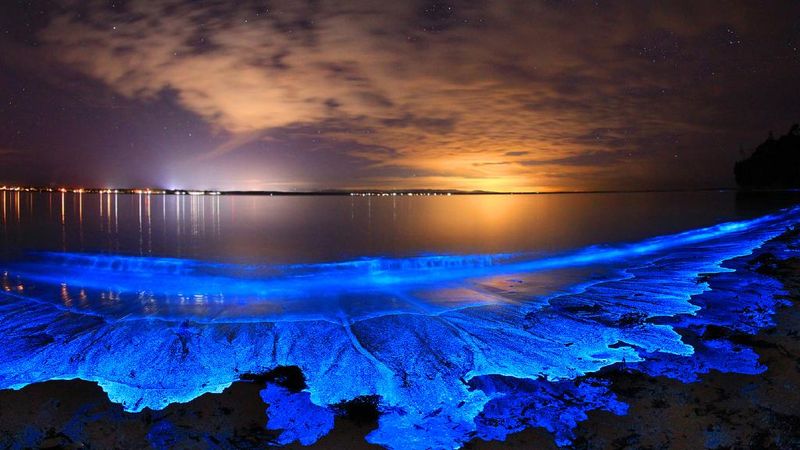
Imagine walking along a beach at night and seeing the waves glow with a blue light. This is due to Bioluminescence.
What causes it?
Tiny marine organisms like plankton emit light when disturbed, often as a defense mechanism. The chemical reaction inside their bodies produces light without heat, illuminating the water with a magical glow.
Volcanic Lightning
Lightning during a volcanic eruption looks like a scene from a fantasy movie, but it’s a real and powerful phenomenon known as Volcanic Lightning.
What causes it?
As a volcano erupts, it releases ash, gas, and rock into the atmosphere. The friction between these particles generates static electricity, which can build up and discharge as lightning within the ash cloud.
The Sailing Stones
In a remote desert, large rocks mysteriously move across the ground, leaving long trails behind them. This phenomenon occurs in Racetrack Playa.
What causes it?
For years, this puzzled scientists. The mystery was solved when researchers discovered that thin layers of ice form under the rocks during cold nights. When the ice melts and winds pick up, the rocks slowly slide across the wet surface.
Fire Rainbows
Despite the name, Circumhorizontal Arc are neither fire nor traditional rainbows. They appear as bright, rainbow-colored patches in the sky.
What causes it?
They form when sunlight passes through ice crystals in high-altitude clouds. The crystals bend the light, separating it into different colors, much like a prism.
Waterspouts
Waterspouts are tornado-like formations that occur over water, creating a dramatic column connecting clouds to the sea.
What causes it?
They form when warm, moist air rises rapidly and begins to rotate under specific atmospheric conditions. While less destructive than tornadoes on land, they can still be dangerous to boats and nearby coastal areas.
Conclusion
Natural phenomena remind us that Earth is full of mysteries waiting to be understood. While they may seem magical, each has a scientific explanation rooted in physics, chemistry, and environmental processes. By learning how these wonders occur, we gain not only knowledge but also a deeper sense of awe for the natural world.
Whether it’s glowing oceans or dancing skies, these phenomena highlight the incredible forces constantly at work around us, often unnoticed, yet always extraordinary.




Leave a reply




Africa’s Source for Breaking News | Entertainments | Health | Finance | Sports | Lifestyle and Business News.


