
Best Inverter and Solar Systems in Nigeria: 2026 Prices
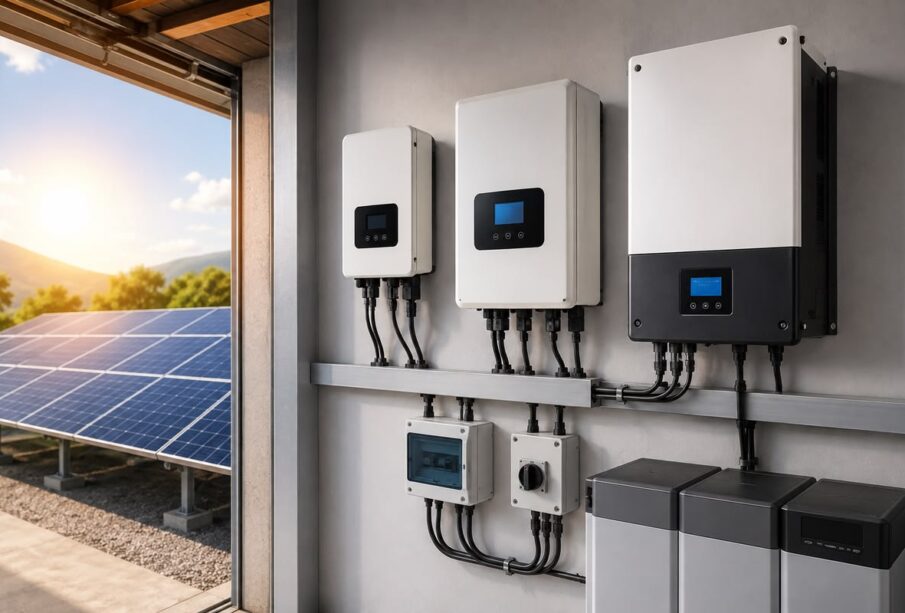
Best Inverter and Solar Systems in Nigeria
Best Inverter and Solar Systems for Nigerian Homes: 2026 Price Guide
The best inverter and solar system for a Nigerian home depends on the appliances you need to power, how long you want backup electricity to last and your budget. For a modest home that needs lights, fans, a television and laptops, a smaller system may be sufficient; households that want to run refrigerators, pumps or air conditioners need a more carefully sized system with sufficient battery capacity.
Prices also vary significantly. A 5 kVA inverter sold on its own is not the same as a complete solar installation with panels, batteries, cables, protection devices and labour.
Quick picks: inverter and solar systems for Nigerian homes
| Pick | System type | Best for | Price guide checked 30 October 2026 |
|---|---|---|---|
| Best overall for many family homes | 5 kVA hybrid inverter with appropriately sized lithium battery and solar panels | Homes with a mix of lights, fans, television, fridge and selected appliances | Complete systems can cost several million naira; obtain an itemised installation quote |
| Best budget backup | Small inverter with a suitable battery, with solar added if required | Lights, fans, router, phones and selected low-power devices | Cost depends on inverter size and battery type; compare the complete kit |
| Best for a small flat | 2.5–3.5 kVA system | Modest loads with careful appliance management | Request a quote based on your load list and required backup hours |
| Best for larger homes | 8–10 kVA or appropriately engineered system | Higher loads and more demanding backup requirements | Usually substantially more expensive; professional load assessment recommended |
| Best for longer backup | Hybrid inverter with larger lithium storage | Homes prioritising longer backup duration | Battery capacity is a major cost driver |
Important: These are system categories, not endorsements of one model for every home. Price estimates below are based on Nigerian market listings and published price checks, not a guarantee of stock or an installation quote.
How we chose these options
We compared the types of systems commonly used in Nigerian homes, the practical difference between inverter capacity and battery storage, and published prices from Nigerian solar retailers and market-price trackers. We prioritised systems that can be sized to real household needs rather than choosing an inverter simply because it has a large number on the box.
The buyers are also considered whether they can obtain a written warranty, replacement parts, installation support and clear specifications. A low price is not a good deal if the system cannot start the appliances you need or the seller cannot explain how it should be installed.
Before buying, check the exact model, rated output, battery voltage, solar charge controller, compatibility with your battery, warranty and the seller’s return policy.
2026 price guide: inverter-only prices versus complete systems
The following figures are market reference ranges, not fixed prices. Prices were checked on 30 October 2026 against recent published Nigerian listings and price guides; availability and prices can change quickly.
| Item | Indicative price range | What the price covers |
|---|---|---|
| 5 kVA hybrid inverter, unit only | About ₦420,000–₦850,000 | Inverter only; excludes battery, panels and installation |
| 5 kVA hybrid solar system with lithium storage | Several million naira; published estimates range broadly around ₦2 million–₦5.5 million | Depends on battery capacity, panel count, installation and components |
| 3.5 kVA inverter, unit only | About ₦260,000–₦600,000 in published guides | Unit price varies by model and features |
| 10 kVA inverter, unit only | Roughly ₦870,000–₦1.5 million or more in some listings | Unit only; premium models may cost more |
| 450 W solar panel | Around ₦75,000–₦85,000 in listings observed during October 2026 | Panel only; mounting and installation are separate |
| 5 kWh lithium battery | Around ₦995,000–₦2.15 million in a published market guide | Battery only; brand, chemistry, warranty and configuration matter |
Prices are indicative. A quote may differ according to city, stock, exchange rates, battery technology, installation complexity and product quality. Confirm the exact model and total cost with the seller before paying.
1. Best overall: a properly sized 5 kVA hybrid system
Verdict: A good starting point for many family homes, provided the installer sizes the battery and panels to your actual needs.
A 5 kVA inverter can support a range of household appliances, but it does not automatically mean you can run every appliance at once. Actual usable output depends on the inverter’s specifications and power factor. Motors and compressors can also draw extra power when starting.
Before buying, list the appliances you want to run and their wattage. Include the fridge, fans, television, lighting, laptops, pumps and any air conditioners. Ask the installer to calculate the combined load and starting surge.
A hybrid inverter can manage solar input and battery storage, and some models can also use grid or generator power. Check the solar input range, battery compatibility and whether the unit supports the charging arrangement you need.
2. Best budget option: a small inverter and battery
Verdict: Best for essential devices when your budget cannot yet support a complete solar installation.
A smaller inverter and battery may provide backup for lights, fans, a router, phones and a laptop. This can be more realistic than buying a poorly sized full system that cannot meet your needs.
However, be clear about what the setup excludes. A small unit may not support an electric iron, kettle, microwave or air conditioner. These appliances often draw considerably more power than basic electronics.
If you plan to add solar panels later, check whether the inverter supports solar charging and whether the battery voltage and configuration will remain compatible with your future system.
3. Best for a small flat: a 2.5–3.5 kVA system
Verdict: Worth considering for a small household with modest loads and realistic expectations about what can run simultaneously.
A 2.5–3.5 kVA setup may support lighting, fans, television, internet equipment and some other appliances. Whether it can run a refrigerator or pump depends on the specific appliance and the inverter’s output and surge capability.
Do not size the system solely by counting rooms. A one-bedroom flat with a large freezer and multiple appliances may need more capacity than a larger flat with low-power devices.
Ask for a load calculation and a battery-runtime estimate before paying a deposit.
4. Best for a larger home: a higher-capacity system
Verdict: Consider a larger system when your household has substantial simultaneous demand, but do not buy extra capacity without checking the load.
An 8–10 kVA system may suit a larger home or a small office with higher electricity demand. Nevertheless, increasing inverter capacity does not automatically increase backup time. Battery storage determines how much energy is available, while solar-panel capacity affects how quickly the system can recharge in suitable sunlight.
If you want to run air conditioners, pumps and other high-power appliances, ask an installer to check starting surges, wiring, protective devices and the full load profile.
5. Best for longer backup: a lithium battery system
Verdict: A suitable lithium battery can provide useful storage and cycle-life advantages, but the correct capacity matters more than the battery label alone.
Lithium iron phosphate (LiFePO4) batteries are used in many modern solar installations. They can offer useful cycle life and usable capacity, depending on the battery’s design and operating conditions.
Before buying, check the battery’s usable energy, rated charge and discharge current, battery-management system, compatibility with the inverter and warranty conditions. Confirm whether the warranty covers the intended usage and installation method.
A larger battery costs more, but it may be worthwhile if your household experiences long outages and needs power after sunset.
How to calculate the solar system your home needs
Step 1: List your appliances
Record the wattage of each appliance and estimate how many hours you use it during an outage. Use the appliance label or manufacturer’s specifications rather than guessing.
Step 2: Calculate the energy requirement
Multiply each appliance’s wattage by its estimated hours of use, then add the results. This gives a rough daily energy requirement in watt-hours.
For example, a 60 W fan used for five hours consumes approximately 300 Wh. Repeat the calculation for each device.
Step 3: Size the battery
Battery capacity should cover your energy requirement while accounting for the usable capacity of the battery, inverter losses and any reserve you want to keep.
Do not assume that a battery’s advertised capacity is fully available for every use. Ask the installer to explain the usable energy figure.
Step 4: Size the panels
Solar panels need to generate enough energy to support your daily use and recharge the battery under local sunlight conditions. The number of panels depends on their wattage, available roof space, shading, system losses and weather.
Step 5: Request an itemised installation quote
Ask for separate prices for the inverter, battery, panels, mounting, cables, protective devices, labour and any additional work. Confirm whether the quote includes testing and after-installation support.
Where to compare products
Use the marketplaces below to compare specifications and seller terms. These are shopping destinations, not confirmed affiliate tracking links. Add your own approved affiliate URLs and tracking IDs before publication.
- Amazon: search for solar inverters and home solar equipment.
- Jumia Nigeria: compare solar panels, batteries and inverter listings.
- Konga: compare inverter and solar equipment listings.
Affiliate disclosure: This article may contain affiliate links. If you purchase through qualifying links, we may earn a commission at no additional cost to you. We recommend checking the product specifications, seller reputation, warranty and total installation cost before buying.
Frequently asked questions
1. How much does a complete solar system cost in Nigeria in 2026?
The cost depends on inverter capacity, panel wattage, battery chemistry and capacity, installation and other components. Published estimates for a 5 kVA system with lithium storage range broadly from about ₦2 million to ₦5.5 million. Get a written quote for your home before budgeting.
2. Can a 5 kVA inverter power an air conditioner?
Possibly, but it depends on the air conditioner’s power consumption, starting surge, the inverter’s output and the other appliances running at the same time. Ask a qualified installer to calculate the load before connecting it.
3. Is lithium better than a tubular battery?
Lithium batteries can offer advantages in usable capacity, cycle life and maintenance, depending on the model. Tubular batteries may have a lower initial price. Compare total cost over time, usable capacity, warranty and compatibility rather than purchase price alone.
4. How many solar panels does a Nigerian home need?
There is no single correct number. It depends on panel wattage, daily energy use, roof conditions, sunlight, battery-charging needs and system losses. Have the installer size the array based on your actual energy requirement.
5. Should I buy an inverter online?
You can compare online listings, but verify the seller, exact model, warranty, delivery conditions and return policy. For a complete system, use a qualified installer and insist on an itemised quote and documented installation details.




Leave a reply





Africa’s Source for Breaking News | Entertainments | Health | Finance | Sports | Lifestyle and Business News.


