
Foods That Tell Africa’s Cultural Story
Foods That Tell Africa's Cultural Story
Food is one of the most powerful ways to understand Africa.
Long before written records became common, communities used food, farming, cooking and shared meals to preserve memories and express identity. A traditional dish can reveal where people came from, what crops grew in their environment, how communities traded, and which cultural influences shaped their history.
Across the continent, food remains closely connected to celebrations, family gatherings, religion, hospitality and everyday life. From West African rice dishes to East African fermented foods and North African spice blends, every region has flavours that tell a unique story.
Jollof Rice and the Story of West African Identity
Jollof rice is more than a popular meal. It represents the cultural connections and friendly rivalries that exist across West Africa.
Nigeria, Ghana, Senegal, Gambia and other countries have their own versions, with differences in ingredients, preparation methods and preferred accompaniments. The dish’s wider history is connected to the Senegambian region and the ancient Jolof Empire.
Today, jollof has travelled far beyond West Africa. It appears at parties, restaurants, family gatherings and international food events. Its popularity demonstrates how a traditional meal can evolve while remaining connected to its cultural roots.
Injera and Ethiopia’s Culinary Heritage
Injera is one of the most recognisable foods associated with Ethiopia and Eritrea. The soft, slightly sour flatbread is traditionally made from fermented teff flour and commonly served with a variety of stews and vegetables.
Its cultural importance goes beyond its ingredients. Injera is often placed at the centre of a shared meal, encouraging people to eat together and interact.
The fermentation process also demonstrates generations of knowledge about transforming locally available grains into nutritious and distinctive foods.
Couscous and North African Heritage
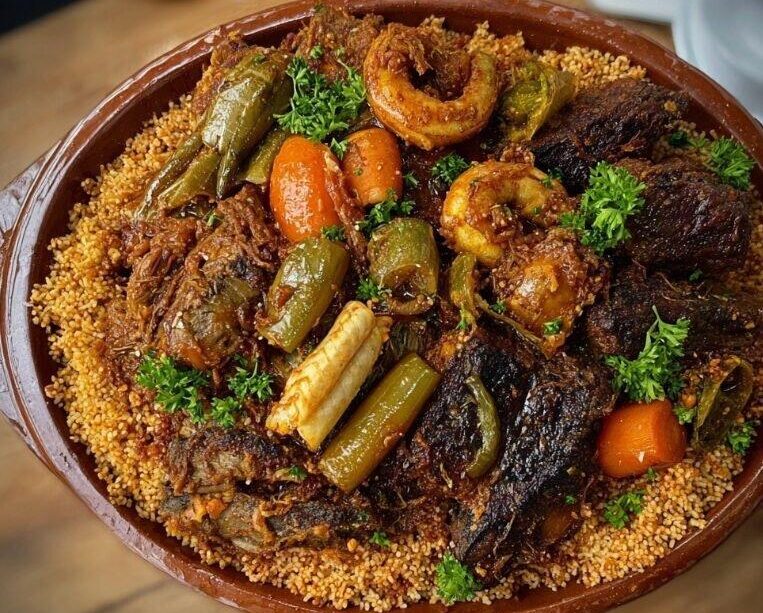
Couscous is deeply rooted in North African culinary traditions, particularly among Amazigh communities. It has become an important part of the food culture of countries including Morocco, Algeria, Tunisia and Libya.
Traditionally prepared from semolina, couscous can be combined with vegetables, meat, seafood or legumes depending on the region and occasion.
The dish demonstrates how grains, local produce and culinary techniques can become part of a shared cultural identity.
Ugali and East Africa’s Agricultural Story
Across parts of East Africa, ugali is an important staple prepared from maize or other grains.
Its simplicity reflects the importance of grains in regional agriculture. It is commonly eaten with vegetables, meat, fish, beans or stews, creating meals that can be adapted according to what is locally available.
Ugali also demonstrates how staple foods can become deeply embedded in everyday life. For many families, it is not simply something to eat but part of the rhythm of daily meals and social life.
Fufu and the Tradition of Communal Eating
Fufu and similar pounded staples are found in several parts of West and Central Africa. Depending on the community, they may be made from cassava, yam, plantain or other starchy ingredients.
Preparing these foods traditionally can involve pounding and carefully working the ingredients until they reach the desired consistency.
Fufu is often served with soups and stews and eaten communally. The practice reflects the importance of sharing food as a way of strengthening family and community relationships.
Tagine and Morocco’s Spice Heritage
Moroccan tagine tells a story through its ingredients and cooking method. Prepared in a distinctive earthenware vessel, the dish is traditionally cooked slowly, allowing meat, vegetables, fruit and spices to develop rich flavours.
Moroccan cuisine reflects Indigenous Amazigh traditions alongside Arab, Mediterranean and other influences. Spices such as cumin, cinnamon, saffron and ginger contribute to a culinary identity recognised around the world.
The tagine demonstrates how geography, trade and cultural exchange can influence the food found on a family’s table.
Bobotie and South Africa’s Complex History
Bobotie is a South African dish often associated with Cape Malay cuisine. Its combination of spiced minced meat, egg-based topping and aromatic ingredients reflects the complex history of cultural interaction in the Cape.
The dish illustrates how migration, trade and historical circumstances can create new culinary traditions. It also reminds us that food history can contain multiple layers of influence.
Amala and the Heritage of Indigenous Crops
Amala, particularly associated with southwestern Nigeria, is traditionally made from processed yam or cassava flour and commonly served with richly flavoured soups.
The dish reflects the importance of indigenous crops and local processing techniques. Its popularity demonstrates how agricultural products can become central to regional identity.
Meals such as amala also show the relationship between farming and cuisine. The food on the plate is often the final stage of a much longer chain involving farmers, processors, traders and cooks.
Injera, Fermentation and Traditional Knowledge
Fermentation appears across many African food cultures. It is used to transform grains, milk and other ingredients into products with distinctive flavours and textures.
These techniques are valuable because they represent practical knowledge developed over generations. Communities learned how to preserve food, improve flavour and make use of available ingredients without relying on modern industrial processes.
Preserving this knowledge could also contribute to conversations about food sustainability and reducing waste.
Food and African Celebrations
Food becomes especially meaningful during important occasions.
Weddings, naming ceremonies, religious celebrations, festivals, funerals and family reunions often involve dishes that are prepared specifically for the occasion. Certain recipes may only appear during major celebrations, making them part of a community’s collective memory.
The preparation itself can also bring people together. Older relatives may teach younger family members how to prepare traditional dishes, passing knowledge from one generation to another.
Food as a Record of Migration and Trade
Africa’s culinary history cannot be separated from movement.
People have migrated across regions for centuries, carrying ingredients, cooking techniques and recipes with them. Trade routes also connected communities and introduced new spices, grains and other foods.
As a result, many African dishes contain influences from multiple cultures. Rather than weakening their identity, these connections show how African societies have always interacted and adapted.
Protecting Africa’s Food Heritage
Traditional foods face challenges from changing lifestyles, urbanisation, rising food costs and the growing popularity of highly processed meals. Some indigenous ingredients are also becoming less common in modern diets.
Preserving culinary heritage requires practical action. Families can document recipes and teach traditional cooking techniques. Schools and cultural organisations can introduce children to regional foods. Restaurants can feature indigenous dishes, while food entrepreneurs can develop modern products using traditional ingredients.
Digital platforms offer another opportunity. Recipes, interviews with older cooks, cooking demonstrations and stories about indigenous ingredients can reach audiences far beyond their original communities.
The Future of Africa’s Culinary Story
African cuisine is not frozen in history. It continues to evolve as people move, experiment and create new combinations of ingredients.
The challenge is to ensure that innovation does not erase the knowledge that came before it. Traditional foods carry stories about agriculture, migration, family, celebration, resilience and cultural exchange. They connect modern Africans with generations that came before them while providing opportunities for new businesses, tourism and creative expression.
Every region has dishes that deserve to be remembered. Every family has recipes worth passing down. And every traditional meal has the potential to tell a piece of Africa’s story.



Leave a reply







Africa’s Source for Breaking News | Entertainments | Health | Finance | Sports | Lifestyle and Business News.


