
Forgotten Historical Events That Changed the World

History often shines a spotlight on major events like world wars, revolutions, and famous leaders.
Yet, beneath these widely recognized milestones lie lesser-known moments that quietly reshaped societies, influenced global systems, and altered the course of human development. These “forgotten” historical events may not dominate textbooks, but their impact is profound and far-reaching.
1. The Eruption of Mount Tambora (1815)
When Mount Tambora erupted in Indonesia in 1815, it became the most powerful volcanic eruption in recorded history. However, its global consequences are often overlooked. The eruption released massive amounts of ash into the atmosphere, leading to the “Year Without a Summer” in 1816. Crops failed across Europe and North America, causing famine, migration, and economic instability. This climatic disaster also inspired cultural works and innovations, including early ideas for modern bicycles due to horse shortages.
2. The Taiping Rebellion (1850–1864)
The Taiping Rebellion in China remains one of the deadliest conflicts in human history, yet it is rarely discussed outside academic circles. Led by a man who claimed to be the brother of Jesus Christ, this civil war resulted in the deaths of an estimated 20–30 million people. Beyond its staggering human cost, the rebellion weakened the Qing Dynasty and accelerated China’s vulnerability to foreign influence, shaping the geopolitical landscape of East Asia for decades.
3. The Haitian Revolution (1791–1804)
While revolutions in America and France are widely celebrated, the Haitian Revolution is often underrepresented. It was the first successful slave revolt that led to the establishment of an independent nation governed by formerly enslaved people. This event challenged the global system of slavery, inspired resistance movements, and forced colonial powers to reconsider their economic and political structures.
4. The Congress of Vienna (1814–1815)
After the defeat of Napoleon, European powers convened to restore stability. Though less dramatic than battlefield events, the Congress of Vienna quietly redrew borders and established a balance of power that maintained relative peace in Europe for nearly a century. Its diplomatic framework influenced modern international relations and conflict resolution strategies.
5. The Great Emu War (1932)
At first glance, this event in Australia might seem trivial or even humorous, a military operation against a large population of emus. However, it highlights important lessons about environmental management, human intervention, and unintended consequences. The failure of the campaign demonstrated the limits of military solutions to ecological problems, a lesson still relevant today.
6. The Meiji Restoration (1868)
Although more recognized in Japan, the Meiji Restoration is often underappreciated globally. This political revolution transformed Japan from a feudal society into a modern industrial power within a few decades. It reshaped global trade, influenced imperial dynamics in Asia, and set the stage for Japan’s emergence as a major world power.
7. The 1918 Influenza Pandemic
Overshadowed by World War I, the 1918 flu pandemic infected one-third of the world’s population and killed tens of millions. Despite its scale, it is less discussed than the war itself. The pandemic changed public health systems, accelerated medical research, and highlighted the importance of global health coordination, lessons that remain relevant in modern times.
8. The Berlin Conference (1884–1885)
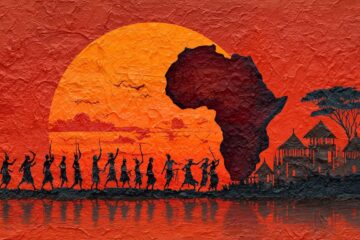
This meeting of European powers regulated the colonization of Africa without African representation. While colonialism itself is widely studied, the conference’s role in arbitrarily dividing the continent is sometimes overlooked. The borders drawn during this event continue to influence political tensions, conflicts, and governance challenges in many African nations today.
Why These Events Matter
These forgotten events remind us that history is not only shaped by widely celebrated moments but also by quieter, complex developments. They demonstrate how environmental changes, lesser-known conflicts, and diplomatic decisions can ripple across generations.
Understanding these events broadens our perspective, helping us see connections between past and present. It also encourages critical thinking about which stories are told, and which are left behind.
Final Thoughts
History is far richer than the headlines we remember. By revisiting overlooked events, we gain a deeper appreciation for the forces that have shaped our world. These forgotten chapters are not just footnotes; they are powerful reminders that even the most understated moments can change the course of humanity.


Leave a reply





Africa’s Source for Breaking News | Entertainments | Health | Finance | Sports | Lifestyle and Business News.


