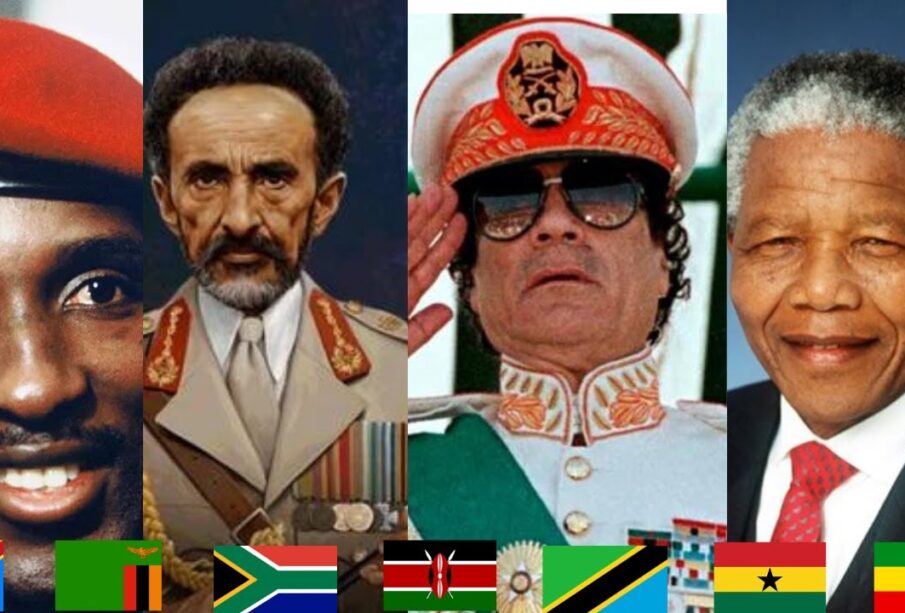
Here are some historical Leaders Who Changed Africa Forever
1. Kwame Nkrumah (Ghana)
Few names carry as much weight in African independence movements as Kwame Nkrumah. As the first Prime Minister and later President of Ghana, he led the country to independence from British colonial rule in 1957, the first sub-Saharan African nation to do so.
Nkrumah’s vision extended beyond Ghana. He was a strong advocate for Pan-Africanism, pushing for unity across the continent. His efforts helped inspire liberation movements in countries like Nigeria, Kenya, and beyond. Although his rule faced criticism for authoritarian tendencies, his role in dismantling colonialism remains undeniable.
2. Nelson Mandela (South Africa)
Nelson Mandela stands as a global symbol of resilience and reconciliation. After spending 27 years in prison for opposing apartheid, he emerged not with vengeance, but with a commitment to unity.
As South Africa’s first Black president, Mandela led the country through a peaceful transition from apartheid to democracy. His leadership prevented potential civil conflict and laid the foundation for a more inclusive society. His legacy continues to influence conversations around justice and equality worldwide.
3. Haile Selassie (Ethiopia)
Haile Selassie was one of Africa’s most prominent monarchs and a symbol of resistance against colonial aggression. During the Italian invasion of Ethiopia in the 1930s, he appealed to the international community, highlighting the dangers of fascism.
Though his reign was later criticized for slow modernization and internal inequality, Selassie’s global influence was significant. He also played a key role in the formation of the Organization of African Unity (OAU), now the African Union, promoting cooperation among African nations.
4. Julius Nyerere (Tanzania)
Julius Nyerere, often called “Mwalimu” (teacher), was central to Tanzania’s independence and early development. He promoted a unique form of African socialism known as Ujamaa, which emphasized community, self-reliance, and equality.
While his economic policies faced challenges, particularly in productivity, his focus on education and national unity helped stabilize Tanzania. His leadership style remains admired for its integrity and humility.
5. Patrice Lumumba (Democratic Republic of Congo)
Patrice Lumumba became the first Prime Minister of the Democratic Republic of Congo after independence from Belgium in 1960. He was a passionate nationalist who sought true sovereignty for his country.
However, his tenure was short-lived due to political instability and foreign interference during the Cold War. His assassination turned him into a symbol of African resistance against neo-colonial influence, and his legacy still sparks debate about foreign involvement in African politics.
6. Thomas Sankara (Burkina Faso)
Thomas Sankara is often referred to as “Africa’s Che Guevara.” As president of Burkina Faso, he introduced bold reforms aimed at reducing corruption, empowering women, and promoting self-sufficiency.
He rejected foreign aid dependency and encouraged local production. Despite his short time in power, his ideas continue to inspire young Africans who seek transparent and people-focused governance.
7. Ahmed Ben Bella (Algeria)
Ahmed Ben Bella played a major role in Algeria’s fight against French colonial rule. As the country’s first president, he worked to establish a socialist state and rebuild after years of war.
His leadership marked the beginning of Algeria’s post-colonial identity, though political instability later led to his removal from power. Still, his contribution to independence remains significant.
Lasting Impact on Africa
These leaders shaped Africa in several key ways:
- Political Independence: Many led the fight against colonial rule, giving nations control over their own destinies.
- Pan-African Unity: Figures like Nkrumah and Selassie promoted cooperation among African states.
- Social Reform: Leaders such as Sankara and Nyerere focused on equality, education, and community development.
- Global Influence: Mandela and others changed how the world views justice, leadership, and reconciliation.
Conclusion
Africa’s story cannot be told without these influential leaders. While their legacies are complex, marked by both achievements and challenges, their contributions reshaped the continent permanently. Their visions continue to inspire new generations of Africans striving for progress, unity, and self-determination.