
Messi’s Farewell to La Albiceleste
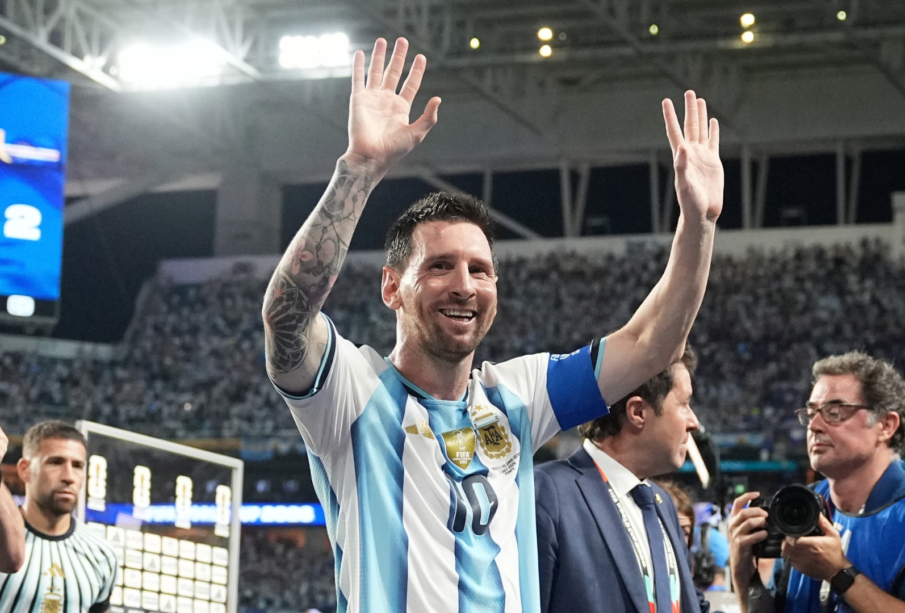
Messi's Farewell to La Albiceleste
The Last Dance in Sky Blue and White: Messi’s Farewell to La Albiceleste
There was a time when Lionel Messi wearing Argentina’s sky-blue and white shirt felt like a promise of something that might never arrive.
For years, the greatest player of his generation carried the hopes of an entire football nation while chasing the one thing that seemed determined to escape him: a major international trophy with Argentina. There were painful defeats, missed opportunities and questions about whether Messi could ever reproduce his club brilliance on the international stage.
Then everything changed.
Messi eventually lifted the Copa América, won the World Cup and transformed his relationship with Argentina supporters forever. But football careers, even extraordinary ones, have an ending. As Messi approaches the final chapter of his international journey, the prospect of his farewell to La Albiceleste is no longer an abstract idea.
It is becoming reality.
From Argentina’s Hope to Argentina’s Legend
Messi’s international career began with enormous expectations.
After establishing himself as a superstar at Barcelona, he was quickly expected to become the next great Argentine footballer. Comparisons with Diego Maradona followed him everywhere.
The pressure was immense.
Argentina had a deep football culture, and supporters wanted Messi to deliver the same kind of international glory that Maradona had brought in 1986. Yet Messi’s early years with the national team were filled with frustration.
Argentina reached the 2014 World Cup final, only to lose to Germany. The team also lost consecutive Copa América finals in 2015 and 2016.
For Messi, those defeats were especially painful.
After the 2016 Copa América final, he even announced his retirement from international football. Fortunately for Argentina, that retirement did not last.
He returned.
And that decision changed football history.
The Trophy That Broke the Curse
The turning point came at the 2021 Copa América.
Argentina defeated Brazil at the Maracanã, giving Messi his first major senior international trophy with the national team.
The images from that night remain unforgettable.
Messi celebrated with his teammates, finally free from the burden that had followed him for years. The player who had been criticized for supposedly failing Argentina had finally delivered.
But he was not finished.
The Copa América victory gave Argentina belief. It also gave Messi something he had desperately needed: confidence that this generation could win together.
A year later, Argentina won the Finalissima against Italy.
Then came Qatar.
The World Cup That Completed the Story
The 2022 FIFA World Cup became the defining chapter of Messi’s international career.
Argentina’s opening defeat to Saudi Arabia immediately placed the team under pressure. Another failure seemed possible.
Instead, Argentina recovered.
Messi scored, created chances and led the team through one dramatic match after another. By the time Argentina reached the final against France, Messi had transformed the tournament into his personal masterpiece.
The final itself became one of the greatest matches in World Cup history.
Messi scored twice. Argentina and France produced a spectacular 3–3 draw after extra time. Argentina eventually won the penalty shootout.
Messi lifted the World Cup.
The image was bigger than football.
For decades, the debate over Messi and Maradona had dominated Argentine football. Messi had now written his own answer.
He did not need to become Maradona.
He had become Messi.
La Albiceleste Became More Than a Jersey
The phrase La Albiceleste refers to Argentina’s famous sky-blue and white national team colours. For Messi, however, the shirt came to represent something far deeper.
It represented responsibility.
It represented criticism.
It represented pride.
And eventually, it represented redemption.
Messi’s relationship with Argentina supporters was not always easy. Early in his career, some fans questioned his commitment because he had spent much of his football life in Spain.
There were also complaints that Messi did not show the same personality for Argentina that he displayed at Barcelona.
Those criticisms gradually disappeared.
His leadership evolved.
Messi became more vocal. He embraced responsibility. He celebrated passionately. He defended teammates. Most importantly, he started winning.
The player who once looked burdened by the national shirt eventually looked completely at home in it.
The Final Chapter
Now, the question is not whether Messi has achieved enough.
He clearly has.
The question is how his international career should end.
At his age, every appearance for Argentina carries greater significance. Supporters understand that there may not be many more opportunities to see him walk onto the pitch wearing the famous colours.
That reality makes every match feel different.
A simple pass can receive applause. A free kick can create nervous anticipation. A goal can feel like a memory being created in real time.
For Argentine supporters, watching Messi now is partly about enjoying what remains.
The final dance does not necessarily need another trophy.
It needs appreciation.
What Messi Leaves Behind
Messi’s influence on Argentina extends beyond statistics and medals.
He changed the country’s relationship with its national team.
Before his international breakthrough, Argentina had endured years of disappointment despite producing some of the world’s finest footballers. Messi’s eventual success helped restore belief in the national team.
He also inspired a generation of young Argentine footballers.
Children who watched Messi lift the World Cup now have an image that could shape their ambitions for years. They saw a player who endured criticism, lost important finals and still returned to try again.
That is an important part of Messi’s legacy.
His story was never simply about winning.
It was about persistence.
The End of an Era
Every football generation eventually says goodbye to its icons.
For Argentina, Messi’s farewell represents the end of one of the most remarkable eras in the country’s football history.
There will be another captain. Another number 10. Another young player who carries the country’s hopes.
But replacing Messi will be almost impossible.
The number 10 shirt will remain. The sky-blue and white colours will remain. The songs will remain.
But the player who made millions of people around the world stop whatever they were doing to watch Argentina play will eventually disappear from the international stage.
That is the difficult truth about football.
Legends do not stay forever.
A Farewell Worth Celebrating
There is something fitting about Messi’s international career ending after he achieved what once seemed impossible.
He won the Copa América.
He won the World Cup.
He became Argentina’s undisputed football leader.
He silenced many of his critics.
Most importantly, he gave Argentine supporters memories that will last for generations.
So when Messi eventually walks onto the pitch for the final time in sky blue and white, the moment should not be dominated by sadness.
It should be celebrated.
There should be applause for the teenager who arrived with enormous expectations. Applause for the player who endured heartbreaking defeats. Applause for the captain who refused to give up. And applause for the champion who finally brought the World Cup back to Argentina.
Messi’s farewell to La Albiceleste will not simply mark the end of a football career.
It will close one of the most extraordinary stories international football has ever witnessed.
For years, Argentina asked Messi to give them everything.
In the end, he gave them almost everything a footballer possibly could.
Now, as the final dance approaches, the sky-blue and white shirt carries a different meaning.
It is no longer a burden.
It is a symbol of everything Messi achieved.
And when the music finally stops, Argentina will not simply remember the player who wore number 10.
It will remember the man who finally made the dream come true.




Leave a reply






Africa’s Source for Breaking News | Entertainments | Health | Finance | Sports | Lifestyle and Business News.


