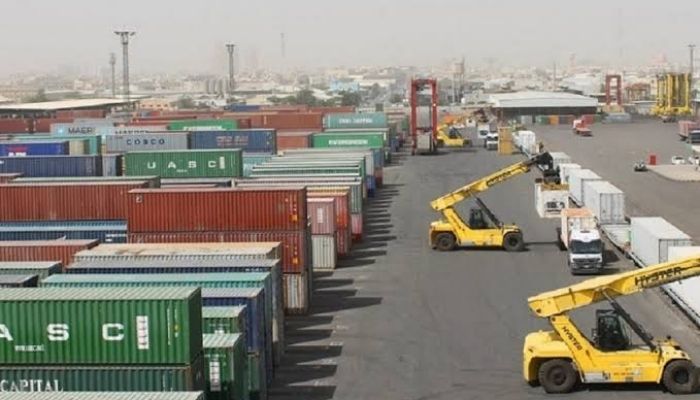
Tinubu Greenlights Olokola Deep Seaport: What the Blue Marine Economic Zone Means for Ogun State.
President Bola Ahmed Tinubu’s administration has given fresh momentum to Ogun State’s long-running ambition to develop a deep seaport along the state’s coastline.
On September 24, 2026, the Ogun State Government and global ports and logistics company DP World signed Memoranda of Understanding (MoUs) covering the development of the Gateway Deep Sea Port and the Ogun State Blue Marine Special Economic Zone. President Tinubu witnessed the signing in Paris. The agreements are expected to attract more than $7 billion in initial investment and generate more than 50,000 direct jobs, according to the State House.
The development is significant because the proposed port is not being planned as an isolated maritime facility. It is being linked to a much larger industrial and logistics ecosystem that could connect Ogun State’s manufacturing base with Nigerian and international markets.
But what exactly does this mean for Ogun State?
From Olokola Ambition to Gateway Deep Sea Port
The idea of a deep seaport at Olokola has been discussed for years. In January 2026, Ogun State Governor Dapo Abiodun announced that President Tinubu had approved the immediate take-off of the Olokola Deep Seaport project in Ogun Waterside.
The latest agreement provides a more detailed framework for the development.
The project is now being presented as the Gateway Deep Sea Port, alongside a proposed 10,000-hectare Blue Marine Special Economic Zone. The port is expected to have a four-kilometre berth and an 18-metre draft, allowing it to accommodate larger vessels used in international trade.
That capacity matters because port infrastructure is closely connected to the cost and speed of moving goods.
For businesses, a port is not simply where ships arrive. It can influence transportation costs, delivery times, access to export markets and the location of factories and warehouses.
What Is the Blue Marine Special Economic Zone?
The Blue Marine Special Economic Zone is perhaps the most important part of the announcement.
A traditional port primarily handles cargo. An integrated port and economic zone can go further by creating an environment where goods are imported, processed, manufactured, stored and exported within the same broader industrial corridor.
President Tinubu described this distinction at the signing ceremony, saying that while a port moves cargo, a port integrated with a special economic zone can help build an economy.
The proposed zone covers about 10,000 hectares.
According to the Federal Government, the zone is intended to support manufacturing, processing and export-oriented businesses. Imported inputs could be converted into finished products, while Nigerian raw materials could be processed for export.
For Ogun, this could create an important connection between its existing industrial base and international maritime trade.
Why Ogun State Is Strategically Positioned
Ogun already has a strong manufacturing and industrial presence. The state borders Lagos and the Republic of Benin and has developed industrial clusters, free trade zones and an agro-industrial base. The Ogun State investment agency also identifies logistics, manufacturing, agriculture, mining, energy and services among the state’s major economic opportunities.
The proposed seaport could add another major component: direct maritime access.
Currently, businesses operating in the wider Lagos-Ogun industrial corridor depend heavily on existing port infrastructure around Lagos.
A new deep-sea port in Ogun could provide another route for imports and exports while potentially reducing pressure on the Lagos port corridor.
The Federal Government says the Gateway Deep Sea Port is intended to decongest the Lagos port corridor and reduce costs and delays for importers and exporters.
Manufacturing Could Be a Major Beneficiary
One of the biggest potential effects on Ogun State could be the expansion of manufacturing. Ogun has already attracted companies involved in sectors such as food processing, consumer goods, construction materials, chemicals and other forms of industrial production.
A port located closer to major industrial clusters could make it easier for companies to bring in machinery, equipment and raw materials.
It could also provide a more direct route for finished Nigerian products heading toward international markets.
If the infrastructure develops as planned, the economic impact could therefore extend well beyond Ogun Waterside.
The Lagos-Ogun Economic Relationship Could Change
Ogun’s proximity to Lagos is one of its biggest economic advantages.
The state has increasingly become part of the wider Lagos industrial and residential expansion. However, this relationship has also created pressure on roads, transportation networks and existing logistics infrastructure.
The new port and economic zone could encourage more economic activity to take place within Ogun rather than relying entirely on Lagos for maritime access.
The Federal Government has also highlighted the importance of the 28-kilometre Ogun section of the Lagos-Calabar Coastal Highway to the proposed corridor. According to the State House, the road is expected to connect the port and zone with Lagos, the Nigerian hinterland and wider African markets.
That means roads will be just as important as the port itself.
A deep seaport without reliable road, rail, power and warehousing connections would struggle to deliver its full economic potential.
Jobs Could Extend Beyond the Port
The reported projection of more than 50,000 direct jobs has attracted significant attention.
However, the wider employment impact could involve much more than dockworkers and maritime professionals.
Potential opportunities could emerge in:
Trucking and transportation
Warehousing
Freight forwarding
Customs and trade services
Manufacturing
Food processing
Packaging
Engineering
Construction
Security
Hospitality
Information technology
Equipment maintenance
Marine services
Professional services
Small and medium-sized businesses could also benefit if they become suppliers to companies operating around the port and economic zone.
For young people in Ogun, this could increase demand for technical and professional skills connected to logistics, manufacturing and maritime services.
Ogun’s Export Potential Could Increase
One of the central arguments for the project is its potential to support Nigeria’s non-oil exports. Ogun already has agricultural resources and industrial capacity. The state’s investment agency identifies crops such as cassava, cocoa, maize, rice and oil palm among its agricultural opportunities.
A modern maritime gateway could make it easier for processed agricultural products and manufactured goods to reach foreign markets.
This is particularly relevant as African businesses increasingly seek opportunities under the African Continental Free Trade Area (AfCFTA).
The State House says the Gateway Deep Sea Port is intended to provide a trade and logistics gateway capable of serving a continental market of approximately 1.4 billion people.
The real opportunity, however, will depend on whether Nigerian businesses can produce goods competitively enough to take advantage of that market.
The Port Could Support a Wider Coastal Economic Corridor
The proposed development is larger than a port and industrial zone.
The Federal Government says the emerging corridor could connect with other strategic projects, including the proposed Nigerian Navy Operating Base and Dockyard and the OK LNG Project.
This creates the possibility of a broader coastal economic cluster involving:
Maritime services + logistics + energy + manufacturing + exports
Such clustering can make infrastructure investments more useful because different industries can share transport networks, suppliers, skilled workers and support services.
What It Could Mean for Local Communities
For communities around Ogun Waterside, the potential benefits are significant, but development will also need careful management. Large infrastructure projects can change land use, increase demand for housing and services, and place pressure on local roads and environmental resources.
The Ogun State Government has said host-community participation and environmental sustainability will be important considerations as the project moves forward.
This makes community engagement important.
Residents should be able to participate in the economic opportunities created around the project, rather than simply experiencing the effects of large-scale development.
Local businesses can potentially benefit through contracts, supply services, food businesses, transportation, accommodation and other forms of support.
Infrastructure Will Determine the Outcome
Signing an MoU is an important step, but it is not the same as completing a port.
The success of the project will ultimately depend on implementation. That includes financing, construction, roads, rail connections, electricity, security, customs systems, environmental management and efficient port operations.
President Tinubu said the Federal Government would support road, rail and power connectivity while providing regulatory clarity and investment security.
For investors, consistency will be particularly important.
A major port requires businesses to make long-term decisions. Investors therefore need confidence that infrastructure plans, regulations and operating arrangements will remain sufficiently predictable over time.
A New Chapter for Ogun’s Maritime Economy
The Gateway Deep Sea Port and Blue Marine Special Economic Zone represent a potentially important shift in how Ogun State approaches economic development.
Rather than viewing the coastline simply as a geographic boundary, the state is attempting to turn it into an economic gateway.
The combination of a deep-sea port, industrial zone, coastal highway, existing manufacturing clusters, airport infrastructure and trade links could give Ogun a broader logistics and production ecosystem.
The proposed $7 billion-plus initial investment and projected employment figures demonstrate the scale of the ambition.
But the long-term significance will be measured by what happens after the signing ceremonies.
If construction progresses, supporting infrastructure arrives on schedule, businesses establish operations and local communities participate meaningfully, the project could change the economic geography of Ogun State.
For now, the agreement represents a major development in the state’s long-standing seaport ambitions. The next test is implementation: turning plans, investment commitments and infrastructure designs into a functioning maritime and industrial corridor.
Conclusion
Tinubu’s backing for the Gateway Deep Sea Port and the Ogun State Blue Marine Special Economic Zone has placed Ogun’s coastal development plans back at the centre of Nigeria’s maritime and industrial conversation.
The potential benefits go beyond shipping. The project could affect manufacturing, exports, logistics, employment, investment and regional trade.
For Ogun State, the bigger story is therefore not simply about building a port. It is about whether the state can use maritime infrastructure to build a stronger connection between production, people and global markets.
If successfully implemented, the coastline could become one of the foundations of Ogun’s next phase of economic development.