
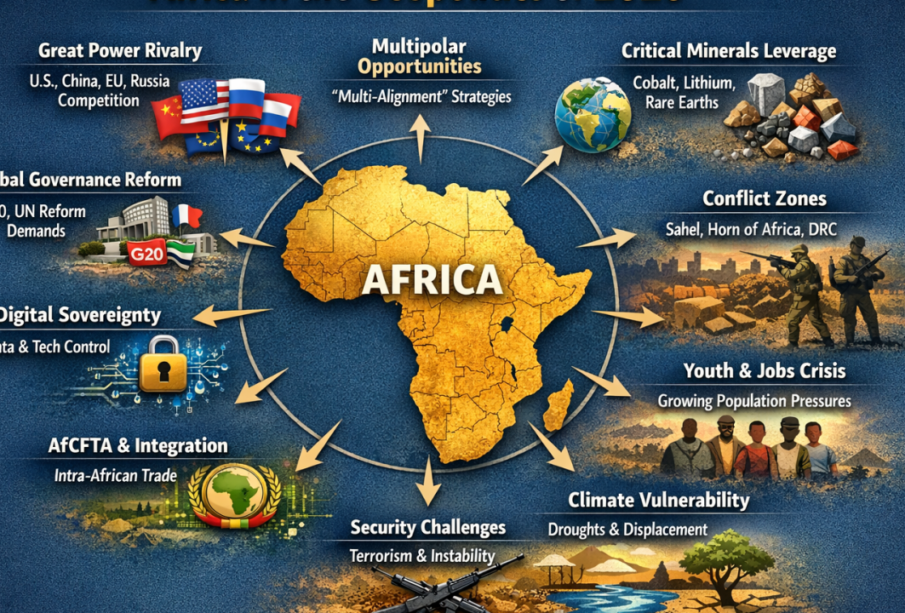
Political Trends That Could Shape Africa's Future
Africa is entering a period of significant political and social change.
Rapid population growth, urbanisation, technological development, economic pressures, and changing public expectations are influencing how governments operate and how citizens participate in politics.
The political choices made today could have a major impact on Africa’s development over the coming decades. While every country has its own political realities, several broad trends are emerging across the continent.
A Younger and More Politically Active Population
Africa has one of the youngest populations in the world. As millions of young people enter adulthood and the workforce, their expectations are increasingly influencing political discussions.
Young Africans are demanding better employment opportunities, improved public services, greater accountability, and stronger representation in government.
Social media has also made it easier for younger citizens to organise, express opinions, follow political developments, and engage with public officials.
Political parties and governments that fail to understand these changing expectations may find it increasingly difficult to connect with younger voters.
Growing Demand for Government Accountability
Citizens across Africa are increasingly demanding transparency from public institutions.
Issues such as corruption, misuse of public resources, poor service delivery, and weak institutions remain important concerns. As access to information expands, citizens can more easily question government decisions and demand explanations for how public funds are used.
Civil society organisations, journalists, activists, and digital platforms are contributing to this growing culture of accountability.
The pressure for transparent governance is likely to remain an important political trend in the years ahead.
The Rise of Digital Politics
Technology is changing political communication across Africa.
Political campaigns increasingly use social media, online advertising, messaging platforms, and digital communities to reach voters. Politicians can communicate directly with citizens without relying entirely on traditional media.
Digital platforms also give citizens new ways to participate in political discussions.
However, digital politics comes with challenges. Misinformation, online manipulation, deepfakes, hate speech, and coordinated disinformation can influence public opinion.
As technology becomes more powerful, African governments and citizens will need stronger digital literacy and responsible information practices.
Changing Attitudes Toward Political Leadership
Across parts of the continent, citizens are becoming more willing to question established political structures and long-standing leadership patterns.
Voters may increasingly prioritise competence, economic performance, integrity, and practical solutions over traditional political loyalties.
This could create opportunities for new political movements and independent candidates.
At the same time, established political parties are likely to adapt their strategies to remain relevant to changing electorates.
Regional Integration and Continental Cooperation
Economic and political cooperation among African countries could become increasingly important.
The African Union and regional organisations continue to promote cooperation on trade, security, infrastructure, migration, and development.
The African Continental Free Trade Area is particularly significant because deeper economic integration could influence political relationships between countries.
Greater regional cooperation could also help African governments respond collectively to challenges that cross national borders.
The Politics of Economic Opportunity
Economic conditions will remain closely connected to African politics.
High youth unemployment, rising living costs, inequality, and limited access to economic opportunities can create frustration among citizens.
Governments that successfully create jobs, support entrepreneurship, improve infrastructure, and expand access to education may strengthen public confidence.
As a result, economic performance is likely to become an increasingly important factor in political legitimacy.
Climate Change and Environmental Politics
Climate change is becoming a major political issue for African countries. Droughts, floods, desertification, food insecurity, and changing weather patterns can affect agriculture, livelihoods, migration, and national budgets.
Governments will increasingly need policies that address climate adaptation, renewable energy, water management, sustainable agriculture, and environmental protection.
Climate-related pressures could also influence regional relations, particularly where communities depend on shared water resources or cross-border ecosystems.
The Growing Importance of Urban Politics
Africa’s cities are expanding rapidly. As more people move to urban centres, issues such as housing, transportation, infrastructure, sanitation, security, and employment will become increasingly important political concerns.
Urban residents may demand more responsive local governments and better municipal services.
This could increase the importance of city-level politics and encourage governments to rethink how urban areas are planned and managed.
Women’s Political Participation
Greater participation by women in political leadership could become another important trend.
Women across Africa are already active in politics, civil society, business, community organisations, and public administration. Continued efforts to remove barriers to political participation could lead to stronger representation in elected and appointed positions.
Greater diversity in political institutions can introduce different perspectives into policy discussions and decision-making.
The Politics of Security
Security will remain a major political issue in several parts of Africa.
Governments face challenges ranging from terrorism and organised crime to communal conflicts and political instability. How governments respond to these challenges can significantly affect public trust.
There is likely to be increasing attention on balancing security measures with human rights, effective institutions, and community-based approaches to preventing conflict.
The Role of the African Diaspora
The African diaspora is becoming increasingly important to the continent’s political and economic future.
Millions of Africans living abroad contribute through remittances, investments, professional expertise, advocacy, and business relationships.
Governments may increasingly seek stronger connections with diaspora communities as they look for investment, skills, and international partnerships.
The diaspora can also influence political conversations through social media and international networks.
Artificial Intelligence and Political Decision-Making
Artificial intelligence could eventually influence African politics in several ways. Governments may use AI to analyse public data, improve service delivery, identify infrastructure needs, and support policy planning. Political campaigns may also use technology to understand voter behaviour and communicate with specific audiences.
However, AI creates important questions about privacy, misinformation, surveillance, algorithmic bias, and election integrity.
African policymakers will need to develop appropriate rules while ensuring that technological innovation remains beneficial to citizens.
What These Trends Mean for Africa
These political trends will not affect every African country in the same way. Each nation has its own history, institutions, economy, and political culture.
However, the broader direction is clear: African politics is becoming increasingly influenced by young populations, technology, economic expectations, urbanisation, climate change, and demands for accountable leadership.
Governments that adapt to these changes may be better positioned to build stable and inclusive societies.
Conclusion
Africa’s political future will be shaped by more than elections and political parties. Demographic change, technology, economic opportunity, climate pressures, urbanisation, regional integration, and citizen expectations will all influence the continent’s political landscape.
The biggest opportunity lies in turning these changes into positive outcomes. Strong institutions, accountable leadership, inclusive participation, and effective policies can help African countries respond to emerging challenges while creating better opportunities for future generations.
Africa’s political future is still being written, and the decisions made today will play an important role in determining what that future looks like.




Leave a reply




Africa’s Source for Breaking News | Entertainments | Health | Finance | Sports | Lifestyle and Business News.


