
The Future of Food Delivery Services
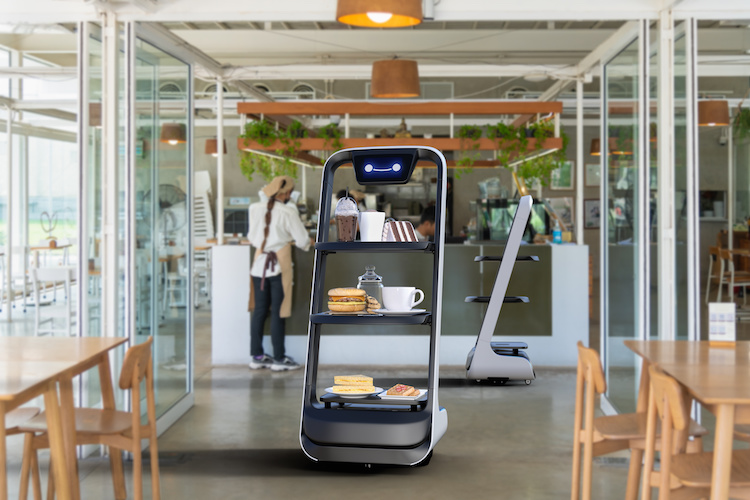
Autonomous waiter robot working in restaurant, Artificial intelligence 5G technology concept
Food delivery has changed significantly in recent years.
What once involved calling a restaurant or relying on informal delivery arrangements has evolved into a technology-driven service connecting restaurants, food vendors, delivery riders and customers through digital platforms.
Across Africa, especially in rapidly growing cities, food delivery services are becoming an increasingly important part of everyday life. Busy professionals, students, families and businesses are turning to delivery services for convenience, speed and access to a wider variety of meals.
As technology, consumer expectations and urban lifestyles continue to evolve, the future of food delivery is likely to become even more digital, efficient and personalized.
Technology Will Drive the Next Stage
Technology will remain at the centre of food delivery. Mobile applications already allow customers to browse menus, place orders, make payments and track deliveries from their phones.
The next generation of delivery platforms is likely to use artificial intelligence and data analytics to improve the customer experience. Platforms could recommend meals based on previous orders, predict busy periods and help restaurants prepare orders more efficiently.
Better mapping and location technologies can also help riders find customers more accurately, reducing delays caused by unclear addresses or difficult-to-reach locations.
Faster and More Efficient Deliveries
Customers increasingly expect their food to arrive quickly while still being fresh and properly packaged.
Delivery companies will therefore continue looking for ways to improve routing, order coordination and rider allocation. Instead of simply assigning the nearest rider, future systems may consider traffic conditions, restaurant preparation times, delivery distance and multiple orders in the same area.
This could reduce unnecessary trips and make delivery networks more efficient.
More Local Food Vendors Will Go Digital
Food delivery is not only changing how customers order meals; it is also creating opportunities for small food businesses.
Restaurants, home-based cooks, bakeries and independent food vendors can use digital platforms to reach customers beyond their immediate neighbourhoods. A small business that previously depended almost entirely on walk-in customers can now receive orders from people across a wider area.
As digital ordering becomes more accessible, more informal and small-scale food businesses may find ways to participate in the delivery economy.
Cashless Payments Will Become More Common
Digital payments are likely to become an increasingly important part of food delivery.
Mobile money, bank transfers, cards and digital wallets can make transactions faster and easier to track. In markets where cash remains common, delivery platforms may continue offering multiple payment options while gradually encouraging secure digital transactions.
For businesses, digital payments can also make it easier to monitor sales and understand customer purchasing patterns.
Sustainability Will Become More Important
The growth of food delivery also raises environmental concerns. More deliveries can mean more fuel consumption, traffic and packaging waste.
Future food delivery companies may therefore face greater pressure to adopt environmentally responsible practices. These could include reusable or recyclable packaging, electric motorcycles, bicycles for short-distance deliveries and better route planning.
Restaurants may also explore packaging that keeps food fresh while reducing unnecessary plastic and other waste.
Personalization Will Shape Customer Experiences
Customers do not all want the same type of food or delivery experience.
Technology can help platforms provide more personalized recommendations based on previous orders, dietary preferences, location, budget and ordering habits.
For example, a customer who regularly orders breakfast before work may receive breakfast recommendations during the morning, while another customer may see suggestions for family meals later in the day.
Personalization can make food delivery platforms more useful while helping businesses increase repeat orders.
More Attention to Food Safety
As delivery services expand, food safety will become even more important. Customers need confidence that meals are prepared in hygienic environments, packaged properly and transported under appropriate conditions. Restaurants and delivery platforms may increasingly use technology to monitor preparation and delivery processes.
Better packaging can also help maintain food quality during transportation, particularly in cities where traffic can make journeys unpredictable.
The Rise of Delivery-Only Food Businesses
Another important development is the growth of cloud kitchens and delivery-only restaurants.
These businesses do not necessarily need expensive dining spaces in prime locations. Instead, they can focus on food preparation and rely on delivery platforms to reach customers.
This model can reduce some operating costs and allow entrepreneurs to experiment with different menus and food concepts.
The African Market Has Unique Opportunities
Africa’s growing cities present significant opportunities for food delivery services. Young populations, increasing smartphone use, expanding digital payments and busy urban lifestyles are all contributing to demand for convenient services.
However, delivery companies must also adapt to local realities. Traffic congestion, inconsistent addressing systems, road conditions, electricity challenges and varying levels of digital payment adoption can affect operations.
Companies that understand these local challenges and develop practical solutions will be better positioned to succeed.
What the Future May Look Like
The future of food delivery will likely involve a combination of technology, convenience and stronger local adaptation. Customers may experience more accurate delivery estimates, smarter recommendations, easier payments and better order tracking. Businesses may gain improved access to customer data and more efficient ways to manage their operations.
At the same time, sustainability, food safety and fair working conditions will become increasingly important considerations as the industry matures.
Conclusion
Food delivery services are moving beyond simply transporting meals from restaurants to customers. They are becoming part of a broader digital food ecosystem that connects consumers, restaurants, technology companies, payment providers and logistics networks.
As African cities continue to grow and lifestyles become increasingly fast-paced, demand for convenient food services is likely to remain strong. The companies that combine technology with local understanding, reliable logistics, affordability and good customer service will be best placed to shape the future of food delivery.




Leave a reply





Africa’s Source for Breaking News | Entertainments | Health | Finance | Sports | Lifestyle and Business News.


