
How to Apply for a Portugal Tourist Visa: A Step-by-Step Guide for Mali Applicants
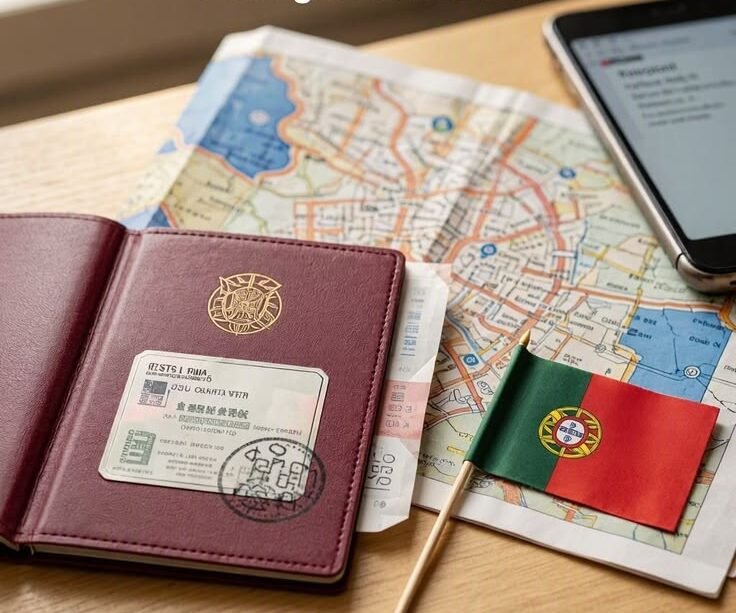
How to Apply for a Portugal Tourist Visa
Malian citizens who want to visit Portugal for tourism generally need a short-stay Schengen visa.
This visa allows eligible travellers to visit Portugal and other Schengen countries for up to 90 days within any 180-day period, provided they meet the entry conditions.
The application process involves choosing the correct consular authority, completing the application form, preparing supporting documents, arranging travel medical insurance, paying the visa fee and attending an appointment for biometrics where required.
One important detail deserves attention before you book anything: Mali falls within the consular jurisdiction of the Portuguese Embassy in Dakar, Senegal, following a Portuguese jurisdiction update published in March 2026. Portugal also has an honorary consulate in Bamako, but applicants should confirm directly with the Portuguese Embassy in Dakar where and how tourist visa applications must be submitted. Do not assume that an honorary consulate or another country’s embassy automatically accepts applications for Portugal.
This guide explains the process, the documents to prepare and the mistakes that can cause delays or refusal.
Portugal tourist visa requirements for Mali applicants at a glance
| Requirement | What applicants should know |
|---|---|
| Visa type | Short-stay Schengen tourist visa, Type C |
| Maximum stay | 90 days within any 180-day period |
| Main consular jurisdiction | Portuguese Embassy in Dakar, Senegal, for Mali |
| Application window | Up to six months before travel and normally no later than 15 days before departure |
| Standard adult visa fee | €90 |
| Children aged 6 to under 12 | €45 |
| Children under 6 | Normally exempt from the visa fee |
| Travel medical insurance | Required, with at least €30,000 cover for relevant medical and repatriation costs |
| Normal processing period | 15 calendar days; may extend to 45 days in certain cases |
| Biometrics | Fingerprints and a facial image are generally required, subject to exemptions |
1. Confirm that you need a Schengen tourist visa
The first step is to establish which visa applies to your trip. A short-stay Schengen visa is generally suitable for tourism, holidays, visiting friends or relatives, and other permitted activities lasting no more than 90 days within a 180-day period.
Malian passport holders are required to obtain a Schengen visa for tourism. Therefore, if you plan to visit Lisbon, Porto, Faro or another Portuguese destination, you should prepare a short-stay visa application before travelling.
The visa is not a residence permit or permission to take up employment. If you intend to work, study for an extended period or live in Portugal, you will need to investigate the appropriate national visa or residence route.
Your main destination also determines where you should apply. If Portugal is the only Schengen country you intend to visit, apply through the Portuguese authorities. If your trip includes several Schengen countries, apply through the country where you will spend the longest time. When the stays are equal, the first country of entry generally determines the competent consulate.
Do not apply through another country’s embassy simply because it has an office in Bamako. The correct authority depends on your itinerary and the applicable consular arrangements.
2. Identify the correct Portuguese consular authority for Mali
This is an important step for applicants living in Mali.
Portugal’s consular jurisdiction changed in March 2026. Under Despacho n.º 3869/2026, published in Portugal’s official gazette, Mali was transferred from the jurisdiction of the Portuguese Embassy in Algiers to the consular jurisdiction of the Portuguese Embassy in Dakar.
Portugal also has an honorary consulate in Bamako, established under an earlier legal instrument and dependent on the Portuguese Embassy in Dakar. However, the existence of an honorary consulate does not automatically mean it can accept or process every visa application.
Before booking an appointment or travelling outside Mali, contact the Portuguese Embassy in Dakar and ask:
- Whether it is currently accepting short-stay tourist visa applications from Mali residents.
- Whether applicants must submit their documents in Dakar or use another authorised arrangement.
- Whether the honorary consulate in Bamako can provide any administrative assistance.
- How to obtain an appointment and the latest application checklist.
- Which payment method and currency are accepted.
- Whether additional documents are required for Malian residents.
Use official Portuguese diplomatic channels to verify the information. Avoid relying on travel agents, social media posts or old application instructions.
This distinction can save applicants money and prevent them from travelling to the wrong office.
3. Choose suitable travel dates and prepare a realistic itinerary
Once you have confirmed the application channel, plan your trip.
A tourist visa application should explain why you want to visit Portugal, how long you intend to stay and what you plan to do during the visit. Your itinerary should be realistic and consistent with your accommodation, financial documents and employment or business circumstances.
For example, a ten-day holiday might include Lisbon, Porto and a nearby destination. You should show how you intend to travel between these places, where you will stay and how much the trip is likely to cost.
Avoid preparing an itinerary that includes too many cities for the time available. A complicated schedule can make the purpose of the visit appear unclear.
You should also avoid paying for expensive, non-refundable arrangements before receiving a visa decision. Where possible, use genuine reservations with cancellation conditions that suit your circumstances. Never submit a false hotel booking or fabricated flight reservation.
Portugal’s official guidance allows short-stay visa applications to be submitted up to six months before the intended journey. The normal latest submission point is 15 days before departure, although applying that late leaves little room for delays or additional document requests.
A practical approach is to begin preparations several weeks or months ahead.
4. Complete the Schengen visa application form
The application form records your personal details, passport information, travel purpose, planned dates, accommodation and other relevant information.
Read every section carefully before completing it. Your name, date of birth, passport number and travel details must match the information in your supporting documents.
Pay particular attention to:
- Your current residential address in Mali.
- Your occupation and employment or business details.
- The reason for visiting Portugal.
- Your intended arrival and departure dates.
- Your accommodation arrangements.
- The person or organisation paying for the trip, where applicable.
- Your previous Schengen travel history, where requested.
If you are self-employed, describe your occupation accurately. If another person will sponsor your trip, explain the relationship and provide appropriate supporting evidence.
Do not leave important sections incomplete unless the instructions permit it. If a question does not apply, follow the form’s guidance for marking it as not applicable.
The Portuguese government provides an online route through its E-Visa portal for relevant visa services, but online information or a preliminary submission does not necessarily replace the required in-person application and biometric process. Follow the instructions of the competent consular authority.
5. Prepare the required supporting documents
A well-organised application helps the consular officer understand your travel purpose, financial position and reasons for returning after the visit.
The exact document checklist can depend on your circumstances and the current instructions of the Portuguese Embassy. Nevertheless, the following documents are commonly relevant to a short-stay tourist application.
Valid passport
Your passport should meet Schengen requirements. In general, it must:
- Have been issued within the previous ten years.
- Remain valid for at least three months after the date you intend to leave the Schengen area.
- Contain the required blank pages for visa processing.
- Be in good physical condition.
Include copies of relevant passport pages and previous visas where requested.
If you have an old passport containing travel history, ask whether the consulate wants to see it. Previous travel records can help explain your travel history, but they do not guarantee approval.
Passport photographs
Provide recent photographs that meet the required Schengen specifications. Do not assume that every ordinary passport photograph is acceptable.
Check the required dimensions, background, facial positioning and image quality before submitting the photographs.
Proof of accommodation
Show where you intend to stay during your visit. This may include genuine hotel reservations or an invitation and accommodation information from a host, depending on the circumstances.
The dates should match your itinerary. If you plan to stay in several cities, provide accommodation details for the relevant parts of the journey.
Flight itinerary or travel arrangements
Provide credible information about your intended journey to and from Portugal. Your travel arrangements should support the dates and purpose stated in the application.
Avoid buying a non-refundable ticket simply because someone claims that doing so guarantees a visa. It does not.
Travel medical insurance
Travel medical insurance is a key Schengen requirement. The policy should provide at least €30,000 in medical coverage and meet the applicable territorial and duration requirements. It should cover emergency medical treatment and repatriation, including in the event of death.
Make sure the policy covers the entire period of your intended stay in the Schengen area. Check the insurer’s conditions and confirm that the document is valid for the application.
Proof of financial means
You must show that you can reasonably pay for your accommodation, food, transport and other expenses during the trip.
Depending on your circumstances, useful evidence may include:
- Recent personal bank statements.
- Salary slips or employment income records.
- Business income records.
- Evidence of savings or other legitimate financial resources.
- Sponsorship documents, where another person is paying for the trip.
The amount you need will depend on the duration and nature of your visit, accommodation arrangements and applicable consular requirements.
A large unexplained deposit shortly before the application can raise questions. If you receive a legitimate payment, bonus or business income, provide evidence explaining its source.
Evidence of employment or business activity
Your occupation and circumstances help explain how you earn a living and why you intend to return to Mali.
If employed, provide relevant documents such as an employment letter, approved leave, salary information and evidence that you are expected to resume work.
If self-employed, consider business registration documents, tax records where available, evidence of business activity and financial records that reflect your work.
If you are a student, include evidence of enrolment and any relevant permission for the proposed travel period.
Evidence of your intention to return
A tourist visa application must establish that the visit is temporary. Your circumstances may demonstrate this through employment, education, business responsibilities, family commitments or other legitimate ties to Mali.
No single document guarantees approval. The consular authority assesses the application as a whole, including the credibility of the travel purpose and the likelihood that you will leave the Schengen area before your authorised stay ends.
6. Arrange the appointment and submit your application
After confirming the correct submission procedure with the Portuguese Embassy in Dakar, follow its appointment instructions.
Do not pay an individual or unofficial agent who claims to have access to guaranteed appointments. Visa appointments should be arranged through the authorised channel identified by the consular authority.
At the appointment, applicants may be required to:
- Submit the completed application form.
- Present the original passport and supporting documents.
- Provide the required photographs.
- Pay the applicable visa fee.
- Give fingerprints and a facial image, unless exempt.
- Answer questions about the travel purpose and supporting evidence.
Applicants should arrive on time and bring the originals and copies requested in the checklist.
If you are asked about your itinerary, employment, accommodation or finances, answer honestly and consistently with the documents you submitted. Do not memorise a false story or attempt to hide information that may be relevant to the application.
7. Pay the Portugal Schengen visa fee
The standard Schengen visa fee for adults is €90. Children aged six to under 12 generally pay €45, while children under six are normally exempt.
Certain categories of applicants may qualify for a fee exemption under the applicable rules. However, do not assume that an exemption applies without checking the conditions.
The fee covers the processing of the visa application, not the guarantee of a visa. It is generally non-refundable if the application is refused or withdrawn.
If the application is submitted through an authorised external service provider, an additional service charge may apply. Confirm the current amount and accepted payment method with the responsible authority before making payment.
For applicants submitting through the Portuguese Embassy in Dakar, ask whether payment is accepted in euros or another specified currency and whether the consular section requires a particular method.
Keep the payment receipt. You may need it when following up on your application.
8. Attend biometrics and any required interview
Most applicants must provide biometric information, including fingerprints and a facial image. Some people may qualify for exemptions, including children below the relevant age threshold and applicants whose fingerprints were recorded recently and remain usable under the rules.
If the consulate requires an interview, attend as instructed.
Questions may cover:
- Why you want to visit Portugal.
- How long you intend to stay.
- Who is paying for your trip.
- Where you will stay.
- What you do for a living.
- Whether you have travelled to the Schengen area before.
- What responsibilities you will return to in Mali.
Answer directly and truthfully. If you do not know an answer, do not invent one. Explain the situation clearly.
The purpose of an interview is to help assess the application, not to test how confidently you can recite a prepared script.
9. Track the application and understand processing times
The standard Schengen visa processing period is 15 calendar days from the date the application is lodged. However, a more detailed assessment, additional documents or an interview can extend the processing period to as much as 45 calendar days in certain cases.
Do not treat 15 days as a guaranteed completion date. Processing may take longer depending on the circumstances and workload of the responsible consular office.
Use the tracking method provided when you submit the application. Keep your receipt and any reference number safe.
If the consulate requests additional documents, respond within the stated deadline and ensure that the information is accurate.
Avoid sending repeated messages through unrelated channels. If you need to make an enquiry, use the official contact details supplied by the embassy or authorised service provider.
10. What happens after the visa decision?
If your application is approved, check the visa sticker carefully before travelling.
Confirm that:
- Your name and passport details are correct.
- The visa validity dates match the authorised period.
- The number of entries is what you requested or what has been granted.
- The permitted duration of stay is sufficient for your trip.
A visa may be issued for a shorter period than requested. You must follow the dates and conditions printed on the sticker.
If your application is refused, you should receive a written explanation of the reasons. Read the refusal notice carefully before deciding whether to appeal or submit a new application.
A new application should address the weaknesses identified in the refusal. Repeating the same documents without resolving the concerns may lead to another refusal.
Remember that a visa does not automatically guarantee admission at the Portuguese border. Border authorities may ask for evidence of accommodation, sufficient funds, the purpose of your visit and your intention to leave the Schengen area.
Common mistakes that can delay or weaken a Portugal tourist visa application
Even applicants with genuine travel intentions can create avoidable problems through poor preparation.
Applying through the wrong consular office
Mali’s Portuguese consular jurisdiction was transferred to Dakar in March 2026. Confirm the current procedure before travelling to submit an application. Do not assume that an embassy handling another country’s visas can process a Portugal application.
Submitting inconsistent information
Your application form, bank statements, employment letter, itinerary and accommodation records should tell a consistent story. Different travel dates or conflicting explanations can create doubts.
Providing unexplained financial deposits
A sudden large deposit may require clarification. Include supporting evidence showing where the money came from rather than expecting the consular officer to assume it is ordinary income.
Presenting false reservations or documents
Fake hotel bookings, altered bank statements and fabricated employment letters can seriously damage an application. False information may result in refusal and further consequences.
Applying too close to departure
The normal processing period is 15 days, but applications can take up to 45 days. Apply early enough to respond to additional requests without missing your intended travel date.
Ignoring the insurance requirement
A travel insurance policy that does not meet Schengen requirements may weaken the application. Check the minimum cover, territorial validity and travel dates.
Assuming an invitation guarantees approval
An invitation from a friend or relative can support the purpose of the visit, but it does not remove the need to demonstrate financial arrangements and satisfy the other visa conditions.
A final checklist before submitting your application
Use this checklist to review your documents before the appointment.
- Confirm that Portugal is your main Schengen destination.
- Confirm the current submission procedure with the Portuguese Embassy in Dakar.
- Complete the application form accurately.
- Check that your passport meets the validity requirements.
- Prepare compliant passport photographs.
- Provide a realistic travel itinerary.
- Include accommodation evidence.
- Arrange compliant travel medical insurance.
- Prepare recent and credible financial evidence.
- Include employment, business or education documents where relevant.
- Provide evidence supporting your intention to return to Mali.
- Prepare the applicable visa fee.
- Arrange your appointment and biometric submission.
- Keep copies of your documents and payment receipt.
Give your Portugal trip the strongest possible start
Applying for a Portugal tourist visa from Mali requires careful planning, but the process becomes easier when you confirm the correct consular authority and prepare a consistent application.
The most important first step is to contact the Portuguese Embassy in Dakar, which has responsibility for Mali under the current Portuguese consular jurisdiction arrangements. After confirming the submission procedure, organise your travel purpose, financial evidence, accommodation and insurance.
Avoid false documents, last-minute applications and unofficial agents who promise guaranteed approval. A visa decision is made on the merits of each application, and no intermediary can guarantee the outcome.
With accurate information and realistic travel plans, you can submit a clearer application and reduce the risk of preventable delays.
Frequently Asked Questions
1. Do Malian citizens need a visa to visit Portugal?
Yes. Malian citizens generally need a short-stay Schengen visa to visit Portugal for tourism. The visa normally permits stays of up to 90 days within a 180-day period, subject to the conditions granted.
2. Where should Mali residents apply for a Portugal tourist visa?
Portugal’s consular jurisdiction for Mali was transferred to the Portuguese Embassy in Dakar in March 2026. Applicants should contact the embassy to confirm the current appointment and document-submission arrangements before travelling.
3. How much does a Portugal tourist visa cost for a Malian applicant?
The standard Schengen visa fee is €90 for adults and €45 for children aged six to under 12. Children under six are generally exempt. An additional service charge may apply if an authorised external provider is used.
4. How long does it take to process a Portugal tourist visa?
The normal processing period is 15 calendar days. In some cases, the consulate may require additional documents or a more detailed examination, extending the process to as much as 45 calendar days.
5. Can I travel to other European countries with a Portugal tourist visa?
A valid uniform Schengen visa generally allows travel to other Schengen countries within the authorised dates and conditions. You must still respect the 90-days-in-180-days limit and any restrictions printed on your visa.




Leave a reply




Africa’s Source for Breaking News | Entertainments | Health | Finance | Sports | Lifestyle and Business News.


