
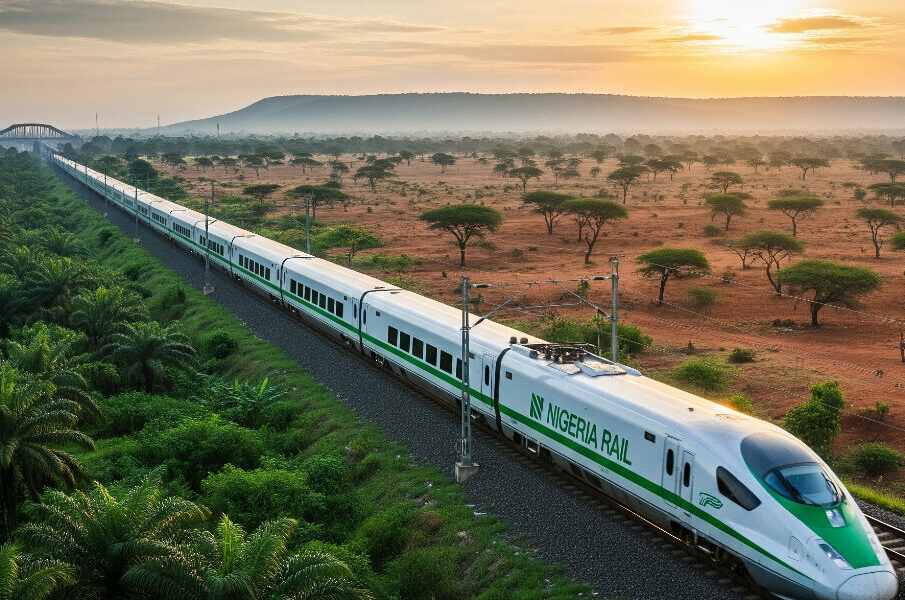
The Future of Rail Transport in Africa
Africa is entering a new era of transportation, and railways are expected to play a major role in shaping the continent’s economic future.
For decades, many African countries have depended heavily on road transport for moving people and goods. However, growing populations, expanding cities, rising fuel costs, traffic congestion and increasing pressure on infrastructure are creating a stronger case for modern rail systems.
From passenger trains connecting major cities to freight railways linking ports with inland markets, rail transport is gradually becoming an important part of Africa’s development strategy. The future of rail transport will not simply be about building more tracks. It will be about creating faster, safer, more affordable and better-connected transportation networks that support trade, employment and urban development.
Why Rail Transport Matters for Africa
Railways can move large numbers of passengers and substantial volumes of cargo more efficiently than many road-based alternatives. This makes them particularly valuable for a continent where distances between major economic centres can be considerable.
Efficient rail networks can help reduce pressure on highways by moving heavy cargo away from roads. They can also improve connections between ports, industrial areas, agricultural communities and urban centres.
For businesses, better rail infrastructure can reduce transportation challenges and make it easier to move goods across regions. Farmers may gain improved access to markets, while manufacturers can benefit from more reliable connections to suppliers and customers.
Rail development can therefore become more than a transportation project. It can support wider economic integration.
The Rise of Modern Rail Projects
Several African countries have invested in modern railway infrastructure in recent years. New and upgraded systems have introduced technologies and operating standards that are significantly different from the older railway networks inherited from the colonial era.
Modern passenger rail projects are emerging around major cities, while freight corridors are being developed to connect resource-producing regions with ports and commercial centres.
Urban rail is also receiving greater attention. As cities such as Lagos, Nairobi, Addis Ababa, Cairo and Johannesburg continue to grow, efficient mass transit is becoming increasingly important.
The expansion of urban rail could help cities manage congestion while providing residents with more predictable transportation options.
Rail and Africa’s Growing Cities
Africa is one of the world’s fastest-urbanising regions. As more people move to cities in search of employment, education and business opportunities, transportation systems will face greater pressure.
Rail can provide an important solution.
Urban rail systems can transport thousands of passengers along busy corridors without requiring every passenger to travel in a separate car or bus. When properly planned, rail stations can also become centres of economic activity, encouraging the development of shops, offices, housing and services around them.
This creates an opportunity for African cities to think beyond transportation and use rail development as part of broader urban planning.
Cross-Border Rail Could Transform African Trade
One of the most exciting possibilities for the future is the expansion of cross-border railway networks.
Africa’s regional economies are increasingly interconnected, but transporting goods across borders can still be expensive and time-consuming. Better rail connections could make it easier to move agricultural products, manufactured goods, minerals and consumer products between neighbouring countries.
Regional rail corridors could also strengthen the ambitions of the African Continental Free Trade Area by improving physical connections between markets.
A stronger rail network stretching across national borders could make African trade more efficient and reduce the logistical barriers that businesses face when expanding into neighbouring markets.
Technology Will Shape the Next Generation of Railways
The future African railway will increasingly depend on technology.
Digital ticketing can make passenger journeys more convenient, while real-time tracking can improve the movement of freight. Automated signalling systems can improve safety and help trains operate more efficiently.
Data can also help railway operators understand passenger demand, identify maintenance needs and manage schedules.
Artificial intelligence could eventually contribute to predictive maintenance, allowing operators to identify potential equipment failures before they disrupt services. Smart railway systems may therefore become an important part of Africa’s transportation future.
The Opportunity for Greener Transportation
Environmental concerns are another reason rail transport is gaining attention.
Moving large numbers of people and goods by rail can reduce dependence on individual vehicles and potentially lower emissions compared with equivalent road transportation.
There is also growing interest in electrified railway systems and renewable energy across Africa. Countries with strong solar, wind and hydropower potential could explore ways to connect cleaner energy systems with modern rail infrastructure.
Green rail development could therefore contribute to both transportation efficiency and broader sustainability goals.
Challenges That Must Be Addressed
Despite its potential, Africa’s railway future is not without challenges.
Rail infrastructure is expensive to construct and maintain. Governments must also address issues such as land acquisition, financing, technical expertise, security and long-term maintenance.
Another challenge is ensuring that new railways are financially sustainable. Building an impressive railway is only the beginning. Operators need reliable revenue, effective management and sufficient investment to maintain tracks, trains, stations and signalling systems.
Poor coordination between different transportation systems can also reduce the usefulness of rail. A railway station that is difficult to reach by bus, taxi or other forms of transport may not attract enough passengers.
For rail investments to succeed, governments and private-sector partners must therefore think about the entire transportation ecosystem.
Public-Private Partnerships Could Become More Important
The scale of investment required for modern rail infrastructure means governments may increasingly work with private investors, development institutions and international partners.
Public-private partnerships can provide access to capital, technical expertise and operational experience. However, such partnerships must be structured carefully to protect public interests while giving investors reasonable opportunities to recover their investments.
Transparent procurement, strong regulation and effective oversight will be essential as more private capital enters Africa’s railway sector.
What the Future Could Look Like
Africa’s future railway network may consist of several interconnected layers.
High-speed or faster intercity services could connect major economic centres. Urban rail systems could transport commuters within rapidly growing cities. Freight corridors could connect mines, farms and factories with ports and distribution centres.
Integrated ticketing could allow passengers to combine rail journeys with buses and other forms of public transport. Digital platforms could provide real-time information about schedules, delays and available services.
The most successful systems will probably be those designed around the needs of passengers and businesses rather than simply around the construction of infrastructure.
Rail as a Driver of Economic Development
Rail transport can influence much more than mobility. New railway corridors can create jobs during construction and operation. They can stimulate businesses around stations and improve access to markets.
Industrial zones may develop around freight corridors, while communities previously isolated from major commercial centres could gain better access to economic opportunities.
For Africa, this makes railway investment a potential tool for regional development, industrialisation and economic integration.
Conclusion
The future of rail transport in Africa is closely connected to the continent’s broader economic ambitions. As populations grow, cities expand and regional trade increases, transportation systems will need to become more efficient and sustainable.
Railways can help meet that demand by connecting people, businesses, cities and countries. However, the success of Africa’s railway transformation will depend on more than laying tracks. Governments and investors will need to prioritise affordability, maintenance, safety, technology, accessibility and integration with other forms of transport.
If these challenges are addressed effectively, railways could become one of the most important foundations of Africa’s transportation future, helping the continent move not only people and goods, but also economic opportunities and regional integration.




Leave a reply






Africa’s Source for Breaking News | Entertainments | Health | Finance | Sports | Lifestyle and Business News.


