
The Science Behind Africa’s Diverse Ecosystems
The Science Behind Africa’s Diverse Ecosystems
Africa is one of the most ecologically diverse continents on Earth.
From the humid rainforests of Central Africa to the dry deserts of the north, the continent contains an extraordinary range of landscapes, climates, plants and animals. This diversity is not accidental. It is the result of millions of years of geological change, shifting climates, varying rainfall patterns and complex interactions between living organisms and their environments.
Understanding the science behind Africa’s ecosystems helps explain why the continent supports such a remarkable variety of life—and why protecting these environments matters for people around the world.
Africa’s Geography Creates Ecological Diversity
One of the most important factors behind Africa’s ecological diversity is its geography. The continent stretches across the Equator and covers a vast area from the Mediterranean coast in the north to the temperate regions of the south.
This enormous geographical range exposes different parts of Africa to different temperatures, rainfall patterns and seasonal conditions.
Mountains also play an important role. The Atlas Mountains, Ethiopian Highlands, Drakensberg Mountains and East African mountain ranges influence rainfall and temperature. Higher elevations generally have cooler conditions, while mountains can force moist air upward, creating wetter environments on one side and drier areas on the other.
The Great Rift Valley is another important geographical feature. Its lakes, mountains, valleys and volcanic landscapes have created numerous habitats for plants and animals.
Climate Is a Major Driver of Ecosystems
Climate strongly influences which ecosystems can develop in particular regions.
Africa contains several major climate zones, including tropical, subtropical, desert, Mediterranean and highland climates. Each supports different forms of life.
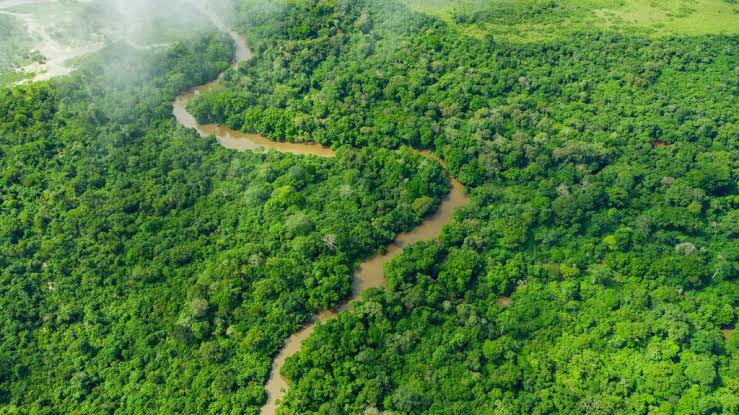
Near the Equator, relatively warm temperatures and abundant rainfall support tropical rainforests. The Congo Basin, for example, contains one of the world’s largest tropical rainforest regions. These forests provide suitable conditions for thousands of plant, insect, bird and mammal species.
Further from the Equator, rainfall becomes more seasonal. This creates vast grasslands and savannas, particularly across parts of East and Southern Africa. Savannas support iconic wildlife such as elephants, giraffes, zebras, antelopes and lions.
In extremely dry regions, such as the Sahara and Namib deserts, organisms have evolved specialized adaptations that allow them to survive with very little water.
Rainfall Shapes African Landscapes
The amount and timing of rainfall are just as important as temperature.
Some areas receive rain throughout much of the year, while others experience distinct wet and dry seasons. This difference affects vegetation, soil conditions, water availability and animal behaviour.
In savannas, seasonal rainfall encourages grasses to grow rapidly during wet periods. During dry periods, vegetation becomes less abundant, forcing many animals to migrate or search for water and food.
This seasonal cycle also contributes to natural processes such as grazing, decomposition and nutrient recycling.
Fire Is Part of the Natural System
Fire may appear destructive, but in many African ecosystems it is a natural ecological process.
In several savanna regions, periodic fires help prevent woody vegetation from completely replacing grasslands. Some plants have adaptations that allow them to survive or regenerate after fire.
Fire can also return nutrients to the soil by breaking down vegetation. However, the ecological effect depends on factors such as frequency, intensity, timing and the condition of the ecosystem.
Human activities can alter natural fire patterns. Too many fires can damage vegetation and soil, while suppressing fire completely in ecosystems that evolved with regular burning can also change their natural structure.
Rivers and Lakes Create Unique Habitats
Africa’s freshwater systems are another major contributor to biodiversity.
The Nile, Congo, Niger, Zambezi and other major rivers support ecosystems that provide water, food and breeding grounds for numerous species. Wetlands, floodplains and lakes also create habitats that may be very different from the surrounding landscape.
The Great Lakes of East Africa are particularly important. Lakes such as Victoria, Tanganyika and Malawi contain diverse aquatic ecosystems, including species found nowhere else.
Freshwater ecosystems also support human communities by providing water for agriculture, fishing, transportation and household use.
Soils Influence What Can Grow
Soil is another major piece of the ecological puzzle.
Different parts of Africa have soils with varying levels of nutrients, minerals, organic matter and moisture. These characteristics influence which plants can thrive.
Some tropical regions experience heavy rainfall that can wash nutrients deeper into the soil. Meanwhile, grasslands can accumulate organic material through extensive root systems.
Desert soils have very different characteristics, and plants that survive there often possess specialized adaptations for accessing or conserving scarce water.
The relationship between vegetation and soil is also constantly changing. Plants add organic material to the ground, microorganisms break it down, and nutrients are recycled through the ecosystem.
Plants and Animals Adapt to Their Environments
Africa’s biodiversity is also the result of evolution.
Over long periods, species have developed physical and behavioural characteristics suited to their environments.
Desert plants may have deep roots, reduced leaves or water-storage abilities. Animals living in dry environments may be active during cooler parts of the day to reduce water loss.
In rainforests, plants compete for sunlight, producing tall trees, climbing vines and layered vegetation. Animals have developed different ways of moving through these complex habitats and finding food.
In savannas, large herbivores have evolved different feeding strategies. Some specialize in grazing grasses, while others browse leaves and branches. Predators, in turn, have developed hunting strategies suited to particular prey and landscapes.
These relationships demonstrate that ecosystems are interconnected networks rather than collections of independent species.
Africa’s Ecosystems Are Constantly Changing
Ecosystems are not static. They naturally change over time in response to climate, geological processes, animal activity, vegetation growth and other factors.
Human activity, however, has accelerated many changes.
Deforestation, agricultural expansion, urban development, pollution, overfishing and unsustainable resource extraction can alter habitats. Climate change is adding another layer of pressure by affecting rainfall, temperatures, drought patterns, wildfires and water availability.
Some species can adapt to changing conditions, while others may struggle when their habitats disappear or environmental changes happen too quickly.
Why Ecosystem Science Matters
Understanding how Africa’s ecosystems work is important for conservation and sustainable development.
Scientists can use ecological research to identify important habitats, monitor endangered species, understand changing weather patterns and develop better approaches to land and water management.
Local communities are also essential to ecosystem conservation. Many communities have generations of knowledge about seasonal changes, wildlife behaviour, farming practices and natural resources. Combining this knowledge with scientific research can produce more effective conservation strategies.
Protecting ecosystems is not only about saving wildlife. Healthy ecosystems provide services that people depend on, including clean water, fertile soils, food, pollination, carbon storage and climate regulation.
A Continent of Connected Systems
Africa’s diverse ecosystems exist because geography, climate, water, soil, evolution and human activity interact in complex ways. A rainforest, desert, wetland or savanna may look completely different from another ecosystem, but each is part of a larger environmental system.
The science behind Africa’s biodiversity therefore reveals something important: diversity is created through relationships.
Rainfall influences vegetation. Vegetation supports animals. Animals affect seed dispersal and nutrient cycles. Rivers connect habitats, while climate influences nearly every part of the system.
As Africa continues to experience population growth, urbanization and environmental change, understanding these connections will become increasingly important. Protecting the continent’s ecosystems requires not only preserving individual species but also maintaining the natural processes that allow entire ecosystems to function.
Africa’s ecological richness is one of its greatest natural assets. Understanding the science behind it provides a foundation for protecting that richness for future generations.




Leave a reply




Africa’s Source for Breaking News | Entertainments | Health | Finance | Sports | Lifestyle and Business News.


