
A Trip Down Memory Lane
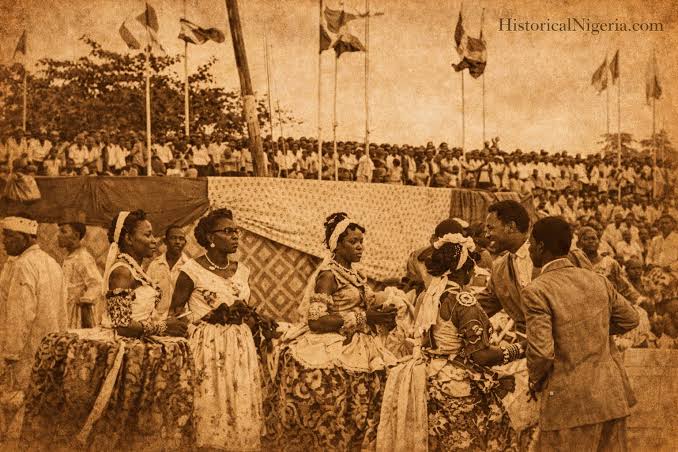
A Trip Down Memory Lane
A Trip Down Memory Lane: Nigeria Before and After Independence
Every October 1, Nigerians gather to celebrate their country’s independence. Flags are raised, national anthems are sung, speeches are delivered, and politicians remind citizens of the sacrifices made by the country’s founding fathers. On television, we see military parades, cultural performances and carefully prepared messages about unity, progress and national development.
Yet, somewhere between the celebrations and the speeches, an uncomfortable question lingers: how far has Nigeria truly travelled since gaining independence in 1960?
As Nigeria marks 66 years of independence in 2026, taking a trip down memory lane offers an opportunity to examine the country before colonial rule ended, the hopes that accompanied freedom, and the realities that have shaped the decades since. It is a journey through remarkable achievements, missed opportunities, political upheavals and the stubborn challenges that continue to define everyday Nigerian life.
After all, independence was supposed to be the beginning of a brighter chapter. Whether the country has lived up to that promise is another matter entirely.
Nigeria Before Independence: A Land of Many Peoples
Long before the British established colonial administration, the geographical area now known as Nigeria was home to diverse societies with their own political systems, economic structures, cultures and traditions.
The Hausa city-states and the Sokoto Caliphate developed influential systems of governance and trade in the north. The Oyo Empire and other Yoruba kingdoms flourished in the southwest, while the Kingdom of Benin developed a sophisticated political structure and renowned artistic traditions. In the southeast, Igbo communities maintained diverse systems of governance, often built around village assemblies, age grades and other communal institutions. Numerous other ethnic groups across the Middle Belt, Niger Delta and surrounding regions also developed their own ways of life.
Agriculture, local manufacturing, long-distance trade and regional commerce sustained these societies. Markets connected communities, while traders moved goods such as kola nuts, textiles, salt, livestock and agricultural produce across considerable distances.
However, precolonial Nigeria was not a perfect paradise. Societies experienced warfare, political rivalries, social inequalities, slavery and other forms of hardship. Nevertheless, many communities exercised considerable control over their political and economic affairs before colonial conquest altered their circumstances.
The arrival and expansion of British influence gradually transformed this landscape. Through trade, missionary activities, military campaigns and political agreements, Britain extended its control over different territories.
In 1914, the British amalgamated the Northern and Southern Protectorates, creating the administrative entity that became Nigeria. The decision was driven substantially by British colonial interests rather than a nationwide democratic agreement among the diverse peoples brought together.
Colonial administration introduced new infrastructure, formal education, Western legal institutions and administrative structures. Railways and roads were developed, primarily to facilitate administration and the movement of export commodities. Cash-crop production expanded, while colonial taxation and economic policies reshaped local livelihoods.
However, these developments came with significant costs. Political power remained concentrated in colonial hands, economic priorities often favoured Britain, and Nigerians had limited opportunities to determine the policies governing their lives.
Independence therefore represented more than a change of flag. It represented the promise that Nigerians could finally govern themselves and determine their collective future.
The Road to Freedom: A Nation Demands Its Independence
The struggle for independence was neither sudden nor effortless. It was the product of decades of political organisation, public debate, journalism, protests and negotiations.
Nigerian nationalists increasingly challenged colonial authority through political parties, newspapers, labour movements and constitutional campaigns. Educated elites, traditional leaders, workers, women and young people contributed to the growing demand for self-government in different ways.
Among the prominent figures were Herbert Macaulay, Nnamdi Azikiwe, Obafemi Awolowo and Ahmadu Bello. Abubakar Tafawa Balewa also became a central figure in the final years leading to independence.
Their political visions were not identical. They differed on questions of regional development, federalism, political organisation and the future structure of the country. Nevertheless, their activities helped move Nigeria towards self-government.
Constitutional reforms gradually expanded Nigerian participation in government. Regional political competition also intensified, reflecting the country’s considerable ethnic, cultural and religious diversity.
Finally, on October 1, 1960, Nigeria became an independent country. The Union Jack was lowered, and the green-white-green Nigerian flag was raised.
The occasion carried enormous expectations. Nigerians hoped that their country would enjoy political freedom, economic prosperity, better education, improved healthcare and greater control over its resources.
There was a sense that the future belonged to the people. Nigeria possessed agricultural wealth, a growing educated population, natural resources and a strategic position in West Africa.
For many citizens, independence was not merely a historical event. It was a promise that their children would inherit a country with more opportunities and fewer limitations.
The First Republic: Hope Meets Political Reality
Nigeria’s early years of independence were filled with optimism, but the new nation faced serious difficulties.
The First Republic operated within a federal structure dominated by three major regions: Northern, Western and Eastern Nigeria. Each region had distinct political interests, economic priorities and influential political leaders.
The country recorded important achievements in education, agriculture, public administration and cultural development. Regional governments invested in schools and infrastructure, while agricultural commodities such as cocoa, groundnuts and palm produce contributed significantly to economic activity.
However, political competition became increasingly intense. Disputes over elections, census figures, regional power and the distribution of national resources weakened public confidence in democratic institutions.
In January 1966, a military coup ended the First Republic. A counter-coup followed in July, deepening political instability and ethnic tensions. These events contributed to the outbreak of the Nigerian Civil War in 1967, after the Eastern Region declared the independent state of Biafra.
The war lasted until January 1970 and caused enormous suffering, displacement, hunger and loss of life.
Nigeria survived as one country, but the conflict left deep scars. It demonstrated how fragile national unity could become when political grievances, regional distrust and failures of leadership remained unresolved.
The dream of a united and prosperous country survived, but the journey towards it became considerably more complicated.
The Oil Boom: Wealth, Opportunity and Missed Chances
The discovery and commercial exploitation of petroleum transformed Nigeria’s economy. By the 1970s, rising oil revenues had made the country a major petroleum exporter and provided the government with substantial resources.
Oil income financed roads, public buildings, universities, urban development and other ambitious projects. Nigeria’s international influence also expanded, while its expanding public sector created employment opportunities.
Yet the oil boom introduced a dangerous dependence. Petroleum increasingly overshadowed agriculture and other productive sectors in government revenue and foreign exchange earnings.
As oil money flowed in, agricultural production weakened relative to its earlier importance. Public spending expanded, but economic management, corruption and dependence on crude oil created vulnerabilities.
The central problem was not simply that Nigeria discovered oil. It was that successive governments struggled to transform petroleum wealth into a diversified economy capable of creating sufficient jobs, supporting local industries and improving living standards across the country.
The consequences remain visible today. Nigeria possesses substantial oil and gas resources, yet fuel supply, refining capacity, infrastructure and the effective management of petroleum revenues have remained persistent public concerns.
A country blessed with natural resources should not have to explain repeatedly why those resources have failed to deliver broadly shared prosperity.
Military Rule and the Return of Democracy
Between 1966 and 1999, military governments interrupted Nigeria’s democratic development for much of the period, with the Second Republic of 1979–1983 providing a brief return to civilian rule.
Military administrations pursued different economic and political programmes. Some expanded infrastructure, while others introduced policies intended to address economic difficulties. However, military rule restricted democratic participation and weakened the continuity of accountable civilian government.
Economic crises, declining public services, corruption allegations and human rights abuses became important features of different periods of military government.
The annulment of the June 12, 1993, presidential election, widely regarded as having been won by Moshood Kashimawo Olawale Abiola, further damaged public confidence in the political process. The subsequent years of military rule were marked by repression and demands for a return to democracy.
On May 29, 1999, Nigeria returned to civilian government under President Olusegun Obasanjo.
The transition represented a major milestone. Since then, Nigeria has maintained civilian rule and conducted several general elections, including the historic transfer of power between political parties in 2015.
Nevertheless, the endurance of civilian government has not automatically resolved problems of governance, accountability, insecurity and economic inequality. Democracy offers citizens a mechanism to choose their leaders, but its value also depends on how effectively institutions respond to public needs.
Nigeria After Independence: Progress Amid Persistent Struggles
More than six decades after independence, Nigeria has changed considerably. Its population has grown, its cities have expanded, and its cultural influence reaches far beyond its borders.
Nigerian music, film, fashion, literature and food have attracted international audiences. Nollywood has become a significant part of the global film industry, while Afrobeats artists have helped introduce Nigerian sounds to listeners around the world.
The country’s technology sector has also expanded, with entrepreneurs developing financial technology, digital services, e-commerce platforms and other businesses. Nigerian professionals continue to make contributions in medicine, science, education, sports and the creative industries.
These achievements deserve recognition. They demonstrate the resourcefulness and ambition of Nigerians, often despite difficult operating conditions.
However, national progress cannot be measured by international recognition alone.
For millions of citizens, daily life remains a struggle against rising living costs, unemployment, inadequate infrastructure and uncertain economic prospects. Inflation and currency pressures have reduced purchasing power during recent economic difficulties, leaving households to make painful decisions about food, transportation, rent, healthcare and school fees.
For a parent, independence may mean little when providing three meals a day becomes an exhausting calculation. For a graduate, the promise of education feels incomplete when years of studying lead to unemployment or work that barely covers basic expenses.
Meanwhile, for small business owners, unreliable electricity, expensive fuel, high operating costs and limited access to affordable credit can turn entrepreneurship into a daily battle for survival.
Insecurity adds another layer of anxiety. Kidnappings, banditry, insurgency, communal violence and other security threats have affected communities in different parts of the country. Farmers may fear travelling to their fields, traders may worry about transporting goods, and families may hesitate before undertaking journeys that should be routine.
Public services also remain uneven. Many Nigerians face difficulties accessing affordable healthcare, reliable public transportation, quality education and dependable electricity.
These realities raise difficult questions about what political independence should mean in practical terms. Freedom from colonial rule is fundamental, but citizens also expect the freedom to live safely, earn a decent income, access essential services and plan their futures with reasonable confidence.
The Nigerian Spirit: The Nation’s Most Enduring Asset
Despite these difficulties, Nigerians continue to find ways to survive, create and contribute.
From market traders and artisans to technology entrepreneurs, teachers, healthcare workers, farmers and creatives, ordinary people keep the economy moving. Families support relatives, communities organise assistance, and young people develop new skills in pursuit of opportunities at home and abroad.
This resilience is admirable, but it should not become an excuse for inadequate governance. Citizens should not have to be exceptionally resilient simply to access basic necessities.
Patriotism should also leave room for honest criticism. Loving Nigeria does not require pretending that everything is working. In fact, meaningful patriotism includes demanding better institutions, responsible leadership, transparent public spending and equal opportunities.
Nigeria’s future will depend on its ability to strengthen public trust, diversify the economy, improve security, invest in education and healthcare, and create conditions in which talent can flourish.
The responsibility belongs to leaders and institutions, but citizens also have a role through civic participation, informed decision-making, community engagement and respect for the rights of others.
National unity, meanwhile, cannot be sustained by slogans alone. It requires fairness, inclusion and confidence that every citizen deserves protection and opportunity, regardless of ethnicity, religion, region or social background.
Looking Back, Looking Forward
Nigeria’s journey from colonial rule to independence and beyond has been marked by extraordinary promise and profound disappointment. The country has survived civil war, military coups, economic crises and repeated political transitions. It has also produced remarkable achievements in culture, enterprise, technology and human development.
Yet, the distance between Nigeria’s potential and the everyday experiences of many Nigerians remains painfully visible.
At 66, the country must confront the difference between celebrating its independence and delivering the benefits that independence was supposed to make possible.
The green-white-green flag represents more than a historical achievement. It represents the hopes of generations who believed that Nigerians could build a country where hard work would offer a fair chance, where public institutions would serve the people, and where children could look towards the future without inheriting the same struggles.
The question is no longer whether Nigeria has the potential to succeed. Its people have demonstrated that potential repeatedly. The more urgent question is whether its political and economic institutions can translate that potential into better living conditions for ordinary citizens.
History has given Nigeria several opportunities to change direction. The years ahead will require more than anniversary speeches, ceremonial parades and promises of a brighter tomorrow. They will require consistent action, measurable improvements and a willingness to place citizens’ welfare above political convenience.
Until then, the national celebration will continue to carry two emotions at once: pride in what Nigerians have achieved and frustration over what the country has yet to become.
And so, as we look back on 66 years of independence, we raise our flags, sing our anthem, and applaud the resilience of a people who have somehow continued to survive every new chapter of the Nigerian experience.
Happy 66th Independence Anniversary, Nigeria! May your leaders finally discover the mysterious connection between all the wealth your country possesses and the quality of life your citizens deserve. Until then, keep celebrating your independence, dear Nigeria. After all, you may not always be free from poverty, insecurity, unreliable electricity or economic hardship, but at least, every October 1, you are guaranteed a public holiday to rest from worrying about them. What independence!




Leave a reply





Africa’s Source for Breaking News | Entertainments | Health | Finance | Sports | Lifestyle and Business News.


