
Honoring the Legacy of Olu Jacobs
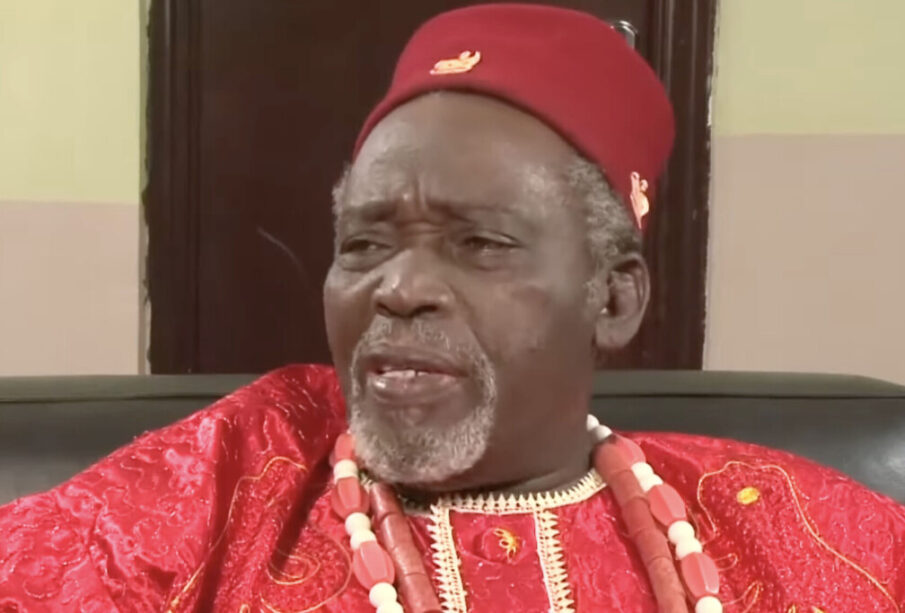
Honoring the Legacy of Olu Jacobs
A Life Well Lived and Fought: Honoring the Legacy of Olu Jacobs
There are some people whose passing feels bigger than the loss of an individual. Their departure creates a silence that reaches beyond family, friends and colleagues. It touches an entire generation that watched them, learned from them and, in one way or another, grew up with their work.
The death of veteran Nigerian actor Oludotun Baiyewu Jacobs, popularly known as Olu Jacobs, at the age of 84, is one such moment. His family announced his death on September 16, 2026, describing him as “The Lion of Lufodo” and announcing that he had lived a life “well lived and fought.”
That description is particularly fitting.
Olu Jacobs did not merely have a long career. He fought for a place for serious acting in an industry that was still finding its feet. He crossed continents, mastered stage and screen, returned to Nigeria when doing so required courage, and became one of the defining figures of Nigerian theatre and film.
His legacy is therefore not simply the collection of movies he appeared in. It is the standard he represented.
From Kano to the World
Olu Jacobs was born on July 11, 1942, to parents of Egba-Alake heritage from Abeokuta, Ogun State, but he spent his early childhood in Kano. At Holy Trinity School, he participated in debating and drama, developing an early interest in performance.
One experience helped shape his ambition.
As a young man in Kano, Jacobs watched the legendary Nigerian theatre pioneer Hubert Ogunde perform at the Colonial Hotel. The experience strengthened his desire to become an actor.
His decision was not necessarily an easy one. Like many young Africans who wanted careers in the arts, he had to pursue his calling against conventional expectations.
In 1964, he travelled to Britain and trained at the Royal Academy of Dramatic Art in London. From there, his career began to extend far beyond Nigeria. He worked with repertory theatre companies in Britain and Ireland and appeared in stage productions, television programmes and international films.
His British television credits included productions such as The Goodies, Till Death Us Do Part, Barlow at Large, The Professionals and The Third Eye. He also appeared in international films including The Dogs of War, Baby: Secret of the Lost Legend and Roman Polanski’s Pirates.
That history matters because Olu Jacobs was already an accomplished international actor before becoming one of Nollywood’s most recognisable faces.
The Decision to Come Home
Perhaps one of the most important chapters of Jacobs’ story was his return to Nigeria.
He could have continued building his career abroad. Instead, he returned to a country whose film industry was developing and whose creative infrastructure was nowhere near as established as what he had experienced in Britain.
Director Tunde Kelani, who worked with Jacobs early in his career, recently recalled that Jacobs had already built an impressive reputation in British theatre, television and international cinema. Yet he eventually embraced the emerging Nigerian film industry and its limitations.
That decision became part of his legacy.
Nigeria’s modern film industry did not emerge fully formed. It was built through experimentation, difficult working conditions, limited resources and the persistence of people who believed African stories deserved to be told professionally.
Jacobs was one of those people.
Kelani described him as a performer who brought discipline and generosity to productions, recalling how Jacobs participated in the student film Trying Times without asking for a fee beyond a meal during the shoot.
That small story says something significant about the man.
Greatness is often remembered through awards, but the people who worked closely with someone frequently remember something else: how that person behaved when there was nothing to gain.
The Voice, The Presence and the Character
For generations of Nigerian viewers, the name Olu Jacobs immediately brought certain images to mind.
A king.
A father.
A patriarch.
A traditional ruler.
A powerful businessman.
A politician.
A respected elder.
A man whose arrival in a scene could change its atmosphere.
His deep voice and commanding delivery became part of the soundscape of Nigerian cinema. His physical presence was equally powerful. He could communicate authority without shouting and menace without exaggerated movement.
Yet reducing Jacobs to his famous “king” roles would be unfair.
His real achievement was his ability to inhabit characters.
He understood that acting was more than memorising lines. It involved understanding human beings: their fears, ambitions, weaknesses, pride, regrets and contradictions.
That is why his performances continued to resonate.
He made fictional people feel familiar.
And sometimes, frighteningly, he made them feel like people we already knew.
More Than an Actor
Olu Jacobs’ influence extended beyond individual performances.
Together with his wife, veteran actress Joke Silva, he co-founded the Lufodo Group, which became involved in film production, distribution and performing arts education. The couple also established the Lufodo Academy of Performing Arts to help train a new generation of performers.
This is an important part of his legacy because building an industry requires more than appearing in films.
It requires creating structures.
It requires teaching.
It requires giving younger people opportunities.
It requires thinking about what happens after you are gone.
Jacobs and Silva did that through their professional partnership and their work with Lufodo.
In 2022, the Lagos State Government handed the management of the historic Glover Memorial Hall to the Lufodo Group, further connecting the couple’s work with the preservation and development of Nigeria’s performing arts.
A Career Measured in Decades
Jacobs’ career stretched across more than five decades.
He worked in theatre before the word “Nollywood” became globally recognisable. He worked in television before streaming platforms transformed how audiences consumed entertainment. He acted in films when Nigerian cinema was still searching for its international identity.
His career therefore mirrors the transformation of Nigerian entertainment itself.
Over the years, he appeared in more than 100 Nigerian films, with later credits including Oloibiri and The Royal Hibiscus Hotel. His work earned significant recognition, including the Africa Movie Academy Award for Best Actor in a Leading Role in 2007. He received the Industry Merit Award at the Africa Magic Viewers’ Choice Awards in 2013 and an Africa Movie Academy Awards Lifetime Achievement Award in 2016.
In 2011, the Nigerian government conferred on him the national honour of Member of the Order of the Federal Republic (MFR).
But perhaps the greatest measure of his career was not an award ceremony.
It was recognition.
People knew the voice.
They knew the face.
They knew the name.
And they knew what his presence usually meant for a production.
Olu Jacobs and Joke Silva: A Partnership Beyond the Screen
Any conversation about Olu Jacobs’ life would be incomplete without Joke Silva.
Their relationship became one of the most enduring partnerships in Nigerian entertainment.
The two reportedly met in 1981 at the National Theatre in Lagos while working on Wole Soyinka’s Jero’s Metamorphosis. They married in 1985.
Together, they built a family and a professional partnership that lasted for decades.
Their relationship also challenged some conventional expectations about marriage and professional identity. Silva retained her professional name, and Jacobs supported her decision, recognising that she had already established herself as Joke Silva before becoming his wife.
Their story was not simply about two famous actors falling in love.
It was about two professionals building something together.
And in the later years of Jacobs’ life, Silva’s role became even more significant.
His passing has also brought renewed attention to the private realities behind public greatness: ageing, vulnerability, family and caregiving.
The actor who once played powerful kings and commanding patriarchs was, eventually, simply a husband, father and grandfather.
That may be one of the most human parts of his story.
The Meaning of “A Life Well Lived and Fought”
The phrase chosen by Jacobs’ family deserves reflection.
A life can be well lived without being easy.
Success does not mean that there were no difficult seasons.
Olu Jacobs’ journey involved leaving Nigeria, building a career abroad, returning home, entering a developing creative industry and maintaining relevance across generations.
He experienced the changing nature of entertainment.
He watched analogue production give way to digital filmmaking. He witnessed Nigerian cinema move from local video productions into an internationally recognised industry. He saw younger actors rise and established stars become global names.
Through all those changes, he remained part of the story.
That is what makes his legacy particularly important.
He was not merely successful within an existing system.
He helped shape the system.
What Nigeria Loses
When an actor of Olu Jacobs’ stature dies, Nigeria loses more than a celebrity.
It loses a living connection to an earlier chapter of its cultural history.
It loses someone who knew theatre before Nollywood became a global brand.
It loses an actor who understood the discipline of stage performance and brought that discipline into film.
It loses one of the bridges between generations.
Tunde Kelani recently described Jacobs as a “founding patriarch” of modern Nigerian screen performance and recalled his generosity, discipline and formidable talent.
Those qualities may ultimately matter more than the number of films attached to his name.
Because the most valuable legacy of an artist is not simply the work they leave behind.
It is the people they inspire to continue.
The Lion of Lufodo
Olu Jacobs’ family called him “The Lion of Lufodo.”
It is a fitting name.
Not because his career was perfect or because his life was without struggle, but because he stood for something larger than celebrity.
He represented craft.
He represented endurance.
He represented professionalism.
He represented the possibility of taking Nigerian talent to the world and still returning home to invest in the Nigerian creative space.
His life reminds aspiring actors, filmmakers, writers, designers and other creatives that careers are rarely built overnight.
Sometimes, they are built over decades.
Sometimes, they require leaving home and returning.
Sometimes, they require surviving seasons when the industry does not yet recognise what you are capable of.
And sometimes, they require simply refusing to stop.
A Final Curtain
Olu Jacobs’ final curtain has fallen, but his performance does not end here.
It continues in the films people will revisit.
It continues in the actors who studied his work.
It continues in the students who pass through institutions created to strengthen the performing arts.
It continues in the Nigerian stories that will be told by people he helped inspire.
And it continues in the memories of audiences who heard that unmistakable voice and immediately knew that someone important had entered the scene.
For more than five decades, Olu Jacobs gave audiences characters they could fear, admire, question, laugh with and remember.
Now, the man behind those characters has taken his final bow.
His family said he lived a life “well lived and fought.”
Perhaps that is the most fitting tribute of all.
Because Olu Jacobs did not merely live long.
He lived purposefully. He fought for his craft. He crossed boundaries. He built. He taught. He endured. And he left the Nigerian creative industry richer than he found it.
The films will remain.
The voice will remain.
The lessons will remain.
And for generations of Nigerians who watched him become king after king, father after father, villain after villain and patriarch after patriarch, one truth will remain particularly clear:
There was only one Olu Jacobs.
And there will never be another quite like him.




Leave a reply







Africa’s Source for Breaking News | Entertainments | Health | Finance | Sports | Lifestyle and Business News.


