
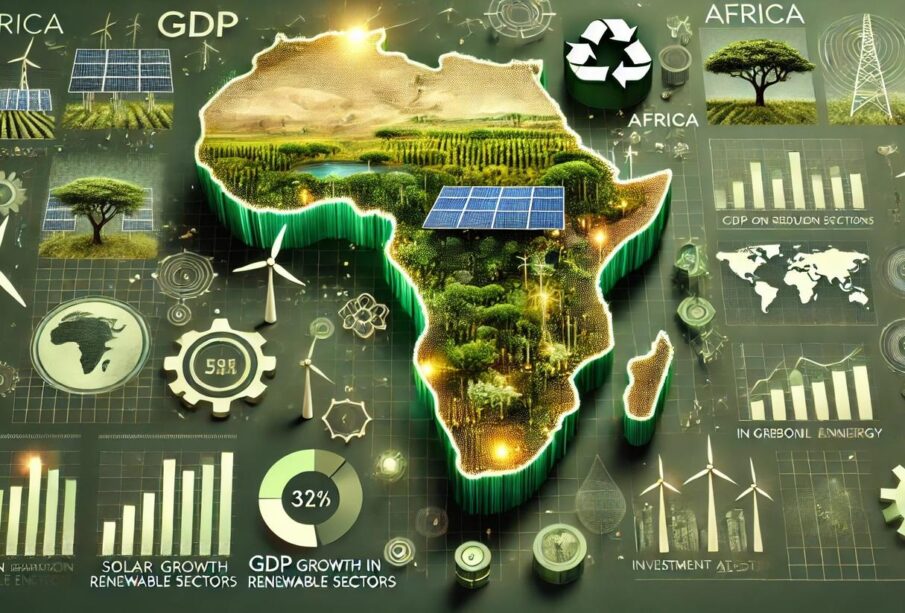
Africa's Role in the Global Green Economy
The global economy is changing. Governments, businesses, and consumers are increasingly looking for ways to grow while reducing environmental damage.
This transition has created the green economy, an economic model that focuses on sustainable development, renewable energy, efficient resource use, environmental protection, and inclusive growth.
Africa has an important role to play in this transition. The continent has abundant renewable energy resources, critical minerals, large agricultural landscapes, forests, and a young population capable of driving new industries. At the same time, Africa faces major challenges, including energy poverty, limited infrastructure, climate vulnerability, and inadequate access to financing.
With the right investments and policies, Africa can move from being primarily affected by the global green transition to becoming one of its major contributors.
Africa’s Renewable Energy Potential
One of Africa’s greatest advantages is its renewable energy potential. Many parts of the continent receive significant amounts of sunlight throughout the year, creating enormous opportunities for solar power. Countries are also investing in wind, hydropower, geothermal energy, and other renewable technologies.
Renewable energy can help African countries address two challenges at once: expanding access to electricity and reducing dependence on fossil fuels.
Solar mini-grids and off-grid systems are particularly important for rural communities that are not connected to national electricity networks. They can provide power for homes, schools, health facilities, farms, and small businesses.
Critical Minerals and the Green Transition
Africa is also important because of its mineral resources.
The global transition to electric vehicles, renewable energy systems, batteries, and other clean technologies requires minerals such as copper, cobalt, lithium, manganese, graphite, and nickel. Several African countries possess significant deposits of these resources.
However, mineral wealth alone does not guarantee economic development.
African countries have an opportunity to move beyond simply exporting raw materials by developing processing, manufacturing, and related industries locally. Building stronger mineral value chains could create jobs, increase government revenue, develop technical skills, and encourage industrialization.
This would allow more of the economic benefits of the green transition to remain within African economies.
Green Agriculture and Food Production
Agriculture is another major area where Africa can contribute to the green economy.
Farmers across the continent are increasingly exploring climate-smart agricultural practices that improve productivity while protecting soil, water, and ecosystems. These practices can include efficient irrigation, agroforestry, improved soil management, drought-resistant crops, and better use of agricultural technology.
Green agriculture can also reduce waste.
Improved storage, transportation, processing, and distribution can help prevent food from being lost before reaching consumers. This is especially important in regions where agricultural production is strong but inadequate infrastructure limits farmers’ ability to reach markets.
Africa’s Natural Ecosystems as Economic Assets
Africa’s forests, wetlands, grasslands, and other ecosystems provide valuable environmental services.
Forests store carbon, protect biodiversity, regulate water systems, and support millions of livelihoods. Wetlands help manage water and provide important habitats for wildlife. Grasslands support livestock and wildlife while contributing to soil and ecosystem health.
Protecting these ecosystems can therefore become part of Africa’s green economic strategy.
Conservation programmes, sustainable tourism, restoration projects, and responsible carbon initiatives can create economic opportunities while protecting natural resources.
However, environmental markets must be designed carefully so that local communities receive meaningful benefits and conservation does not lead to unfair land-use practices.
The Growth of Green Businesses
The green economy is also creating opportunities for African entrepreneurs. Businesses are emerging in areas such as solar energy, electric mobility, recycling, sustainable packaging, clean cooking, waste management, water technology, and environmentally friendly agriculture.
Young African entrepreneurs can play a particularly important role in this transformation. With access to financing, training, technology, and supportive policies, startups can develop solutions designed specifically for African cities and communities.
For example, companies working on waste collection and recycling can address urban pollution while creating employment. Solar businesses can expand electricity access while building new markets.
This demonstrates that environmental challenges can also become opportunities for innovation.
Green Jobs for Africa’s Young Population
Africa has one of the world’s youngest populations. This demographic trend could become an important advantage in the green economy.
The transition will require engineers, technicians, farmers, researchers, construction workers, environmental specialists, entrepreneurs, designers, and technology professionals.
Investing in green skills can help young people participate in emerging industries rather than simply becoming consumers of technologies developed elsewhere.
Vocational education and technical training will be especially important. Installing solar systems, maintaining electric vehicles, managing recycling facilities, restoring ecosystems, and operating clean-energy infrastructure all require practical skills.
The Importance of Green Finance
One of the biggest barriers to Africa’s green transition is access to finance. Many African countries require significant investment to expand renewable energy, modernize transport systems, improve waste management, strengthen climate resilience, and develop sustainable industries.
International climate finance can help, but African countries also need stronger domestic financial systems capable of supporting green businesses and infrastructure.
Banks, investment funds, governments, development institutions, and private investors can all contribute by creating financing products designed for sustainable projects.
Making green finance more accessible to small businesses is particularly important because many innovative environmental solutions are being developed by smaller enterprises.
Building Sustainable African Cities
Africa’s rapidly growing cities will have a major influence on the continent’s environmental future. Urban populations need housing, transportation, electricity, water, waste collection, and other services. If these systems are developed using inefficient technologies, cities could become increasingly expensive and environmentally damaging.
Green urban development offers another path.
Cities can invest in public transportation, renewable electricity, energy-efficient buildings, recycling systems, green spaces, water conservation, and better urban planning.
These investments can improve quality of life while reducing pollution and resource consumption.
Challenges to Africa’s Green Economy
Despite the opportunities, the transition will not be easy.
Many African countries still struggle with inadequate electricity infrastructure, limited access to capital, weak industrial capacity, and skills shortages. Climate change is also placing additional pressure on agriculture, water supplies, infrastructure, and communities.
There is also a risk that Africa could remain primarily an exporter of raw materials while other countries capture most of the value created by green technologies.
For this reason, African governments need policies that encourage local processing, manufacturing, research, entrepreneurship, and skills development.
A Chance to Build a Different Economic Future
Africa’s role in the global green economy is bigger than simply supplying minerals or renewable energy resources. The continent has an opportunity to develop new industries, create jobs, improve energy access, protect ecosystems, and build more sustainable cities.
Achieving this will require cooperation between governments, businesses, communities, financial institutions, universities, and international partners.
The green economy should also be designed around Africa’s own development priorities. Clean energy should expand electricity access. Sustainable agriculture should improve food security. Green industries should create decent jobs. Natural-resource protection should support communities.
Africa has many of the resources needed to participate meaningfully in the global green transition. The key question is whether the continent can turn those resources into lasting economic value.
With strategic investment, strong institutions, innovation, and inclusive policies, Africa can become not only a participant in the global green economy but one of its important drivers.




Leave a reply







Africa’s Source for Breaking News | Entertainments | Health | Finance | Sports | Lifestyle and Business News.


