
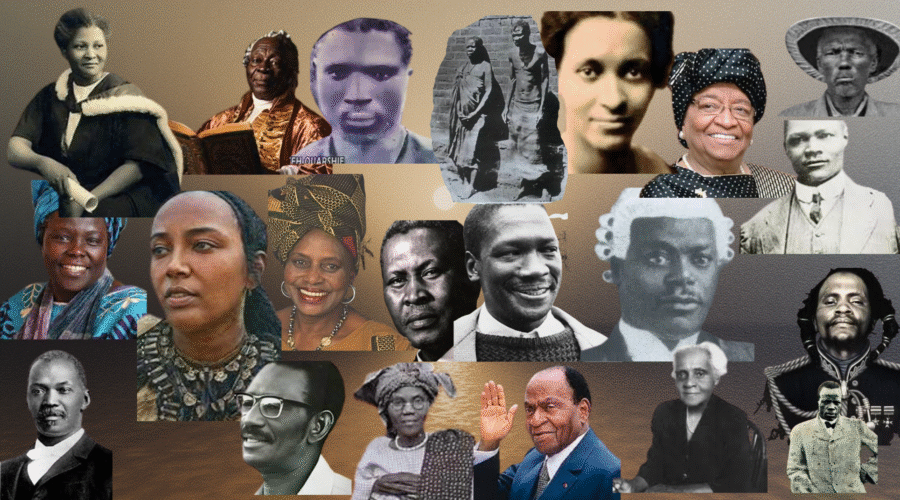
Forgotten Heroes of African History
Forgotten Heroes of African History: The Stories We Should Never Stop Telling
Africa’s history is filled with courageous people who challenged oppression, defended their communities, built institutions and helped shape the continent’s future. Yet, many of these individuals remain largely unknown outside their countries or communities.
When African history is discussed, familiar names such as Nelson Mandela, Kwame Nkrumah, Jomo Kenyatta and Patrice Lumumba often dominate the conversation. Their contributions are undoubtedly important. However, countless other men and women also played extraordinary roles in Africa’s political, cultural, social and economic development.
These forgotten heroes of African history deserve to be remembered, not simply as figures from the past, but as people whose courage and ideas continue to influence Africa today.
Who Are Africa’s Forgotten Heroes?
Forgotten heroes are individuals whose contributions have received limited attention in mainstream historical accounts. Some fought colonial rule, while others resisted slavery, defended indigenous communities, promoted education or transformed African culture.
Many were overlooked because their stories were passed down through oral traditions rather than written records. Others lived in regions where their contributions were not widely documented. Women, in particular, have often received less historical recognition despite playing major roles in resistance movements and community development.
Remembering these figures helps create a broader and more accurate understanding of African history.
1. Queen Amina of Zazzau – The Warrior Queen
Queen Amina of Zazzau, associated with the Hausa city-state of Zazzau in present-day northern Nigeria, is remembered in oral traditions as a powerful military leader.
According to historical traditions, Amina expanded Zazzau’s influence through military campaigns and strengthened its defensive structures. She is also associated with the construction of fortified walls in territories connected with her campaigns.
Although accounts of her life vary, her story has survived for centuries and continues to represent female leadership, military strength and political ambition in precolonial West Africa.
Her legacy challenges the idea that women played only supporting roles in African political history.
2. Yaa Asantewaa – The Woman Who Challenged British Rule
Yaa Asantewaa was a queen mother and influential leader of the Ashanti Empire in present-day Ghana.
In 1900, she became a central figure in the resistance against British colonial rule during what became known as the War of the Golden Stool.
Yaa Asantewaa reportedly challenged other leaders to resist British demands and eventually led Ashanti forces in the struggle.
The rebellion was defeated, and Yaa Asantewaa was captured and exiled. Nevertheless, her courage made her one of the most important symbols of resistance in Ghanaian history.
Her story demonstrates that African women were not passive observers during the colonial era. They could be political leaders, strategists and commanders.
3. Funmilayo Ransome-Kuti – A Pioneer for Women’s Rights
Funmilayo Ransome-Kuti was a Nigerian educator, activist and political organiser who advocated strongly for women’s rights and social justice.
She played a major role in the Abeokuta women’s movement, which challenged unfair taxation and colonial policies affecting women.
Her activism demonstrated the political power of organised communities. Rather than accepting unjust policies, she helped women mobilise, protest and demand accountability.
She was also an advocate for education and greater political participation by Nigerian women.
Today, Ransome-Kuti’s legacy can be connected to many of the conversations surrounding women’s leadership, civic participation and equality across Africa.
4. Dedan Kimathi – A Symbol of Kenyan Resistance
Dedan Kimathi was one of the most prominent leaders associated with Kenya’s Mau Mau uprising against British colonial rule.
Born in central Kenya, Kimathi became involved in the struggle against colonial land policies and political domination.
He eventually became a senior figure in the armed resistance. British authorities captured him in 1956, and he was executed in 1957.
For decades, colonial narratives portrayed Mau Mau fighters largely through the lens of rebellion and violence. Later historical reassessments placed greater attention on the political and social conditions that contributed to the uprising.
Kimathi’s story remains an important part of Kenya’s journey toward independence.
5. Queen Nzinga – The Diplomat Who Resisted Portuguese Expansion
Queen Nzinga, also known as Njinga, ruled the kingdoms of Ndongo and Matamba in what is now Angola during the 17th century.
She became famous for her resistance to Portuguese expansion and the slave trade.
Nzinga was not simply a military leader. She was also a skilled diplomat who negotiated with European powers while working to protect the interests of her kingdoms.
Her ability to navigate warfare, diplomacy and regional politics made her one of the most remarkable leaders in African history.
Her story also illustrates how African kingdoms responded strategically to European expansion rather than simply accepting foreign domination.
6. Thomas Sankara – The Revolutionary Who Wanted a Different Africa
Thomas Sankara was the revolutionary leader of Burkina Faso from 1983 until his assassination in 1987.
Although he is well known in parts of Africa, his contributions are still unfamiliar to many younger Africans.
Sankara promoted self-reliance, women’s participation in public life, environmental protection and resistance to excessive dependence on foreign powers.
Under his leadership, the country underwent ambitious social and economic programmes, including efforts to expand healthcare and education.
His short time in power left a lasting impression because of his emphasis on integrity, national independence and social transformation.
7. Wangari Maathai – The Environmentalist Who Planted More Than Trees
Wangari Maathai became the first African woman to receive the Nobel Peace Prize in 2004.
Through the Green Belt Movement, which she founded in Kenya, Maathai connected environmental conservation with community empowerment and women’s participation.
Her work showed that environmental issues are closely connected to poverty, livelihoods, governance and social justice.
While she eventually became internationally recognised, many people still underestimate the scale of her influence.
Her approach remains relevant as African countries confront deforestation, climate change, land degradation and pressure on natural resources.
8. Mekatilili wa Menza – The Kenyan Woman Who Defied Colonial Rule
Mekatilili wa Menza was a Kenyan resistance leader who opposed British colonial policies among the Giriama people.
She encouraged her community to resist colonial interference and the forced labour and taxation systems imposed by colonial authorities.
Her activism eventually led to her arrest and exile. However, she continued to be remembered within Giriama communities as a symbol of resistance.
Her story is particularly significant because it demonstrates how local resistance could take different forms across colonial Africa.
Not every resistance leader commanded an army. Some mobilised communities through speeches, cultural traditions and political organisation.
Why Do Some African Heroes Become Forgotten?
There are several reasons why important African figures disappear from mainstream historical narratives.
Colonial Historical Narratives
For much of the colonial period, African history was recorded from European perspectives. African resistance leaders were frequently described as rebels or troublemakers rather than political actors responding to colonial policies.
Limited Historical Documentation
Many African societies traditionally relied heavily on oral history. While oral traditions preserved important stories, they were sometimes overlooked by historians who prioritised written records.
Gender Inequality
Women who participated in political movements, economic activities and resistance campaigns were often given less attention than male leaders.
National Boundaries
Modern African borders do not always correspond to the political and cultural communities that existed historically. A figure who is celebrated in one country may be almost unknown elsewhere on the continent.
Education Systems
School curricula often have limited space for African history. Students may learn about major independence leaders without exploring the wider network of activists, community organisers, artists, intellectuals and resistance fighters who contributed to historical change.
Why Remembering These Heroes Matters
Learning about forgotten African heroes is more than an exercise in nostalgia. It helps Africans understand that the continent has always produced leaders, thinkers, innovators and activists capable of confronting difficult challenges.
Their stories also provide young people with a more complete picture of African identity.
Instead of viewing African history only through colonialism, poverty or political instability, people can explore centuries of leadership, creativity, resistance, diplomacy and innovation.
Remembering these individuals can also inspire a new generation to recognise that meaningful change does not always begin with famous people. Sometimes it starts with teachers, farmers, community organisers, activists, entrepreneurs, artists and ordinary citizens who decide to challenge an unfair system.
Preserving African History for Future Generations
Technology provides new opportunities to preserve stories that were once at risk of disappearing. Digital archives, documentaries, podcasts, museums, books and educational platforms can make African historical knowledge accessible to millions of people.
Families and communities also have an important role to play. Oral histories, traditional stories, photographs and personal records can help preserve local histories that may never appear in conventional textbooks.
African countries can strengthen this process by investing in museums, historical research, cultural institutions and history education.
Young Africans can contribute too. Learning about the history of their communities, interviewing older relatives and sharing well-researched historical stories online can help keep these narratives alive.
A History Bigger Than the Famous Names
Africa’s history cannot be reduced to a handful of internationally recognised personalities. Behind every major political transformation were communities, organisers, intellectuals, farmers, workers, women, young people and local leaders whose contributions often received little attention.
From Yaa Asantewaa’s resistance to Queen Nzinga’s diplomacy, from Funmilayo Ransome-Kuti’s activism to Wangari Maathai’s environmental movement, these stories reveal a continent shaped by people who refused to accept the limits placed on them.
The task today is not simply to remember famous heroes. It is to keep searching for the forgotten ones.
Their stories are part of Africa’s history, and Africa cannot fully understand its past or imagine its future without them.

Leave a reply





Africa’s Source for Breaking News | Entertainments | Health | Finance | Sports | Lifestyle and Business News.


