
Historical Battles That Changed Nations
Historical Battles That Changed Nations
Throughout history, battles have done more than determine who won or lost on the battlefield.
Some conflicts changed borders, ended empires, created new political systems, influenced cultures, and shaped the future of entire nations. While wars are often remembered through dates and famous commanders, their consequences can continue for generations. Here are some historical battles that had a lasting impact on nations and societies.
The Battle of Hastings
The Battle of Hastings took place in England in 1066 and changed the country’s political and cultural direction.
William, Duke of Normandy, defeated King Harold II and subsequently became William the Conqueror. The Norman victory introduced major changes to England’s ruling class, land ownership, language, architecture, and administration.
The battle also strengthened connections between England and continental Europe, leaving an influence that can still be seen in English history and language today.
The Battle of Tours
Fought in 732, the Battle of Tours was an important conflict between Frankish forces led by Charles Martel and an Umayyad army advancing into Western Europe.
Charles Martel’s victory strengthened Frankish power and contributed to the political development of the Carolingian dynasty. His success also helped shape the balance of power between Christian kingdoms and Muslim territories in Western Europe.
Although historians continue to debate the battle’s precise long-term significance, its place in European history remains important.
The Battle of Agincourt
The Battle of Agincourt in 1415 became one of the most famous English victories of the Hundred Years’ War. Despite being heavily outnumbered, English forces under Henry V defeated a larger French army. The victory strengthened Henry’s position and became a powerful symbol of English military achievement.
The battle also demonstrated the effectiveness of disciplined infantry and longbowmen against heavily armoured forces under certain battlefield conditions.
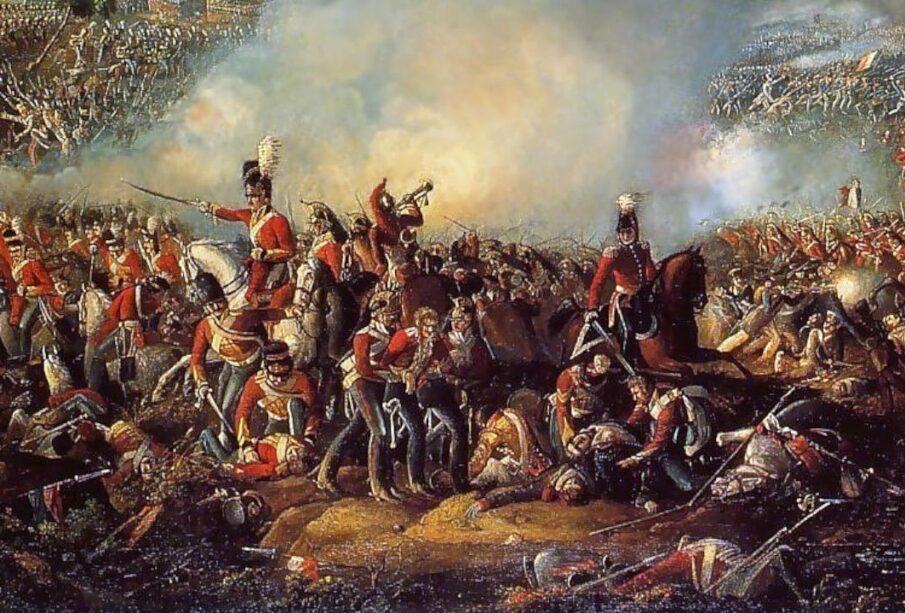
The Battle of Waterloo
The Battle of Waterloo in 1815 brought Napoleon Bonaparte’s final attempt to regain power to an end.
Napoleon’s defeat by the allied forces led by the Duke of Wellington and Prussian commander Gebhard Leberecht von Blücher ended the Napoleonic Wars and contributed to a new political balance in Europe.
The victory helped establish a period of relative stability among Europe’s major powers and influenced international diplomacy for decades.
The Battle of Adwa
The Battle of Adwa, fought in Ethiopia in 1896, holds particular significance in African history. Ethiopian forces under Emperor Menelik II defeated the invading Italian army. The victory protected Ethiopia from becoming an Italian colony and became an important symbol of African resistance to European colonial expansion.
Adwa also inspired anti-colonial movements and remains a major part of Ethiopia’s national identity.
The Battle of Omdurman
The Battle of Omdurman took place in Sudan in 1898 during the period of European imperial expansion in Africa.
British and Egyptian forces defeated the Mahdist army near Omdurman. The battle contributed to the establishment of Anglo-Egyptian control over Sudan and demonstrated the enormous military advantage created by modern weapons against forces equipped with more traditional arms.
Its consequences affected Sudan’s political development and relationship with Britain for decades.
The Battle of Stalingrad
The Battle of Stalingrad during the Second World War became one of the major turning points on the Eastern Front.
Soviet forces surrounded and defeated a large German army, severely weakening Nazi Germany’s military position. After Stalingrad, Soviet forces increasingly pushed westward toward Germany.
The battle had enormous human and material costs, but its outcome significantly influenced the eventual defeat of Nazi Germany and the post-war political order in Europe.
The Battle of Midway
The Battle of Midway in 1942 was a major turning point in the Pacific War.
United States forces successfully intercepted and defeated a Japanese fleet, destroying several Japanese aircraft carriers. The victory shifted the strategic balance in the Pacific and allowed the United States and its allies to move increasingly onto the offensive.
The battle demonstrated the growing importance of intelligence, naval aviation, and aircraft carriers in modern warfare.
The Battle of Yorktown
The Battle of Yorktown in 1781 played a crucial role in the American Revolutionary War. American and French forces surrounded the British army under General Charles Cornwallis, eventually forcing its surrender. Although fighting continued afterward, the defeat significantly weakened Britain’s ability to continue the war.
The conflict ultimately resulted in British recognition of American independence and the emergence of the United States as an independent nation.
The Battle of Sekigahara
The Battle of Sekigahara in Japan in 1600 reshaped the country’s political structure. Tokugawa Ieyasu’s victory over rival forces paved the way for the establishment of the Tokugawa shogunate. The resulting political system brought a long period of relative peace and stability to Japan.
The Tokugawa era influenced Japanese government, society, economic development, and culture for more than two centuries.
Why These Battles Still Matter
Historical battles matter not simply because of military victories but because of what followed them. A battlefield decision could lead to a change in leadership, the creation of a new government, the loss or preservation of independence, or the redrawing of national boundaries.
Battles such as Adwa demonstrate how military resistance could challenge colonial ambitions. Others, such as Waterloo and Stalingrad, transformed international power structures far beyond the battlefield.
Studying these conflicts helps us understand that nations are shaped not only by politics and economics but also by moments of crisis that can alter the direction of history. Their legacies continue to influence national identity, international relations, and the way societies remember their past.




Leave a reply




Africa’s Source for Breaking News | Entertainments | Health | Finance | Sports | Lifestyle and Business News.


