
How Namibia Is Handling Its Debt Burden
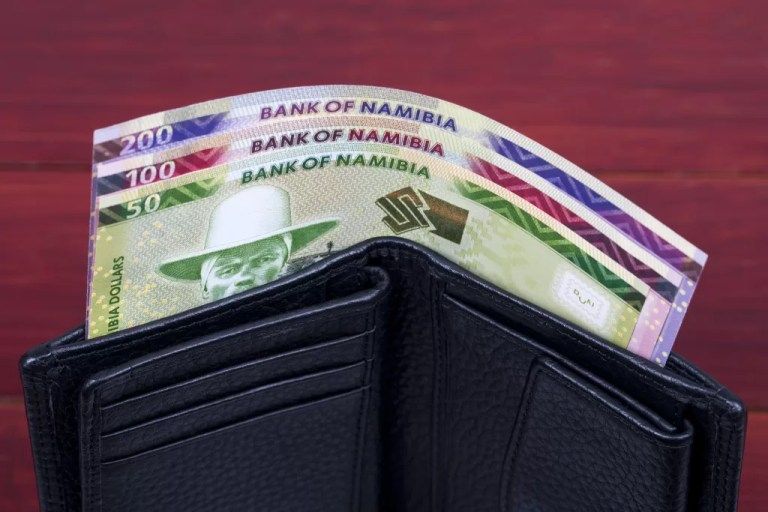
How Namibia Is Handling Its Debt Burden,
How Namibia Is Handling Its Debt Burden, and Who Pays the Price
Namibia faces a difficult economic balancing act. The government must manage its growing debt while funding public services, creating jobs, and improving living standards. Although the country has valuable mineral resources and opportunities in tourism, agriculture, and renewable energy, these advantages have not eliminated unemployment, poverty, or pressure on public finances.
In February 2026, Namibia’s government projected that public debt would reach approximately 65.2% of gross domestic product (GDP) during the 2025/26 financial year. The government also announced plans to reduce its budget deficit and gradually bring the debt ratio towards 60% over the longer term. However, weaker diamond revenues and declining transfers from the Southern African Customs Union (SACU) have complicated those efforts. (Reuters, February 2026).
The challenge goes beyond government finances. Decisions about taxes, public spending, and borrowing affect households, small businesses, young job seekers, and future generations. Understanding how Namibia is handling its debt burden therefore requires examining both its economic strategy and the people who bear its consequences.
Understanding Namibia’s Debt Burden
Government debt accumulates when public expenditure exceeds available revenue and authorities borrow to cover the difference. Borrowing can finance essential infrastructure, schools, hospitals, and development projects. However, it becomes harder to manage when interest payments consume an increasing share of government income.
Namibia depends on several revenue sources, including taxes, mining activities, and SACU transfers. SACU revenue is particularly important because it contributes substantially to the national budget. When regional customs revenue falls, Namibia can face an unexpected funding gap.
The diamond industry has also experienced difficulties. Falling global diamond prices and weaker demand have reduced an important source of economic activity and government revenue. Although stronger gold and uranium prices have provided some support, they have not completely removed the pressure.
The International Monetary Fund’s June 2026 assessment projected that Namibia’s gross public debt could rise from 66.3% of GDP in 2026 to 70.7% by 2030 without sufficient improvement in the fiscal outlook. These projections highlight the importance of additional measures to stabilise the country’s finances. (IMF, June 2026).
How Namibia Is Managing Its Debt
1. Controlling Government Expenditure
One of Namibia’s main strategies involves controlling public spending and improving the efficiency of government operations.
The 2026/27 budget envisages further fiscal consolidation through measures that include controlling spending on goods and services, reducing transfers to public enterprises, and reforming the Public Service Employees Medical Aid Scheme.
These measures aim to reduce unnecessary expenditure and free up resources for more important priorities. Better procurement, transparent budgeting, and stronger oversight of government programmes can also help ensure that public money delivers measurable results.
However, spending cuts require careful decisions. Reducing waste can improve public finances, but cutting essential infrastructure or social programmes may create problems that cost more to solve later.
The government must therefore distinguish between inefficient spending and investment that supports long-term economic growth.
2. Improving Revenue Collection
Namibia also needs reliable government revenue to meet its financial obligations.
Improving tax compliance, reducing evasion, and strengthening the administration of existing taxes can help increase revenue without immediately imposing substantial new costs on households and businesses.
Economic diversification is equally important. A broader economy would generate income from more industries, reducing dependence on volatile diamond prices and SACU transfers.
However, increasing taxes indiscriminately could discourage investment and place additional pressure on small businesses. The government must balance revenue generation with policies that encourage entrepreneurship, formal employment, and business expansion.
3. Managing Borrowing and Repayments
Debt management involves deciding how much to borrow, where to obtain financing, and how to schedule repayments.
Namibia must carefully balance domestic borrowing with external financing. Borrowing within the country can support local financial markets, but excessive government demand for funds may make credit more expensive for private businesses.
External borrowing provides another financing option, although foreign-currency obligations can create additional risks when exchange rates change.
In October 2025, Namibia redeemed a US$750 million Eurobond. The repayment demonstrated the importance of planning for major debt obligations, although it also contributed to a decline in foreign reserves, according to the IMF’s March 2026 assessment.
The government must therefore consider both its repayment schedule and the need to maintain sufficient financial reserves.
4. Supporting Economic Growth
Namibia cannot solve its debt challenges through spending cuts alone. Sustainable economic growth is essential because it can increase tax revenue, create employment, and make existing debt easier to manage.
Mining remains important, particularly as international demand for uranium and other minerals creates opportunities. Tourism, agriculture, renewable energy, and green hydrogen could also contribute to future growth.
However, major investments must generate tangible benefits for Namibians. Projects should create local employment, develop technical skills, support domestic suppliers, and expand the country’s productive capacity.
If these industries grow successfully, Namibia could strengthen its revenue base while reducing dependence on a narrow range of economic activities.
Who Pays the Price for Namibia’s Debt?
1. Low-Income Households
Low-income families are particularly vulnerable when governments tighten their budgets.
Households already struggling with food, housing, electricity, transport, and school expenses have limited room to absorb additional costs. Higher taxes on essential goods or reductions in social assistance can make daily life even more difficult.
Reduced investment in healthcare, education, and infrastructure can also affect poorer communities disproportionately because they often depend more heavily on public services.
Namibia must therefore ensure that debt reduction does not place an excessive burden on citizens who have the fewest financial resources.
2. Young People Seeking Employment
Young Namibians also face significant risks when economic growth slows.
A weaker economy can discourage businesses from expanding, limit recruitment, and reduce opportunities for people entering the labour market.
The IMF estimated that Namibia’s economic growth slowed to 1.7% in 2025, partly because of prolonged weakness in the diamond sector. It projected growth of 2.1% in 2026, underscoring the need to strengthen economic activity.
For young people, weak growth can mean longer job searches, limited career progression, and greater dependence on informal work.
The government must ensure that fiscal reforms support job creation rather than undermine the industries capable of employing more workers.
3. Small Businesses and Entrepreneurs
Small businesses may face higher borrowing costs when government financing needs compete with private-sector demand for credit.
This can make it harder for entrepreneurs to purchase equipment, expand their operations, or employ additional workers.
Businesses that depend on government contracts may also struggle if public spending slows or payments are delayed.
Namibia needs a debt strategy that encourages private investment. Improving access to finance, simplifying regulations, and paying suppliers promptly can help businesses remain productive while the government controls expenditure.
4. Public-Sector Workers
Civil servants may also experience the effects of spending restraint.
Efforts to control personnel costs and reform public-sector benefits can create uncertainty for government employees. Poorly implemented reforms may affect morale and service delivery.
Nevertheless, better administration and more efficient spending can improve public services over time. The challenge is to eliminate waste without weakening essential institutions such as schools, hospitals, and public safety agencies.
5. Future Generations
Namibia’s debt obligations will affect future taxpayers.
Borrowing to finance productive infrastructure can benefit younger generations by improving transport, education, healthcare, and economic opportunities. However, borrowing to cover recurring expenditure without improving the economy’s capacity to generate income can leave future governments with fewer resources for development.
Responsible borrowing should therefore create lasting economic value rather than simply postpone difficult decisions.
What Namibia Must Do Next
Namibia needs a balanced strategy that combines fiscal discipline with inclusive economic development.
First, the government should improve expenditure efficiency through transparent procurement, stronger financial oversight, and regular evaluation of public projects.
Second, it should broaden the revenue base by strengthening tax administration and encouraging productive investment across multiple industries.
Third, authorities must protect essential social services and targeted support for vulnerable households. Fiscal adjustment will be more sustainable when citizens can still access basic services.
Finally, Namibia should prioritise job creation by supporting local businesses, developing technical skills, and ensuring that investment in mining, tourism, agriculture, and renewable energy produces wider economic benefits.
The IMF’s 2026 assessment emphasised the need for additional fiscal measures to place public debt on a sustainable downward path. Achieving that goal will require consistent implementation rather than relying on optimistic revenue forecasts or temporary improvements in commodity prices.
Conclusion: Namibia’s Debt Problem Is Everyone’s Concern
Namibia’s debt burden presents a serious challenge, but the country has opportunities to strengthen its finances and build a more resilient economy.
Controlling expenditure, improving revenue collection, and managing repayments are necessary steps. However, the success of these policies should not be measured by financial indicators alone.
The real test is whether Namibia can stabilise its debt while creating jobs, protecting vulnerable households, and maintaining essential public services.
The costs of debt adjustment are rarely distributed equally. Low-income families, young job seekers, small businesses, and public-sector workers may experience immediate pressure, while future generations inherit the consequences of today’s borrowing decisions.
Namibia must therefore pursue fiscal responsibility without sacrificing economic opportunity. Ultimately, the best debt strategy is not simply one that reduces government liabilities. It is one that restores financial stability while giving ordinary Namibians a fair chance to build better lives.


Leave a reply





Africa’s Source for Breaking News | Entertainments | Health | Finance | Sports | Lifestyle and Business News.


