
Festivals of Morocco Every African Should Experience
Festivals of Morocco Every African Should Experience
Morocco is a country where ancient traditions meet modern creativity.
From the lively streets of Marrakech to the blue-painted alleys of Chefchaouen, its culture comes alive through music, dance, food, crafts and colourful celebrations. For Africans looking to explore the continent’s cultural richness, Morocco offers experiences that go far beyond its famous markets, deserts and historic cities.
The country’s festivals provide a window into its Amazigh (Berber), Arab, African and Andalusian heritage. They also demonstrate how communities preserve their identities while welcoming influences from across the world. Whether you enjoy live music, traditional food, spiritual performances or spectacular outdoor celebrations, Morocco has something worth experiencing.
For travellers from Nigeria, Ghana, Kenya, South Africa and other African countries, these festivals offer opportunities to discover familiar cultural connections in a different setting. Here are some of Morocco’s most memorable festivals to consider adding to your travel plans.
1. Gnaoua World Music Festival, Essaouira
Few events capture Morocco’s African connections as powerfully as the Gnaoua World Music Festival. Held in the coastal city of Essaouira, this internationally recognised music celebration brings together Gnaoua musicians and performers from different musical traditions.
Gnaoua music has deep roots in the history of sub-Saharan African communities in Morocco. Its distinctive rhythms, spiritual influences and traditional instruments reflect centuries of cultural exchange across the Sahara. Performers use instruments such as the guembri, a three-stringed bass lute, alongside metal castanets called qraqeb.
During the festival, Essaouira transforms into a lively musical destination. Concerts take place on major stages and in public spaces, attracting local residents, international visitors and music enthusiasts.
One of the festival’s greatest attractions is its collaborative spirit. Gnaoua musicians frequently perform alongside jazz artists, African musicians and international performers, creating sounds that cross cultural boundaries.
For African visitors, the experience offers a powerful reminder that African musical traditions have travelled, evolved and influenced cultures far beyond their places of origin. It is also an excellent opportunity to explore Essaouira’s historic medina, coastal scenery and seafood restaurants.
2. Fes Festival of World Sacred Music, Fez
The Fes Festival of World Sacred Music celebrates music as a bridge between cultures, religions and communities. Hosted in Fez, one of Morocco’s most historic cities, the event brings together artists whose performances explore spirituality, heritage and shared human experiences.
The programme typically includes sacred music, traditional singing, instrumental performances and artistic collaborations from different parts of the world. Depending on the edition, visitors may encounter Sufi music, African spiritual traditions, classical Arabic performances and other forms of devotional expression.
Fez provides an extraordinary setting for the celebration. Its ancient medina, historic religious institutions and traditional architecture create an atmosphere that encourages visitors to slow down and appreciate the city’s cultural depth.
For Africans interested in history, religion and the connections between communities, this festival offers more than entertainment. It creates opportunities to discover how music expresses faith, memory and identity across different societies.
Visitors can combine festival performances with guided walks through the medina, visits to traditional craft workshops and explorations of Moroccan architecture.
The festival is particularly appealing to travellers who prefer thoughtful cultural experiences over large, purely commercial entertainment events.
3. Rose Festival, Kelaat M’Gouna
The Rose Festival, also known as the Festival of Roses, celebrates one of Morocco’s most beautiful agricultural traditions. It takes place in Kelaat M’Gouna, a town in the Valley of Roses in the country’s southeastern region.
Every spring, rose fields in the surrounding area produce fragrant flowers used in perfumes, rose water, cosmetics and other products. The festival celebrates this harvest and recognises the farmers and workers who sustain the local rose industry.
Visitors can enjoy traditional music, dancing, market stalls, local food and displays of rose-based products. Depending on the programme, celebrations may also include parades, cultural performances and the selection of a Rose Queen.
The festival offers an opportunity to understand how agriculture shapes community identity and economic life. For African visitors familiar with harvest celebrations, it may feel particularly relatable. Across Africa, communities organise festivals around cocoa, yam, rice, millet and other important crops.
The Rose Festival presents a different expression of the same connection between people, their land and their livelihoods.
Travellers can also explore the surrounding Atlas Mountain landscapes, visit nearby villages and discover traditional Amazigh architecture. If you enjoy photography, nature and local products, this festival deserves a place on your itinerary.
4. Marrakech Popular Arts Festival, Marrakech
Marrakech is famous for its bustling souks, historic palaces and lively public squares. During the Marrakech Popular Arts Festival, the city becomes an even more exciting destination for visitors interested in traditional Moroccan entertainment.
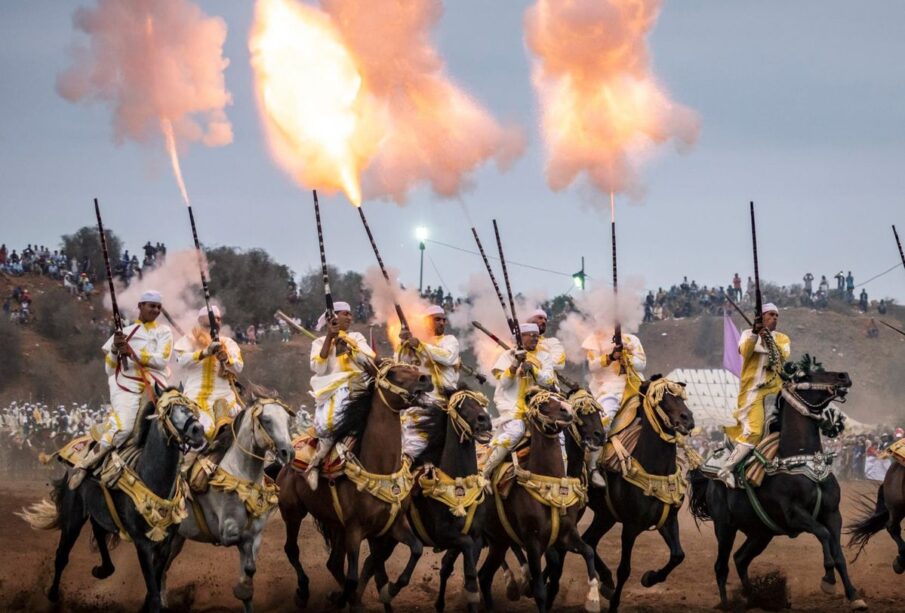
The festival has historically showcased folk musicians, dancers, storytellers and performers representing different regions of Morocco. Depending on the edition, audiences may encounter traditional horse displays, Amazigh music, regional dances and performances inspired by the country’s rural heritage.
One of Morocco’s most famous public spaces, Jemaa el-Fnaa, already offers a taste of traditional street entertainment, with storytellers, musicians and food vendors contributing to its atmosphere. Festival activities can deepen that experience by introducing visitors to artistic traditions they might otherwise overlook.
For African travellers, the attraction lies in seeing how oral storytelling, dance and public performance remain important parts of cultural life. These traditions are also familiar across many African societies, where community gatherings preserve history and pass knowledge between generations.
Before travelling specifically for this festival, check whether an edition has been officially announced and confirm its dates. Festival schedules can change, so it is best not to assume that the event takes place every year on the same dates.
5. Timitar Festival, Agadir
The Timitar Festival in Agadir celebrates Amazigh music while welcoming performers from Morocco and other parts of the world. Its emphasis on Amazigh identity makes it an important cultural experience for visitors interested in the Indigenous communities of North Africa.
Amazigh people have a long history across Morocco and neighbouring countries, including Algeria, Tunisia and Libya. Their languages, music, crafts and cultural practices form an essential part of the region’s heritage.
Timitar has provided a platform for traditional musicians as well as contemporary artists, demonstrating how cultural identity can remain relevant within modern music. Its performances have featured varied musical styles, including regional Amazigh traditions and international influences.
Agadir offers an attractive setting for a festival visit because it combines cultural experiences with beaches, coastal views and opportunities to explore southwestern Morocco.
For Africans interested in the relationship between language, identity and popular culture, Timitar offers a valuable perspective. It shows that preserving tradition does not necessarily mean rejecting modernity. Artists can reinterpret inherited sounds and introduce them to younger audiences without losing their cultural significance.
As with other festivals, travellers should check the latest official programme before booking flights or accommodation.
6. Imilchil Marriage Festival, Atlas Mountains
The Imilchil Marriage Festival is associated with Amazigh communities in Morocco’s High Atlas Mountains. It is one of the country’s most distinctive cultural gatherings, with traditions linked to marriage, community relationships and local identity.
The event is commonly associated with a local moussem, a gathering that can combine religious observances, markets, social activities and cultural celebrations. Popular accounts connect the festival to a romantic legend about two young lovers whose families opposed their relationship.
Although stories about the festival sometimes simplify the customs and their historical origins, the gathering remains an important opportunity to learn about community life in the Atlas region.
Depending on the year and local arrangements, visitors may encounter traditional clothing, music, markets and social gatherings. However, it is important not to assume that every participant is seeking a spouse or that historical marriage customs remain unchanged.
For African travellers, the festival can encourage a deeper appreciation of the diversity within African societies. Traditions surrounding marriage, family and community vary considerably between ethnic groups, even within the same country.
Because Imilchil is relatively remote, travellers should plan transportation and accommodation carefully. Respect local customs, seek permission before photographing people and approach the event as a cultural gathering rather than a tourist spectacle.
7. Erfoud Date Festival, Erfoud
Dates are an important agricultural product in Morocco’s desert regions, and the Date Festival in Erfoud celebrates their role in local culture and livelihoods.
Located near the Sahara Desert, Erfoud is surrounded by palm groves that support date production. The festival brings attention to the farmers, traders and communities whose work sustains this industry.
Visitors can discover different date varieties, sample local products, explore market stalls and enjoy cultural performances. The celebrations also highlight agricultural knowledge and the importance of preserving palm groves in an environment where water management is essential.
For Africans, especially visitors from countries where farming and food markets remain central to everyday life, the experience feels familiar. Nigeria, Ghana and other African countries also have rich agricultural traditions and festivals that celebrate local produce.
The Date Festival provides an opportunity to compare these traditions while learning about the challenges facing desert agriculture.
Visitors can also explore the surrounding landscapes and arrange excursions towards the Sahara. However, because the festival’s programme and dates can vary, confirm arrangements with local tourism authorities before making travel commitments.
How to Plan Your Moroccan Festival Trip
Experiencing Morocco’s festivals requires more than booking a flight. Good planning helps you enjoy the celebrations while respecting the communities that host them.
Choose your festival around your interests. Music lovers may prefer Essaouira or Fez, while travellers interested in agriculture might enjoy the Rose Festival or Date Festival. Film enthusiasts should consider Marrakech’s international cinema event.
Confirm the dates before booking. Festival schedules can change from year to year. Some events follow seasonal harvests, while others depend on official programming. Check announcements from organisers and local tourism authorities.
Budget for transportation and accommodation. Popular festivals can increase demand for hotels and transport. Smaller towns may have limited accommodation, so booking early can make your trip easier.
Respect local customs. Morocco has diverse cultural and religious traditions. Dress appropriately for the setting, ask permission before photographing people and follow guidance at religious or community events.
Explore beyond the festival grounds. Visit local markets, taste regional dishes, learn about traditional crafts and speak with local guides. These experiences often provide a richer understanding of the country than attending performances alone.
African travellers should also check current entry requirements, airline connections, travel insurance arrangements and any applicable visa rules before departure.
Conclusion
Morocco’s festivals reveal a country shaped by African heritage, Amazigh traditions, Arab influences and centuries of cultural exchange. From the rhythms of Essaouira’s Gnaoua musicians to the fragrant rose fields of Kelaat M’Gouna, each celebration offers a different way to understand the people and places that make Morocco unique.
For Africans, these experiences can also challenge the idea that meaningful international travel must involve destinations outside the continent. Africa holds extraordinary cultural diversity, and exploring it can strengthen appreciation for its shared histories and distinctive traditions.
Whether you are a music enthusiast, a creative professional, a history lover or simply someone eager to experience another culture, Morocco offers festivals worth discovering.
The best trip is not necessarily the one with the busiest itinerary. It is the one that allows you to connect with local people, appreciate unfamiliar traditions and return home with a deeper understanding of Africa’s cultural richness.


Leave a reply




Africa’s Source for Breaking News | Entertainments | Health | Finance | Sports | Lifestyle and Business News.


