
Senegal’s Currency Under Pressure
Senegal’s Currency Under Pressure
Senegal’s Currency Under Pressure: What Ordinary Citizens Should Know
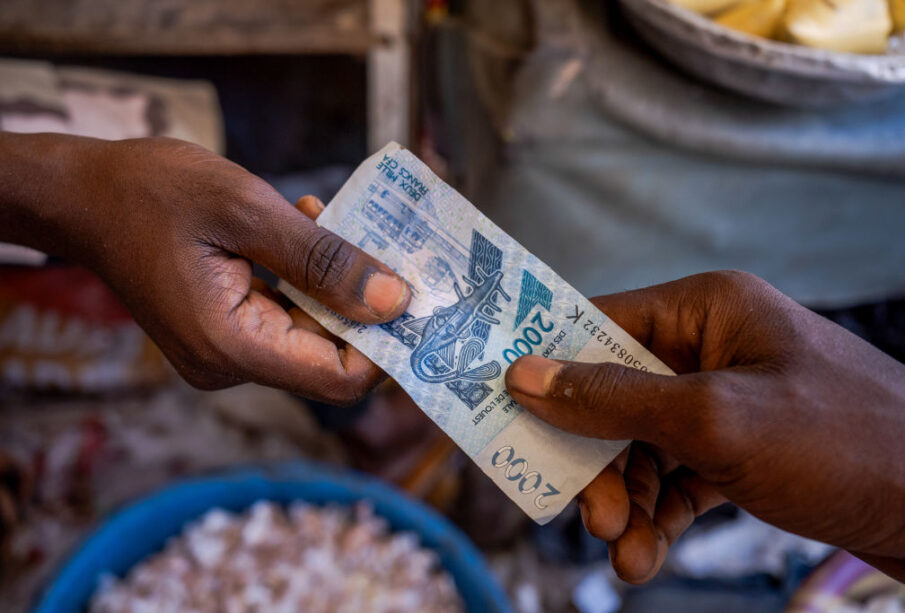
Senegal’s economy is facing a difficult period, and discussions about the country’s currency are becoming increasingly important. But there is one crucial point to understand from the beginning: Senegal’s CFA franc is not simply “crashing” like a freely floating currency.
The West African CFA franc used by Senegal is tied to the euro at a fixed rate. As of October 7, 2026, the official BCEAO reference rate was €1 = 655.957 CFA francs, while $1 was about 586.88 CFA francs.
So why are people talking about pressure on Senegal’s currency?
The bigger issue is not a sudden collapse in the CFA franc. It is the financial pressure surrounding Senegal’s economy: high public debt, difficult refinancing conditions, reduced access to international markets, and the government’s efforts to negotiate a path back to financial stability.
For ordinary citizens, these problems can eventually affect food prices, employment, business costs, government services, borrowing and household finances.
The CFA Franc Is Different From a Floating Currency
To understand Senegal’s situation, it helps to understand the CFA franc.
Senegal uses the West African CFA franc (XOF), which is shared by members of the West African Economic and Monetary Union. Monetary policy is managed by the Central Bank of West African States, or BCEAO.
The CFA franc has a fixed relationship with the euro. That means the exchange rate between the CFA franc and euro does not normally move according to daily market forces in the way the Nigerian naira, Ghanaian cedi or Kenyan shilling can.
This arrangement provides an important degree of exchange-rate stability.
For someone in Senegal buying something priced in euros, the predictable CFA-euro relationship can make planning easier. Businesses involved in European trade also benefit from reduced currency uncertainty.
But stability against the euro does not mean that Senegal’s economy is immune to financial problems.
A country can have a stable exchange rate while households still experience rising costs, weaker purchasing power or fewer employment opportunities.
So What Is Actually Under Pressure?
The biggest pressure is currently on Senegal’s public finances and ability to manage its debt.
The country revealed in 2024 that previous governments had significantly underreported some of its financial obligations. Subsequent assessments put Senegal’s debt burden at around 130% of GDP when broader government-related liabilities are included.
Reuters reported in September that central government debt reached about 25.2 trillion CFA francs, or $44 billion, at the end of 2025.
That is an enormous burden for any economy.
The government now has to find ways to service its debts while continuing to fund infrastructure, public workers, healthcare, education, subsidies and other essential responsibilities.
In September 2026, Senegal launched a debt treatment plan and said it intended to seek treatment of some external debt under the G20 Common Framework. Importantly, the government said CFA-franc-denominated debt would remain outside the restructuring plan.
That distinction matters.
The current crisis is therefore better described as a debt and financing crisis putting pressure on the economy, rather than a straightforward collapse of the CFA franc.
Why Does the Euro Matter?
The CFA franc’s fixed relationship with the euro has both advantages and disadvantages.
One advantage is predictability.
If the CFA franc were freely floating and suddenly lost significant value, imported products could become dramatically more expensive. The euro peg reduces that particular risk.
However, Senegal still imports many products and inputs from outside the euro area.
If the euro becomes more expensive against the US dollar, for example, products priced internationally in dollars can become more expensive in CFA terms.
This matters because international commodities, fuel, machinery and other products can be influenced by dollar prices.
The BCEAO itself has highlighted international risks, including geopolitical tensions and increases in energy and freight costs, as factors affecting the regional economic environment.
What Does This Mean for Food Prices?
This is where ordinary citizens are likely to notice economic pressure first.
When transportation, fuel, imported inputs or financing become more expensive, businesses face higher costs.
A wholesaler may pay more to bring products into the country.
A transporter may face higher operating expenses.
A restaurant may pay more for ingredients.
A manufacturer may pay more for imported equipment or raw materials.
Eventually, some of these costs can be passed on to consumers.
That does not mean every increase in the price of food is caused by the currency. Local harvests, weather, transportation problems, fuel prices, taxes, supply shortages and global commodity prices can all contribute.
For households, however, the distinction may not matter much when the monthly grocery bill rises.
What About Jobs?
Debt problems can also affect employment.
When governments face financial pressure, they may have less room to spend freely. Public investment can slow. Payments to contractors may be delayed. Companies dependent on government projects may experience cash-flow problems.
Senegal’s government has acknowledged the importance of clearing arrears owed to private-sector companies. Its debt treatment plan says reducing debt-service and refinancing pressures should gradually create fiscal space while helping clear pending bills to businesses.
This is important because a government payment is often more than a government accounting entry.
A contractor waiting for payment may struggle to pay workers.
A supplier may delay purchasing stock.
A small business may postpone hiring.
The financial system can therefore transmit government problems into the wider economy.
Should People Panic About Their Savings?
No.
Ordinary citizens should not automatically interpret news about Senegal’s debt negotiations as meaning that their CFA savings are about to become worthless.
The CFA franc’s euro peg remains in place, and the BCEAO continues to operate the regional monetary system.
The more immediate concern for households is purchasing power.
Even if the nominal value of your money remains stable, that money can buy less if prices rise.
That is why financial stability should not be measured only by asking, “What is the exchange rate?”
A better question is:
“What can my income actually buy?”
If a person’s salary stays unchanged while food, transportation, rent and school expenses rise, their real financial position becomes weaker.
What Should Small Businesses Do?
Businesses should prepare for uncertainty rather than assume the situation will resolve immediately.
One practical step is to monitor cash flow closely.
A company that depends heavily on imported goods should understand how exchange-rate movements, international prices and shipping costs affect its margins.
Businesses should also avoid excessive dependence on short-term borrowing when financing conditions are difficult.
Senegal’s recent experience demonstrates why debt structure matters. S&P previously warned about refinancing risks as Senegal increasingly relied on shorter-maturity domestic borrowing after access to international markets became more difficult.
For small businesses, the lesson is simple:
Do not confuse sales with financial health.
A business can have strong sales and still fail if too much cash is tied up in inventory, unpaid invoices or expensive debt.
What Should Ordinary Citizens Watch?
There are several indicators worth following over the coming months.
1. Food and fuel prices
These provide one of the clearest indications of how economic pressure is reaching households.
2. Employment
Changes in hiring, layoffs and business closures can reveal whether financial pressure is spreading through the private sector.
3. Government payments
Watch whether the government successfully reduces outstanding arrears to businesses and contractors.
4. Debt negotiations
Senegal is working toward agreements with external creditors. Reuters reported this week that the government is aiming for an agreement in principle with official creditors and bondholders by December 2026.
5. IMF support
In September, IMF staff reached a preliminary agreement with Senegal on policies that could support a new three-year Extended Credit Facility worth about $2.2 billion, subject to further conditions and approval.
The success of that process could be important for restoring confidence and unlocking additional external financing.
What Can Households Do?
Citizens cannot control government debt negotiations or international financial markets. But they can reduce their personal vulnerability.
Start with a realistic household budget.
Separate essential spending from expenses that can be postponed.
Avoid taking expensive loans simply to maintain a lifestyle.
If possible, build an emergency fund, even if contributions are small.
Small businesses should maintain clear records of income, expenses, debts and receivables.
Households can also avoid panic buying based on rumours about an imminent currency collapse.
Economic uncertainty often creates misinformation. People may hear claims that the currency will suddenly be devalued or that banks are about to fail.
Such claims should be checked against official information from the BCEAO, the Senegalese government and credible financial institutions before people make major financial decisions.
Senegal’s Bigger Economic Challenge
Senegal has some reasons for optimism.
The economy grew strongly in 2025, helped by the country’s emerging oil production. The IMF reported overall growth of 6.7% in 2025, although non-hydrocarbon growth was much weaker at 2.2%. Non-hydrocarbon growth then rebounded to 4.7% year-on-year in the first quarter of 2026.
That distinction is important.
Oil can increase government revenue and foreign-exchange earnings. But sustainable prosperity requires growth beyond oil.
Senegal needs productive businesses, jobs, investment, strong public institutions and confidence in its financial system.
The country’s current challenge is therefore bigger than the CFA franc.
It is about whether Senegal can restore confidence in its public finances while protecting households and businesses from the consequences of adjustment.
The Bottom Line
Senegal’s currency is not experiencing a conventional free-market collapse. The CFA franc remains pegged to the euro, providing a degree of exchange-rate stability. The more serious pressure is coming from high public debt, refinancing difficulties, reduced access to international capital and the government’s ongoing efforts to repair its finances.
For ordinary citizens, the most important thing is not to panic over headlines.
Watch prices.
Watch employment.
Watch government spending.
Watch debt negotiations.
And most importantly, watch purchasing power.
Because for the average household, the true test of economic stability is not simply what the CFA franc is worth against the euro.
It is whether a month’s income can still comfortably pay for the things a family needs.



Leave a reply





Africa’s Source for Breaking News | Entertainments | Health | Finance | Sports | Lifestyle and Business News.


