
Regional African Dishes Every Food Lover Should Try
Regional African Dishes Every Food Lover Should Try
Africa offers one of the world’s most diverse culinary landscapes.
Across the continent, cooks transform grains, vegetables, meat, fish, roots, spices, and fruits into memorable meals. Each region brings its own ingredients, cooking techniques, traditions, and flavors to the table.
For food lovers, exploring African cuisine means discovering much more than new recipes. Food connects people to history, culture, trade, agriculture, and community. From spicy West African rice to fragrant North African stews, every dish tells a story.
Here are some regional African dishes every food lover should add to their food journey.
1. Jollof Rice – West Africa
Jollof rice remains one of the most popular dishes in West Africa. Nigeria, Ghana, Senegal, The Gambia, and Sierra Leone all have their own versions.
Cooks typically prepare jollof with rice, tomatoes, peppers, onions, spices, and stock. Many people serve it with grilled or fried chicken, beef, fish, fried plantain, or vegetables.
The recipes may differ from one country to another, but the dish consistently brings people together. Friendly debates about the best version also form part of its cultural appeal.
2. Thieboudienne – Senegal
Senegalese cuisine offers thieboudienne, a flavorful combination of fish, rice, vegetables, tomatoes, herbs, and spices.
Families often prepare the dish for communal meals. The seasoned fish adds depth to the rice, while vegetables provide contrasting textures and flavors.
Anyone exploring West African cuisine should consider thieboudienne an essential stop. It demonstrates how simple local ingredients can create a rich and satisfying meal.
3. Bunny Chow – South Africa
Durban’s famous bunny chow gives South African street food a distinctive character.
Despite its name, bunny chow contains no rabbit. Instead, cooks hollow out a loaf of bread and fill it with curry. The bread soaks up the flavorful sauce while providing a convenient way to enjoy the meal.
Cultural exchange helped shape this popular dish. Today, bunny chow remains a familiar part of Durban’s food culture and offers visitors an easy introduction to South African street food.
4. Injera and Wat – Ethiopia
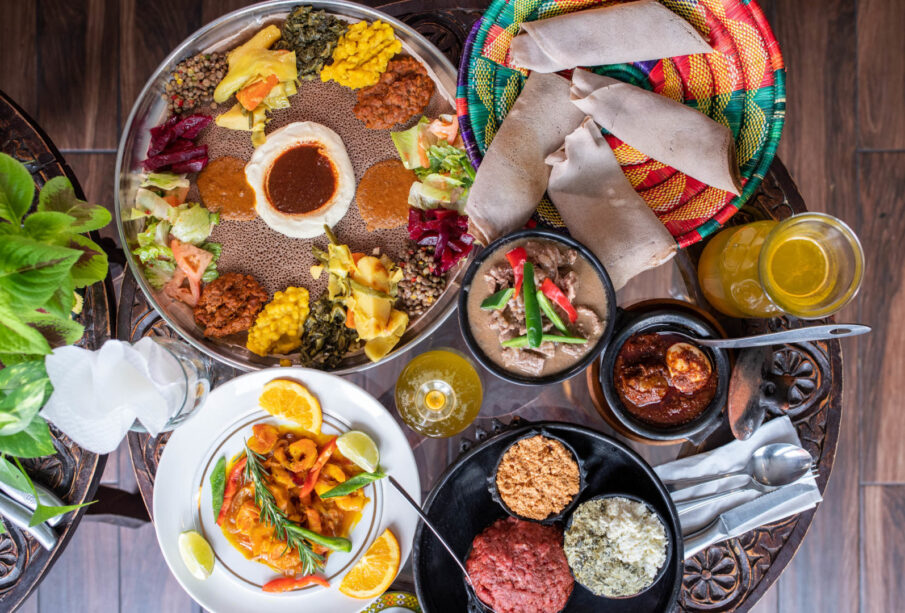
Ethiopian cuisine introduces food lovers to the unique combination of injera and wat. Injera consists of a soft, fermented flatbread traditionally made with teff. Diners use pieces of the bread to scoop up stews, vegetables, lentils, and meat.
Wat refers to richly seasoned Ethiopian stews. Doro wat, which combines chicken and eggs with a spiced sauce, stands among the best-known varieties.
An Ethiopian meal often encourages people to eat together from a shared platter. That communal style adds another layer to the dining experience.
5. Nyama Choma – East Africa
Nyama choma gives meat lovers a chance to experience East African grilling traditions. Kenya and Tanzania have strong associations with this popular dish.
Cooks usually roast or grill meat over an open flame. Goat remains a popular choice, although cooks also use other meats. The fire creates a smoky exterior while the meat develops a rich, savory flavor.
People often enjoy nyama choma during social gatherings. Friends and family can share the meat while talking, relaxing, and enjoying the occasion.
6. Ugali – East Africa
Ugali serves as a staple food across several East African countries, including Kenya, Tanzania, Uganda, and Rwanda.
To prepare it, cooks mix maize flour with water and continue cooking until the mixture develops a firm, dough-like texture. They usually serve it alongside vegetables, meat, fish, beans, or stew.
Although ugali relies on simple ingredients, it plays an important role in everyday meals. Its neutral flavor also makes it an excellent accompaniment for strongly seasoned sauces and stews.
7. Fufu and Light Soup – Ghana
Ghanaian cuisine offers another memorable combination through fufu and soup.
Cooks traditionally pound ingredients such as cassava and plantain until they form a smooth and stretchy dough. They then serve the fufu with soups such as light soup, palm nut soup, or groundnut soup.
The soft texture of fufu pairs well with rich soups and flavorful meats or fish. Many families also enjoy the meal as part of communal dining.
For anyone discovering Ghanaian cuisine, this combination provides a satisfying introduction to traditional food culture.
8. Moambe Chicken – Central Africa
Moambe chicken brings the distinctive flavors of Central Africa to the table. The dish has strong associations with the Democratic Republic of the Congo and neighboring areas.
Cooks prepare chicken with a rich sauce made from palm nuts or palm butter. They may also add spices and other local ingredients to create additional depth.
The creamy texture and distinctive palm flavor make moambe chicken particularly interesting for adventurous food lovers.
9. Kapenta – Southern Africa
Kapenta consists of small freshwater fish that feature in the cuisines of parts of Southern Africa, particularly around Lake Kariba and the Zambezi region.
People may dry, fry, or cook the fish in stews. They often serve kapenta alongside staples such as sadza and vegetables.
This dish highlights the connection between geography and food. Local rivers and lakes provide ingredients that communities transform into practical and flavorful meals.
10. Bobotie – South Africa
Bobotie combines spiced minced meat with a creamy egg-based topping. Cooks bake the mixture until the topping sets and develops a delicate texture.
The dish often combines savory spices with subtle sweet flavors. Some recipes include dried fruit, which creates an interesting contrast with the seasoned meat.
Bobotie also reflects the many cultural influences that have shaped South African cuisine. Its distinctive flavor makes it worth trying when exploring the country’s traditional dishes.
11. Couscous and Tagine – North Africa
North African cuisine introduces food lovers to fragrant spices, slow cooking, grains, vegetables, meat, and dried fruits. Couscous remains popular across countries such as Morocco, Algeria, and Tunisia. Cooks commonly serve it with vegetables, chickpeas, meat, or richly seasoned sauces.
Moroccan tagine offers another classic experience. Cooks slowly prepare meat or vegetables with spices, fruits, nuts, and other ingredients inside a traditional cone-shaped cooking vessel.
Together, these dishes demonstrate the depth and variety of North African cooking.
12. Matapa – Mozambique
Mozambican cuisine offers matapa, a traditional dish that uses cassava leaves as one of its main ingredients.
Cooks commonly combine the leaves with ground peanuts, garlic, and coconut milk. Some versions also include seafood.
The combination produces a rich and distinctive flavor. Matapa also reminds us that African cuisine includes much more than meat and rice. Leafy vegetables, nuts, roots, and locally available ingredients all contribute to the continent’s food traditions.
13. East African Pilau
East African pilau combines rice, meat, onions, and aromatic spices. Kenya and Tanzania have strong pilau traditions, particularly along the Swahili Coast.
Cooks often use cardamom, cloves, cinnamon, cumin, and other spices to create its distinctive aroma. The finished rice carries the flavors of the meat, onions, and seasoning.
Trade and cultural exchange along the East African coast influenced many of these flavors. As a result, pilau provides both a delicious meal and a glimpse into the region’s history.
Why Explore African Cuisine?
Trying African dishes allows food lovers to experience different cultures through taste. A meal can reveal how communities use local ingredients, respond to their environment, preserve traditions, and share experiences.
Geography also plays a major role. Coastal communities often incorporate seafood, coconut, and spices into their cooking. Inland communities may rely more heavily on grains, roots, vegetables, livestock, and freshwater fish.
Migration and trade have also influenced many African cuisines. Ingredients and cooking techniques have moved between communities for generations, creating dishes with fascinating combinations of local and international influences.
Most importantly, African cuisine does not represent one single style of cooking. The continent contains thousands of culinary traditions, and each region offers something different.
Tips for Exploring African Food
Start with flavors you already enjoy. Rice lovers can try jollof or pilau, while fans of grilled meat may prefer nyama choma.
Next, move beyond your familiar region. Someone accustomed to West African food could explore Ethiopian injera, Moroccan tagine, Mozambican matapa, or South African bobotie.
Keep an open mind when you encounter unfamiliar ingredients or eating customs. Some African meals traditionally encourage communal dining, while others pair specific staples with particular soups or sauces.
You can also explore African cuisine through local restaurants, food festivals, markets, and home cooking. These experiences often provide useful context about the history and traditions behind each dish.
Conclusion
African cuisine offers an impressive combination of flavors, ingredients, traditions, and cooking techniques. Jollof rice, thieboudienne, injera, nyama choma, ugali, bunny chow, bobotie, matapa, and tagine represent only a small selection of what the continent has to offer.
For food lovers, each meal creates an opportunity to discover another part of Africa. Exploring these dishes can introduce you to new flavors while deepening your appreciation for the communities and traditions behind them.
So, the next time you want to try something different, look beyond familiar dishes. Africa’s kitchens offer plenty of delicious places to begin.




Leave a reply




Africa’s Source for Breaking News | Entertainments | Health | Finance | Sports | Lifestyle and Business News.


