
The Battle for Kano’s Emirate Throne
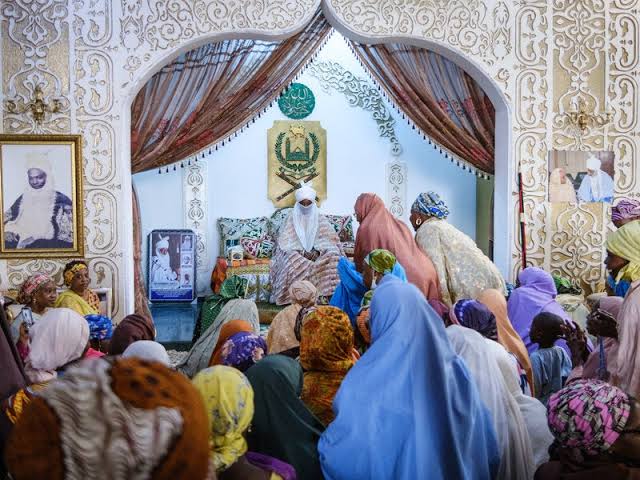
The Battle for Kano's Emirate Throne
One Crown, Two Palaces: The Battle for Kano’s Emirate Throne
A Throne Divided
In Kano, one of northern Nigeria’s most historically significant cities, the emir’s palace represents far more than a royal residence. It is a symbol of religious authority, cultural identity, historical continuity, and the influence of traditional institutions. For generations, the Emir of Kano has occupied a prominent position in the social and spiritual life of the people.
However, in recent years, this respected institution has become the centre of a contentious struggle involving two prominent royal figures: Muhammadu Sanusi II and Aminu Ado Bayero.
The dispute intensified in 2020, when Sanusi II was deposed by the Kano State Government and Bayero was appointed as his successor. In 2024, the political landscape changed again when the state government reinstated Sanusi II following the repeal of the law that had divided the Kano Emirate. Bayero, however, continued to assert his position, creating an unprecedented situation in which two royal figures claimed legitimacy and maintained competing connections to the emirate’s traditional authority.
The resulting controversy raises important questions about traditional leadership, political interference, the rule of law, and the relationship between modern government and centuries-old institutions.
How did Kano arrive at a situation involving one throne, two competing claims, and two palaces? And what does the dispute mean for the future of the emirate?
The Historical Significance of the Kano Emirate
The Kano Emirate has deep historical roots. Kano was an important centre of commerce, Islamic scholarship, craftsmanship, and political power long before Nigeria became an independent country.
The modern emirate system developed significantly following the nineteenth-century Sokoto Jihad, when Kano became part of the Sokoto Caliphate. The emir subsequently emerged as an influential authority in religious affairs, customary matters, and community leadership.
British colonial rule introduced another layer of political authority. Following the British conquest of Kano in 1903, the emirate continued to exist under colonial administration, although its powers and relationship with government changed.
After independence, traditional rulers retained important cultural and social responsibilities, even as elected governments assumed formal responsibility for public administration.
The Emir of Kano remains a highly influential traditional figure. The office connects the present generation with a long history of Islamic scholarship, commercial enterprise, royal succession, and community identity.
Consequently, a dispute over who occupies the throne is rarely viewed as a private disagreement between two individuals. It touches the historical memory and collective identity of Kano’s people.
How the Crisis Began: Sanusi II’s Deposition in 2020
Muhammadu Sanusi II became the Emir of Kano in June 2014, succeeding his great-uncle, Ado Bayero.
Before his appointment, Sanusi had built a national reputation as an economist and former governor of the Central Bank of Nigeria. His public profile, outspoken commentary, and willingness to challenge political and economic decisions made him one of Nigeria’s most recognisable traditional rulers.
His reign, however, was marked by tensions with political authorities.
In March 2020, the Kano State Government, led by Governor Abdullahi Umar Ganduje, announced Sanusi’s removal. The government cited allegations of insubordination and other concerns relating to his relationship with state authorities.
Sanusi’s supporters questioned the decision and viewed it as politically motivated. The circumstances of his removal generated considerable debate about the limits of government authority over traditional institutions.
Following his deposition, Aminu Ado Bayero, a son of the late Emir Ado Bayero, was appointed to the throne.
The transition appeared to settle the immediate question of succession. However, it left behind a controversy that would resurface four years later.
The Return of Sanusi II in 2024
The crisis entered a new phase in May 2024, following a change in Kano’s political leadership.
Governor Abba Kabir Yusuf’s administration repealed the 2019 Kano Emirates Council Law, which had divided the historic emirate into five jurisdictions. The law had also enabled the creation of additional emirates and the appointment of separate emirs.
The new legislation restored the unified Kano Emirate structure and provided the legal basis for Sanusi II’s reinstatement.
On May 23, 2024, the Kano State Government announced Sanusi’s return as Emir of Kano. Aminu Ado Bayero, whose appointment had followed Sanusi’s removal in 2020, was affected by the reversal.
Bayero did not accept the development as the end of his claim to the throne. He returned to Kano and maintained a presence at the Nasarawa palace, while Sanusi occupied the historic Gidan Rumfa palace.
The situation created a striking image: two royal claimants, two palaces, and a community caught in a dispute over the legitimacy of its traditional leadership.
Two Emirs, Two Palaces: Understanding the Rival Claims
At the heart of the crisis is a disagreement over legitimacy, succession, and the legal authority of the state government. Sanusi II’s position rests on his reinstatement under the 2024 law, which restored the unified emirate and reversed the institutional arrangement that had followed his deposition.
Bayero’s position is rooted in his appointment in 2020 and the legal and procedural objections raised against the events of May 2024. His supporters have challenged aspects of the reinstatement process and the treatment of his position.
Both claims have attracted supporters, making the dispute more than a contest between two individuals.
For Sanusi’s supporters, his return represents the restoration of a traditional institution they believe was disrupted by political intervention.
For Bayero’s supporters, questions about the legality of his removal and the process used to reinstate Sanusi deserve judicial consideration.
The competing claims have also exposed a wider problem: traditional succession can become entangled with partisan politics, especially when governments possess statutory powers to recognise, appoint, or remove traditional rulers.
The existence of two competing claims does not, by itself, mean that both claimants possess equal legal standing. That question depends on the applicable laws and the decisions of competent courts.
The Role of Politics in the Emirate Dispute
Although the emirate is a traditional institution, its relationship with government is shaped by modern political realities.
State governments in Nigeria operate within legal frameworks that regulate traditional councils and related institutions. These arrangements can give elected officials considerable influence over the recognition, appointment, suspension, or removal of traditional rulers.
In Kano, changes in political leadership have coincided with major changes to the emirate’s structure.
The 2020 deposition occurred under Ganduje’s administration. Sanusi’s reinstatement followed the election of a new governor and the subsequent repeal of the law that had created multiple emirates.
This sequence has fuelled debate about whether traditional institutions can remain independent of partisan calculations when their formal status depends partly on state legislation.
It also highlights the risks of reversing institutional decisions whenever political administrations change. Such reversals can create uncertainty, weaken public confidence, and turn traditional leadership into a recurring arena for political competition.
Nevertheless, political context alone does not establish the motives behind every decision. The legality of each action must be assessed against the relevant legislation, constitutional principles, and judicial rulings.
The Legal Battle and Questions of Authority
The courts have become central to the Kano Emirate dispute because competing interpretations of the law cannot be resolved through public declarations alone.
Legal questions have included the validity of the 2024 legislation, the procedures used to reinstate Sanusi, the status of Bayero’s appointment, and the jurisdiction of the courts considering related applications.
The dispute has also involved disagreements over the enforcement of court orders and the appropriate authorities responsible for carrying them out.
These issues matter beyond Kano. They concern the relationship between state legislation, judicial independence, administrative authority, and the protection of legal rights.
Where rival claimants seek recognition, the distinction between political authority and judicial authority becomes especially important. A government may pass legislation, but disputes about the law’s interpretation and application may require judicial determination.
For the public, the central concern is whether the dispute can be resolved through lawful procedures rather than prolonged confrontation.
Because litigation and related proceedings can change the legal position, the latest court decisions should be verified before any definitive statement is made about the final status of either claimant.




Leave a reply





Africa’s Source for Breaking News | Entertainments | Health | Finance | Sports | Lifestyle and Business News.


