
The End of Messi’s Argentina Story
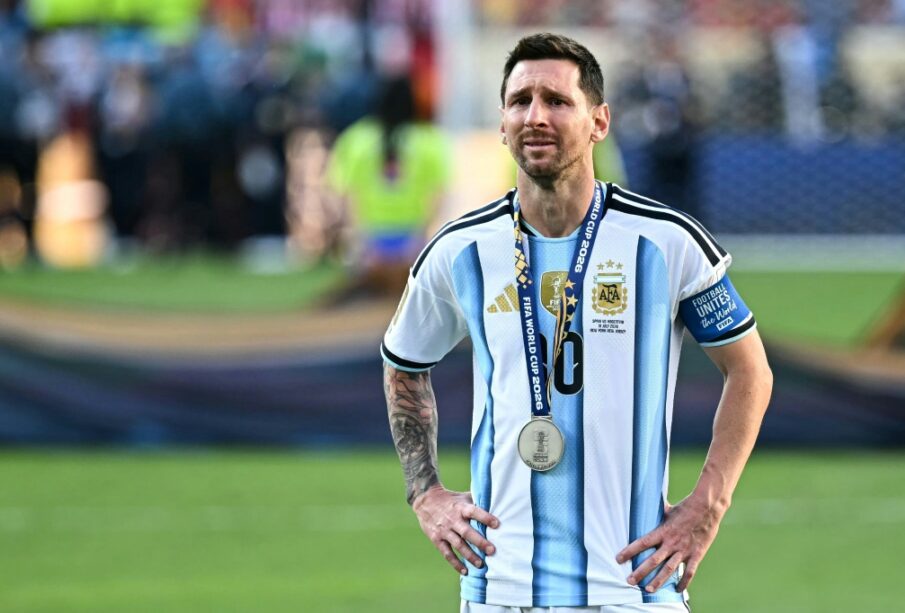
The End of Messi's Argentina Story
207 Games, 125 Goals, One Legend: The End of Messi’s Argentina Story
There are football careers, and then there is Lionel Messi’s story with Argentina.
For years, the relationship between Messi and the Argentina national team was complicated. He was celebrated as the greatest player of his generation, yet every missed opportunity with the national team seemed to reopen the same question: could Messi ever win the biggest trophies with Argentina?
Today, that question feels almost strange.
After 207 appearances and 125 goals for Argentina, Messi’s international story has become one of the most remarkable chapters in football history. From the heartbreak of lost finals to the glory of the 2021 Copa América, the 2022 FIFA World Cup and the 2024 Copa América, his journey transformed from one of frustration into one of football’s greatest redemption stories.
Now, as the end of his Argentina career approaches, the numbers tell only part of the story.
From Wonderkid to National Hero
Messi’s Argentina journey began in 2005 when he made his senior debut as a teenager. Expectations were immediate.
Argentina had produced Diego Maradona, one of football’s most influential figures. Every exceptional Argentine attacking player was inevitably compared with him. Messi was no exception.
His talent was obvious, but international football demanded something different. Argentina supporters wanted trophies.
Messi reached the 2007 Copa América final, but Argentina lost to Brazil. Years later, he would experience even greater disappointment.
The 2014 World Cup became one of the defining moments of his career. Messi inspired Argentina to the final in Brazil, scoring four goals during the tournament and winning the Golden Ball.
But Germany won the final 1–0 after extra time.
For Messi, another major international opportunity had slipped away.
Three Finals, Three Heartbreaks
The pain became even greater over the next two years.
Argentina reached the 2015 Copa América final against Chile. After 120 minutes without a goal, Chile won on penalties.
One year later, Argentina again faced Chile in the Copa América Centenario final.
Again, the match ended goalless after extra time.
Again, Chile won the penalty shootout.
Messi missed his penalty.
The moment was devastating.
Shortly afterward, Messi announced his retirement from international football.
At only 29, the announcement shocked the football world. Many believed one of the greatest players ever had walked away from Argentina without the major international trophy his talent deserved.
But his story was not finished.
The Return That Changed Everything
Messi returned to the Argentina team and continued chasing the trophy that had escaped him.
The road was not always smooth.
Argentina struggled through periods of uncertainty. Coaches changed. Performances fluctuated. The team faced criticism.
Then came a new generation.
Players such as Ángel Di María, Rodrigo De Paul, Lautaro Martínez and Julián Álvarez became important pieces around Messi. More importantly, Lionel Scaloni built a team that understood how to play with its captain.
The transformation became clear at the 2021 Copa América.
Argentina defeated Brazil 1–0 in the final at the Maracanã Stadium.
For Messi, the victory meant far more than another trophy.
It was his first major senior international title with Argentina.
After years of disappointment, he finally had his moment.
The images of Messi celebrating with his teammates became symbolic. The player who had once looked heartbroken after international defeats was finally holding a major trophy for his country.
The curse was broken.
The World Cup That Completed the Story
If the Copa América changed Messi’s relationship with Argentina supporters, the 2022 World Cup completed it.
Argentina’s campaign began disastrously with a 2–1 defeat to Saudi Arabia.
Suddenly, the tournament appeared to be heading toward another painful chapter.
Instead, Argentina responded.
Messi scored against Mexico. He contributed against Poland. He helped Argentina navigate the knockout rounds and produced some of the tournament’s most memorable performances.
Then came the final against France.
It was not simply a World Cup final. It felt like the final examination of Messi’s international career.
Messi scored twice. Argentina and France battled through 120 minutes before the match was decided by penalties.
Argentina won.
Messi lifted the World Cup.
The image instantly entered football history.
For decades, comparisons between Messi and Maradona had dominated conversations about Argentine football. Now Messi had his World Cup.
He had finally achieved the trophy that many believed was missing from his legacy.
More Than 125 Goals
Messi’s 125 goals for Argentina are extraordinary, but the statistic does not fully explain his contribution.
His goals have come across multiple generations, tournaments and tactical systems.
He has scored in World Cup matches, Copa América games, qualifiers and friendlies. He has created goals, controlled matches and repeatedly carried Argentina’s attacking responsibility.
His ability to combine goals and assists has made him much more than a traditional goalscorer.
He became Argentina’s creative engine.
His free kicks, dribbles, passes and movement have produced countless memorable moments.
But perhaps his greatest contribution was emotional.
Messi gave Argentine football supporters something to believe in during periods when the national team struggled.
The 2024 Copa América: Another Chapter
After winning the World Cup, Messi could have walked away from international football.
Instead, he continued.
Argentina entered the 2024 Copa América as the defending world champions and eventually reached the final against Colombia.
The match was difficult, physical and tense.
Messi was forced to leave the game after suffering an injury, but Argentina eventually won 1–0 after extra time.
Another trophy.
Another celebration.
Another reminder that Messi’s international career had become something nobody could have predicted when he first struggled to win a major senior title.
Argentina had gone from three consecutive major final defeats to becoming the dominant international team of its era.
And Messi was at the center of it.
The End Is Coming, But the Legacy Is Already Complete
At some point, every football career ends.
Messi’s international career is no different.
Whether his final Argentina appearance comes sooner or later, the conclusion is already clear: he does not need another trophy to prove anything.
His Argentina legacy is complete.
He leaves behind an extraordinary record, including 207 appearances and 125 goals, but also a collection of memories that statistics cannot capture.
There is the teenager who arrived with enormous expectations.
There is the player who cried after losing international finals.
There is the captain who briefly retired before returning.
There is the champion who finally lifted the Copa América.
There is the World Cup winner who kissed the trophy in Qatar.
And there is the veteran who continued representing Argentina even after reaching the summit of football.
One Legend, One Extraordinary Story
Messi’s Argentina story was never simply about goals.
It was about persistence.
For years, critics used his failures with Argentina as evidence against him. They questioned his leadership. They questioned his commitment. They questioned whether he could succeed outside Barcelona.
Messi answered those questions on the pitch.
He did not rewrite his history by avoiding failure. He rewrote it by surviving it.
That is what makes his Argentina journey so powerful.
The 125 goals will remain in the record books. The 207 appearances will eventually be surpassed by someone else. Records are made to be broken.
But the emotional journey will be much harder to replicate.
Messi experienced the highest form of football heartbreak before eventually experiencing its greatest reward.
He lost finals.
He retired.
He returned.
He won.
And then he won again.
When Messi eventually walks away from Argentina for the final time, the country will not simply be saying goodbye to its captain.
It will be saying goodbye to an era.
The little boy who left Rosario to pursue his football dream became Argentina’s greatest modern football hero.
He arrived as a prodigy.
He endured as a leader.
He finished as a champion.
207 games. 125 goals. Multiple trophies. One World Cup. One legend.
Lionel Messi’s Argentina story may be approaching its final page, but it already has an ending worthy of football history.




Leave a reply




Africa’s Source for Breaking News | Entertainments | Health | Finance | Sports | Lifestyle and Business News.


