
Nigerian Air Force Crashes: A Timeline From 2015 to 2026
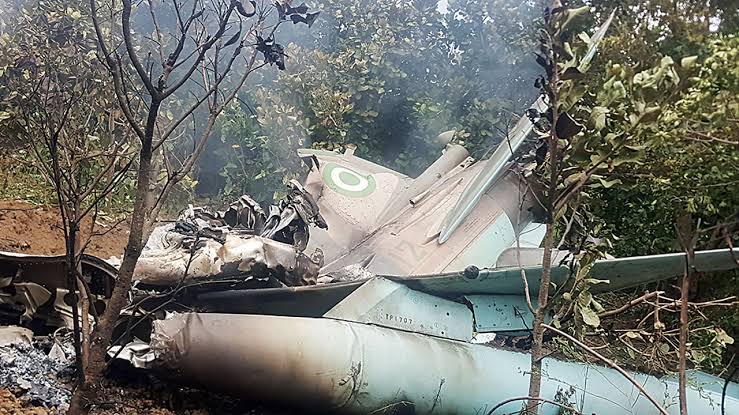
Nigerian Air Force Crashes: A Timeline From 2015 to 2026
The Nigerian Air Force (NAF) operates in some of the country’s most difficult environments.
Its aircraft conduct combat missions against insurgents and bandits, surveillance operations, pilot training, transportation and humanitarian missions. These operations carry significant risks, and over the past decade, Nigeria has experienced a series of military aviation accidents and aircraft losses.
From the deadly Dornier 228 crash in Kaduna in 2015 to the tragic ATR-42 crash in Ondo State in October 2026, the history of Nigerian Air Force crashes reveals a mixture of technical failures, training accidents, combat-related losses and operational emergencies.
Here is a timeline of some of the major incidents from 2015 to 2026.
2015: A Deadly Year Begins the Timeline
The year 2015 recorded two major Nigerian Air Force aircraft crashes.
On August 29, a Dornier 228 aircraft, NAF 030, crashed shortly after taking off from the Kaduna Military Airfield. The aircraft came down inside Ribadu Cantonment in Kaduna. All seven people on board, including military personnel and passengers, died. The accident remains one of the notable fatal NAF crashes of the decade.
Less than two months later, on October 10, an F-7NI fighter jet crashed during a training mission in Kaduna. One person was killed in the incident. The accident highlighted the risks associated with maintaining a fighter force that was being used for both operational readiness and pilot training.
2016: The Makurdi Helicopter Mishap
On November 15, 2016, an AgustaWestland AW101 helicopter associated with the Presidential Air Fleet and recently handed over to the Nigerian Air Force was involved in a mishap at the NAF base in Makurdi, Benue State.
Unlike some reports that described the event as a major crash, the Nigerian Air Force characterized it as a mishap that occurred while the helicopter was taxiing after a successful mission. A board of officers was subsequently established to investigate the immediate and remote causes. No deaths were reported.
The incident nevertheless became part of the broader debate about military aircraft safety and maintenance.
2017: Helicopter Forced Down in Borno
On July 6, 2017, an Agusta 109 Light Utility Helicopter experienced a technical problem while on a liaison mission in Borno State.
The pilot was forced to bring the aircraft down in the Borno River. Fortunately, there were no fatalities. The Nigerian Air Force established a board of inquiry to determine what caused the technical failure.
The incident demonstrated that not every NAF aircraft loss ends in fatalities. Emergency procedures and pilot decisions can sometimes prevent a technical problem from becoming a major disaster.
2018: Fighter Jets Collide Over Abuja
September 28, 2018, became one of the most dramatic moments in the history of Nigerian military aviation.
Two F-7NI fighter jets collided during a rehearsal for Nigeria’s 58th Independence Day celebrations in Abuja. The aircraft went down around Katampe Hills.
Three pilots ejected from the aircraft. Two survived, while Squadron Leader Bello Baba-Ari died from injuries sustained during the ejection.
The accident raised questions about the risks involved in formation flying and the importance of safety protocols during ceremonial aerial displays.
2019: Multiple Crashes Across Nigeria
The Nigerian Air Force experienced several significant aircraft incidents in 2019.
On January 2, an Mi-35M attack helicopter crashed near Damasak in Borno State while supporting troops fighting Boko Haram. All five members of the crew died.
On June 12, another NAF helicopter crash-landed in Katsina while returning from an anti-banditry operation. No fatalities were reported.
On August 17, an RV-6A Air Beetle trainer aircraft crashed in Kaduna, killing its pilot.
Then, on November 14, a NAF training helicopter was involved in a crash at the NAF base in Enugu. No deaths were recorded.
The number of incidents in 2019 reinforced concerns about military aviation safety, especially as the Air Force was expanding its operations against insurgency and banditry.
2020: Maintaining Operations Amid the Pandemic and Insurgency
There was no comparable fatal NAF crash publicly recorded in the major timeline reviewed for 2020.
Instead, the Air Force continued efforts to improve aircraft availability and maintenance. In March 2020, the NAF announced the reactivation of an Alpha Jet following in-country periodic depot maintenance and avionics upgrades. The service said improving maintenance capacity was important for aircraft reliability, safety and operational effectiveness.
This period was significant because maintenance and aircraft serviceability remained central to the Air Force’s ability to sustain operations.
2021: One of the Darkest Years
If there is one year that stands out in the decade, it is 2021.
On February 21, a Beechcraft King Air B350i, NAF 201, crashed while returning to Abuja after reporting an engine failure. The aircraft was supporting surveillance operations connected to efforts to secure abducted students and staff in Niger State. All seven people on board died.
On March 31, an Alpha Jet disappeared from radar during an operation in the North-East. Its two crew members were presumed dead, and the wreckage was later discovered in the Sambisa Forest.
Then came another devastating incident on May 21. A Beechcraft King Air 350 crashed near Kaduna Airport, killing 11 people, including the then Chief of Army Staff, Lieutenant General Ibrahim Attahiru.
On July 18, an Alpha Jet was shot down by armed bandits in Zamfara State. The pilot, Flight Lieutenant Abayomi Dairo, successfully ejected and survived after evading his attackers.
Four major aircraft losses in a single year made 2021 a particularly painful chapter in the NAF’s history.
2022: Two Pilots Lost During Training
On April 19, 2022, a Super Mushshak trainer aircraft crashed in Kaduna.
The incident killed the two pilots on board. The accident once again highlighted the dangers associated with pilot training, where young and experienced aviators must regularly operate aircraft under demanding conditions.
2023: Training, Combat and Rescue Missions
The NAF recorded several major incidents in 2023.
On July 14, an FT-7NI trainer aircraft crashed during a training exercise in Makurdi, Benue State. Both pilots successfully ejected and survived.
On August 14, an MI-171 helicopter crashed near Chukuba village in Shiroro Local Government Area of Niger State while carrying out a casualty evacuation mission. Eleven people died, making it one of the deadliest NAF aviation accidents in the period.
On December 1, an MI-35P attack helicopter crashed shortly after takeoff from the NAF base in Port Harcourt. All five crew members survived.
The three incidents demonstrated the wide range of risks faced by military aircraft, from training flights to combat support and casualty evacuation.
2024: A Trainer Aircraft Crashes, But Pilots Survive
On March 7, 2024, a Super Mushshak trainer aircraft was involved in a crash about 3.5 nautical miles from Kaduna Military Airfield.
The two pilots were returning from a routine training flight and survived without serious injury. The NAF described it as a minor mishap and ordered a preliminary investigation into the cause.
The incident was a reminder that improved survival systems and emergency procedures can make the difference between an aircraft accident and a mass-casualty event.
2025: An Alpha Jet Emergency at Kainji
On December 6, 2025, an Alpha Jet experienced an in-flight emergency shortly after taking off from NAF Base Kainji during a post-inspection functional check flight.
The pilots successfully steered the aircraft away from populated areas before ejecting safely. The NAF subsequently established a Board of Inquiry to investigate the incident. Both pilots survived.
Rather than ending in fatalities, the incident demonstrated the importance of pilot training, maintenance procedures and aircraft escape systems.
2026: The Ondo State ATR-42 Crash
The latest and most devastating incident in this timeline occurred on October 5, 2026.
A Nigerian Air Force ATR-42 aircraft, tail number NGR 931, disappeared from radar while travelling from Benin toward Lagos. The wreckage was later located near the Naval Base in Igbokoda, Ondo State.
Early government information reported 32 people aboard, consisting of 25 passengers and seven crew members. The Nigerian Air Force later confirmed that 25 people were aboard: 20 passengers and five crew members. All 25 died.
President Bola Tinubu declared three days of national mourning and ordered a full investigation into the crash. The cause remains under investigation, meaning it would be premature to attribute the accident to mechanical failure, human error, weather or any other factor.
What the Timeline Tells Us
The Nigerian Air Force’s crash history from 2015 to 2026 is not simply a story about aircraft falling from the sky. It reflects the difficult environment in which military aviation operates.
Some aircraft were lost during training. Others were involved in combat operations. Some suffered technical emergencies, while others were destroyed during missions. In several cases, pilots survived because of effective emergency procedures and ejection systems.
At the same time, the repeated fatal incidents raise important questions about aircraft maintenance, pilot training, fleet modernization, operational pressure and accident investigation.
The lesson is not that military aviation can be made completely risk-free. It cannot. However, every crash should produce lessons that improve maintenance, training, aircraft procurement, flight planning and emergency response.
The October 2026 Ondo tragedy has once again placed those questions in the national spotlight. For the families who lost loved ones, however, the statistics are secondary. Each number represents a person, a career, a family and a sacrifice made in service to Nigeria.




Leave a reply





Africa’s Source for Breaking News | Entertainments | Health | Finance | Sports | Lifestyle and Business News.


