
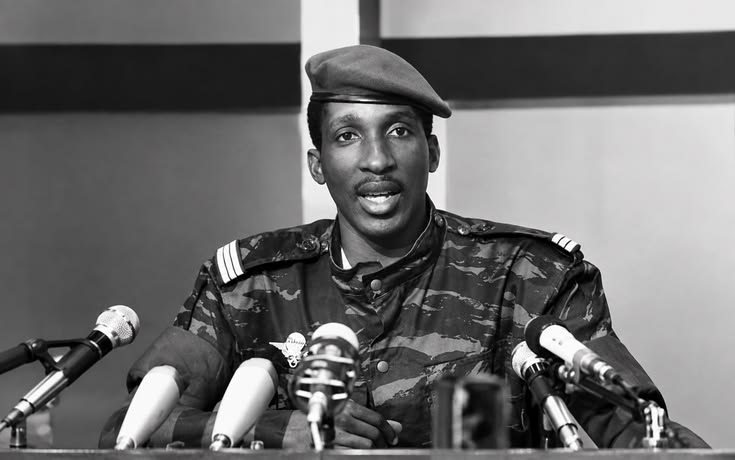
Thomas Sankara's Leadership Lessons for Young Africans
Thomas Sankara, the revolutionary leader of Burkina Faso from 1983 until his assassination in 1987, remains an influential figure in African political history.
He promoted self-reliance, public accountability, social reform and a development vision rooted in local needs. For Africa’s young leaders, his legacy offers useful questions about integrity, independence and service, but it also requires critical reflection on political power, democratic freedoms and the limits of revolutionary leadership.
Sankara’s life was brief, and his government was not without controversy. Understanding both his ambitions and the shortcomings of his rule is more valuable than treating him as a flawless hero.
Who was Thomas Sankara?
Sankara was a military officer who became president of Upper Volta after a coup on 4 August 1983. The following year, his government renamed the country Burkina Faso, a name commonly translated as reflecting the idea of the land of upright or honourable people.
He pursued a programme of political and social transformation that included campaigns against corruption, initiatives in health and education, efforts to strengthen food production, and a public message of national self-reliance. He also challenged aspects of foreign dependence and criticised the lifestyles of political elites.
Sankara was killed on 15 October 1987 during a coup that brought Blaise Compaoré to power. His assassination helped turn his short presidency into a lasting subject of debate across Africa and beyond.
His legacy is often discussed through speeches and anecdotes, but responsible analysis should also examine the policies, political conditions and historical evidence behind the popular image.
Lesson 1: Leadership should begin with public service
One of the strongest themes associated with Sankara was the expectation that public office should serve the population rather than provide personal privilege. His public image contrasted with the extravagant lifestyles often associated with political elites.
For young leaders, the lesson is straightforward: leadership is a responsibility, not a reward. Whether managing a student association, a business, a community organisation or a public institution, a leader should be able to explain how resources are used and who benefits from decisions.
This principle becomes practical through transparent budgets, clear procurement procedures, published performance targets and meaningful responses to complaints. A leader who calls for sacrifice from others while avoiding accountability personally undermines public trust.
However, integrity must be supported by institutions. Ethical slogans cannot replace independent oversight, proper record-keeping, fair investigations and rules that apply to everyone.
Lesson 2: Self-reliance requires investment, not slogans
Sankara promoted national self-reliance and encouraged Burkinabè people to place greater confidence in local capacity. The message remains relevant to African economies that import many finished products while struggling to finance productive industries.
For young entrepreneurs and policymakers, self-reliance should not mean rejecting every foreign partnership. It means building the capacity to produce, innovate and negotiate from a stronger position.
A young African business owner can apply this idea by training local staff, developing reliable supply relationships, improving product quality and reinvesting in equipment. A technology founder might build software around a locally observed problem rather than copying a foreign product without considering local infrastructure or customer needs.
Governments can support this approach by improving education, electricity, transport, access to finance and predictable regulation. Local production becomes more competitive when businesses have the tools and conditions needed to succeed.
The deeper lesson is that economic independence is built through skills, institutions and productive capacity—not simply through declarations of national pride.
Lesson 3: Make development visible in people’s lives
Sankara’s government placed emphasis on public health, education and basic development. These priorities offer an important reminder that a country’s progress should be measured by the quality of life people experience, not only by political speeches or economic statistics.
For young leaders, this means starting with the needs of the people affected by a decision. A community project should be assessed by whether it improves access to water, sanitation, education, healthcare or livelihoods, not by the number of photographs taken at its launch.
A youth organisation might measure success through school attendance, skills gained or jobs secured. A local government initiative might track how long it takes residents to obtain a service, how much it costs and whether people with disabilities can access it.
Useful measurement also requires honesty. If a programme fails to reach its target, leaders should explain why and adjust it. Public reporting should show results as well as intentions.
Lesson 4: Treat food security as a development priority
Sankara’s administration promoted greater food production and challenged dependence on imported goods. His government is often remembered for initiatives intended to strengthen agriculture and improve national food security.
Today’s young leaders can draw a broader lesson: food systems depend on more than farmers. They require roads, storage, electricity, market information, irrigation where appropriate, fair access to finance and dependable routes between producers and consumers.
An agricultural entrepreneur could help reduce losses by improving packaging or connecting growers to reliable buyers. A technology team might develop tools that help traders coordinate orders or monitor prices. A community group could organise bulk purchasing or improve access to storage.
These ideas must respond to actual local conditions. Not every farming area needs the same equipment, and a project that ignores transport costs, market demand or maintenance can waste scarce resources.
Food security improves when investment strengthens the whole chain from production to consumption.
Lesson 5: Speak about corruption, and build safeguards against it
Sankara made the fight against corruption and excessive privilege central to his public message. His example continues to resonate in societies where citizens demand more transparent government and fair access to opportunity.
Young leaders can put this principle into practice by documenting spending, declaring relevant conflicts of interest, using clear selection criteria and creating safe ways for people to report misconduct.
For a small organisation, this may be as simple as requiring two people to approve major expenses, keeping receipts and publishing a periodic account of funds received and spent. For public institutions, the safeguards need to be stronger and supported by independent oversight.
It is equally important to avoid using anti-corruption language to target political opponents while protecting allies. Fair procedures, evidence and the right to challenge allegations are essential to legitimate accountability.
The lesson is not merely to condemn corruption. It is to create systems that make abuse harder to conceal and easier to investigate.
Lesson 6: Give young people a meaningful role
Sankara’s political message appealed strongly to ideas of national transformation and collective responsibility. Young Africans today face different circumstances, but they continue to encounter questions about unemployment, education, housing, political representation and access to capital.
Leaders should treat young people as participants in decision-making rather than an audience for motivational speeches. That means giving them real responsibility, listening to their proposals and explaining how decisions are made.
In a community project, young people could help design the programme, monitor its progress and report results. In a company, junior employees might contribute ideas to improve customer service or reduce waste.
Participation should be meaningful rather than symbolic. Asking for input after all decisions have been made does not create genuine ownership.
Lesson 7: Courage needs accountability
Sankara’s willingness to challenge powerful interests is part of the reason many people admire him. Yet his rule also raises difficult questions about revolutionary government and political freedom.
His administration restricted political opposition and used coercive methods against some opponents. This part of the record matters. It is possible to recognise the ambition behind his social and economic programmes while acknowledging that political repression and limits on dissent are serious problems.
For contemporary leaders, courage should mean confronting difficult problems while respecting people’s rights. It should not mean treating criticism as betrayal or concentrating power in one person’s hands.
A strong leader can defend a vision and still welcome scrutiny. Independent courts, free expression, transparent elections and peaceful transfers of power are not obstacles to development; they help ensure that leaders remain accountable to the people they serve.
Lesson 8: Build institutions that can outlast you
One challenge of leadership built around a charismatic individual is continuity. When the person leaves office or dies, the programmes may weaken if they depend too heavily on personal authority.
Young leaders should therefore build teams, document processes, train successors and establish systems that can continue working without them. A business should not collapse because one founder is absent. A community organisation should not lose its records when its chairperson steps down.
The same principle applies to public administration. Sustainable progress requires capable institutions, stable procedures, trained staff and clear responsibility.
Leadership is not only about what happens during a person’s time in office. It is also about what remains after that person is gone.
Learning from Sankara without turning history into mythology
Thomas Sankara’s legacy continues to inspire debate because it brings together important ambitions and difficult contradictions. His emphasis on public service, local capacity, food security and accountability remains relevant to African development. At the same time, his government’s limitations show why good intentions and bold programmes must be matched by respect for rights and accountable institutions.
Africa’s young leaders do not need to copy a historical figure wholesale. They can examine which ideas produced useful results, which policies need more evidence and which methods should never be repeated.
The strongest tribute to any leader is not uncritical praise. It is the ability to learn, question, improve and build institutions that deliver a better life for ordinary people.
Frequently Asked Questions
1. Who was Thomas Sankara?
Thomas Sankara was a military officer and revolutionary leader who governed Burkina Faso from 1983 until his assassination in 1987. He is remembered for his anti-corruption message, social reforms and advocacy of self-reliance.
2. Why did Sankara change the country’s name?
In 1984, his government changed the name from Upper Volta to Burkina Faso as part of a broader effort to promote national identity and a break with the country’s colonial-era name.
3. What can young African leaders learn from Sankara?
Potential lessons include public accountability, investment in local capacity, attention to basic services, food security and the importance of building institutions. His political record also offers warnings about repression and unchecked power.
4. Was Thomas Sankara a perfect leader?
No. Although he remains influential, his government restricted political opposition and used coercive methods. A balanced assessment should recognise both his development ambitions and the serious limitations of his rule.
5. Why is Thomas Sankara still discussed today?
His ideas about sovereignty, corruption, public service and African development continue to connect with debates about governance and economic independence. His short presidency also raises enduring questions about leadership, democracy and political change.




Leave a reply







Africa’s Source for Breaking News | Entertainments | Health | Finance | Sports | Lifestyle and Business News.


