Africa’s Growing Space and Satellite Programs

Africa’s Growing Space and Satellite Programs
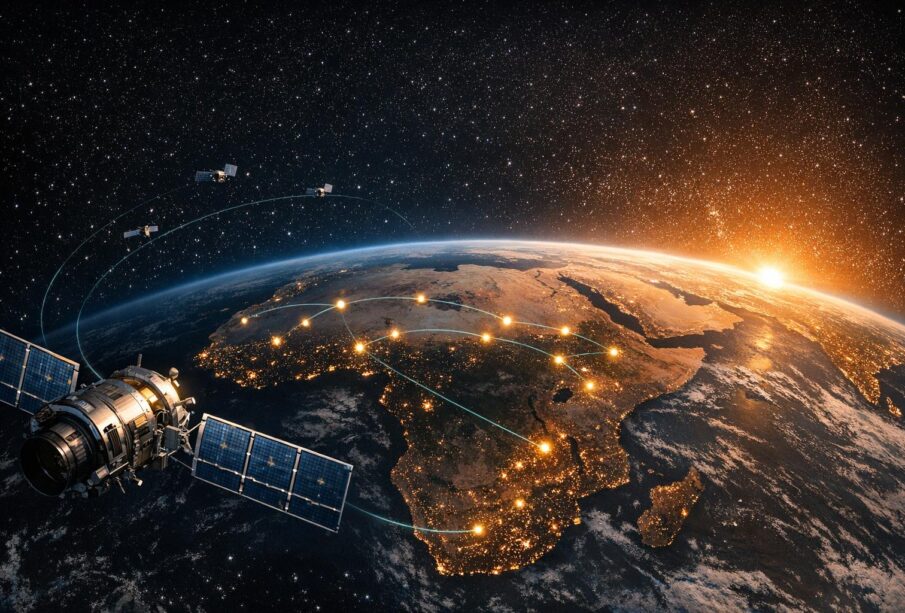
Africa’s space sector is entering a new era.
From monitoring farms and tracking climate change to improving telecommunications, mapping cities, managing natural resources, and responding to disasters, space technology is becoming increasingly important to Africa’s development.
As of September 2026, data from SpaceHubs Africa records 69 African satellites launched across 18 countries, with 30 listed as active.
Africa’s Space Journey Is Gaining Momentum
Africa’s involvement in space is not entirely new. Egypt launched the continent’s first satellite, Nilesat-101, in 1998. Since then, countries across North, West, East, and Southern Africa have gradually developed their own space capabilities.
Egypt and South Africa remain among the continent’s strongest space players. Algeria, Nigeria, Morocco, Kenya, Angola, Ethiopia, Rwanda, Ghana, Senegal, Zimbabwe, Botswana, Djibouti, Uganda, Mauritius, Sudan, and Tunisia are also part of the growing ecosystem.
The expansion has become easier partly because satellite technology has changed. Small satellites and nanosatellites can perform valuable functions without requiring the enormous budgets traditionally associated with large spacecraft.
That shift gives more African countries an opportunity to participate in space technology.
The Rise of African Space Agencies
National space agencies are becoming an important part of Africa’s technological development.
Countries such as Nigeria, Egypt, Algeria, South Africa, Rwanda, Ethiopia, Angola, Senegal, and Zimbabwe have established institutions dedicated to space science, satellite technology, remote sensing, or related activities. Current data identifies 19 African countries with national space agencies or comparable institutions.
Nigeria, for example, established the National Space Research and Development Agency (NASRDA) in 1999. South Africa has developed significant expertise through the South African National Space Agency (SANSA), while Egypt has built substantial satellite and space infrastructure.
These agencies do more than launch satellites. They support research, education, remote sensing, telecommunications, environmental monitoring, and the development of local technical expertise.
The African Space Agency
One of the most important developments is the emergence of the continental African Space Agency (AfSA).
The African Union adopted its African Space Policy and Strategy in 2016. The policy recognizes space technology as an important tool for addressing development challenges and strengthening Africa’s technological independence.
The agency is headquartered in Cairo, Egypt, and is intended to improve coordination among African countries. Its broader vision includes strengthening African capabilities in areas such as Earth observation, satellite communications, navigation, space science, infrastructure, human capital, and the space industry.
Continental coordination matters because many African countries face similar challenges. Instead of every country developing completely separate systems, collaboration could help governments share satellite data, research capabilities, infrastructure, and expertise.
Why Satellites Matter to Africa
The value of satellites extends far beyond space exploration.
1. Agriculture
Agriculture remains central to many African economies and communities. Satellite imagery can help governments, researchers, and farmers monitor vegetation, identify changes in land use, assess crop conditions, and understand environmental patterns.
Satellite data can also support agricultural planning by showing where drought or flooding may affect farmland.
This can help decision-makers move from reacting to agricultural problems toward anticipating them.
2. Climate and Environmental Monitoring
Africa faces significant environmental challenges, including drought, flooding, desertification, deforestation, and changing weather patterns.
Satellites provide a large-scale view of these changes. Governments can use Earth observation data to monitor forests, wetlands, coastlines, water bodies, and other ecosystems.
The African Union specifically identifies climate forecasting, remote sensing, agriculture, and disaster management among the important applications of its space strategy.
3. Disaster Management
Floods, wildfires, droughts, and other disasters can affect large areas within a short period.
Satellite imagery can help authorities understand the extent of damage and identify affected communities. During emergencies, this information can support planning for evacuation, relief distribution, infrastructure repairs, and recovery.
For countries with large territories or difficult-to-access regions, satellite technology can be especially valuable.
4. Telecommunications and Connectivity
Satellites can also support communication services, particularly in areas where terrestrial infrastructure is limited.
Rural communities may be located far from major cities, fiber networks, and other communication infrastructure. Satellite systems can help bridge some of these geographical gaps.
As Africa’s digital economy expands, reliable connectivity will remain essential for education, business, healthcare, financial services, and government operations.
5. Urban Planning
African cities are growing rapidly. Lagos, Nairobi, Accra, Johannesburg, Cairo, Addis Ababa, and many other urban centers continue to expand.
Satellite imagery can help planners understand how cities are changing. It can reveal patterns in housing, roads, vegetation, industrial development, and land use.
For rapidly growing cities, this information can contribute to better infrastructure planning and more informed decisions about transportation, housing, drainage, and public services.
A Growing Opportunity for African Scientists and Engineers
Africa’s space ambitions are also creating opportunities for young scientists, engineers, programmers, designers, researchers, and entrepreneurs.
Universities and technology institutions are increasingly involved in satellite development and space-related research. Small satellite projects can give students practical experience in electronics, software, telecommunications, mechanical engineering, data science, and remote sensing.
This creates an important connection between space programs and Africa’s wider technology ecosystem.
A successful space industry does not require every country to build rockets. It also needs people who can design software, process satellite imagery, build sensors, manage data, develop communications systems, and create commercial applications.
The Private Sector Is Becoming More Important
Government agencies are not the only players in Africa’s space ecosystem. Private technology companies and startups are increasingly developing services around satellite data, geospatial intelligence, communications, agriculture, mapping, and environmental monitoring.
This creates a broader space economy in which satellites become infrastructure for other industries.
For example, an African company does not necessarily need to build a satellite to participate in the space sector. It could develop an agricultural platform that uses satellite imagery to provide farmers with useful information.
Another company could use geospatial data to support logistics, insurance, construction, real estate, or disaster response.
That creates opportunities for entrepreneurs beyond traditional aerospace engineering.
Challenges Still Remain
Despite the progress, Africa’s space sector faces significant obstacles. Funding is one of the biggest challenges. Building satellites, laboratories, ground stations, research facilities, and skilled teams requires sustained investment.
There is also a shortage of specialized technical skills in some areas. Countries need engineers, scientists, programmers, researchers, and technicians who can maintain and develop increasingly sophisticated systems.
Another challenge is infrastructure. Launching a satellite is only one part of the process. Successful space programs also require ground stations, data-processing systems, testing facilities, regulatory frameworks, and long-term maintenance.
The African Union’s own space strategy emphasizes the importance of infrastructure, human capital, indigenous industry, governance, and international partnerships.
International Partnerships Can Accelerate Growth
African countries do not have to develop their space capabilities entirely alone. International partnerships already play a role in satellite development, research, training, and launches. Partnerships can provide access to technology, expertise, financing, research opportunities, and international launch infrastructure.
However, long-term success will depend on ensuring that partnerships also strengthen local capabilities.
The goal should not simply be to buy foreign technology. Africa can benefit more when partnerships help develop African engineers, research institutions, manufacturing capacity, companies, and intellectual property.
What the Future Could Look Like
Africa’s space sector is likely to become increasingly connected to everyday economic activity. Future satellite programs could support smarter farming, more accurate weather information, better disaster response, improved navigation, environmental protection, national security, and digital connectivity.
The continent could also develop stronger regional satellite networks and shared data platforms. Countries may increasingly collaborate on missions instead of working entirely independently.
At the same time, falling satellite-development costs could encourage more universities and startups to participate.
The most important measure of Africa’s space progress, therefore, will not simply be the number of satellites launched. It will be how effectively those satellites improve lives and strengthen African economies.
Conclusion
Africa’s growing space and satellite programs represent more than a technological achievement. They are part of a broader effort to build a more knowledge-driven, innovative, and technologically independent continent.
With dozens of satellites already launched and national space programs expanding, Africa is gradually developing the infrastructure and expertise needed to participate more actively in the global space economy.
The next stage will require sustained investment, stronger education systems, private-sector participation, regional cooperation, and effective use of satellite data.
Space may be hundreds of kilometers above Earth, but its impact can be felt much closer to home, in African farms, cities, schools, businesses, communities, and governments.
Understanding Cybercrime Trends
September 8, 2026The Future of E-Commerce in Africa
September 8, 2026Popular Drinks Across Different African Regions
September 8, 2026
Leave a reply Cancel reply
More News
-
Mastering Anxiety: A Comprehensive Guide to Thrive in Tough Times
February 12, 2024 -
Red Flags to Watch Out for in a Romantic Relationship
November 15, 2023 -
Nigeria’s Top Prolific Public Speakers (UPDATED)
November 11, 2023
Latest Posts
-
Understanding Cybercrime Trends
September 8, 2026 -
The Future of E-Commerce in Africa
September 8, 2026 -
Popular Drinks Across Different African Regions
September 8, 2026 -
How Climate Change Affects African Agriculture
September 8, 2026 -
Strengthening Trust in Relationships
September 7, 2026
Weekly Podcast
Travel News
-
Affordable Nutrition Tips for Families
September 7, 2026 -
Africa’s Growing Space and Satellite Programs
September 7, 2026 -
Travel Safety and Smart Planning Tips
September 5, 2026
Personal Development
-
Building a Personal Brand as a Professional
September 6, 2026 -
How to Stop Comparing Yourself to Others
September 4, 2026 -
Understanding Emotional Intelligence
September 1, 2026