
Historical Peace Agreements That Changed Africa
Historical Peace Agreements That Changed Africa
Africa’s modern history has been shaped by conflicts over land, political power, independence, ethnicity, resources, and national identity.
Yet alongside these conflicts is another important story: the story of negotiations that helped societies move from war toward peace.
Peace agreements do not always solve every problem. Some are imperfect, while others face serious difficulties during implementation. Nevertheless, several agreements have marked important turning points in African history. They have ended long wars, created transitional governments, supported democratic processes, and provided frameworks for rebuilding divided societies.
Here are some of the historical peace agreements that significantly changed Africa.
1. The Lancaster House Agreements – Zimbabwe
The Lancaster House negotiations of 1979 played a major role in ending the Rhodesian Bush War and establishing the path toward Zimbabwe’s independence.
The conflict had pitted the white minority government of Rhodesia against African nationalist movements seeking majority rule. Years of armed struggle created enormous political and humanitarian pressures.
Negotiations in London produced an agreement that established a ceasefire, constitutional arrangements, and elections. The process eventually led to internationally recognized elections and Zimbabwe’s independence in 1980.
The agreement demonstrated how negotiations could help transform a prolonged liberation struggle into a political transition.
2. The Lusaka Accord – Angola
Angola experienced a devastating civil war after gaining independence from Portugal in 1975. The conflict involved competing political movements and was intensified by Cold War rivalries and foreign involvement.
The Lusaka Protocol, signed in 1994, attempted to end the fighting between the Angolan government and UNITA. It provided for power-sharing arrangements, military integration, and the disarmament of combatants.
Although the agreement ultimately failed to produce lasting peace, it remains significant because it demonstrated both the possibilities and difficulties of negotiating an end to deeply entrenched civil conflicts.
The Angolan experience also showed that signing an agreement is only the beginning. Successful peace requires trust, enforcement, political commitment, and effective implementation.
3. The Arusha Accords – Rwanda
The Arusha Accords, signed in 1993, were designed to end the civil war between the Rwandan government and the Rwandan Patriotic Front.
The agreement sought to establish power-sharing arrangements, integrate opposing armed forces, and create a transitional political system.
Tragically, the peace process collapsed following the assassination of President Juvénal Habyarimana in 1994, followed by the genocide against the Tutsi.
Although the accords did not prevent the catastrophe that followed, they remain an important part of Rwanda’s history because they illustrate the challenges of building peace in societies experiencing extreme political polarization and mistrust.
4. The Addis Ababa Agreement – Sudan
Sudan’s First Civil War lasted for years before the Addis Ababa Agreement was signed in 1972. The agreement brought an end to the conflict between the Sudanese government and southern rebels. It granted the southern region a degree of regional autonomy and helped create a period of relative peace.
However, the settlement eventually broke down, contributing to the outbreak of the Second Sudanese Civil War in 1983.
The agreement is important because it demonstrated that negotiated autonomy could temporarily address political and regional grievances, while also highlighting the importance of protecting peace arrangements over the long term.
5. The Comprehensive Peace Agreement – Sudan
One of Africa’s most important modern peace agreements was the Comprehensive Peace Agreement (CPA), signed in 2005 between the Government of Sudan and the Sudan People’s Liberation Movement/Army.
The agreement formally ended the Second Sudanese Civil War, one of Africa’s longest and deadliest conflicts.
The CPA provided for power-sharing, wealth-sharing, security arrangements, and a referendum on self-determination for southern Sudan.
Six years later, South Sudan became independent in 2011.
Although Sudan and South Sudan later experienced new conflicts, the CPA fundamentally changed the political map of Africa by creating the conditions for the emergence of the world’s newest country at the time.
6. The Good Friday Agreement – Northern Ireland and Its African Significance
Although the Good Friday Agreement was not an African peace agreement, its broader lessons have influenced discussions about conflict resolution around the world, including in African peacebuilding circles.
However, Africa has developed its own power-sharing and reconciliation models. One of the most significant examples is South Africa’s negotiated transition from apartheid.
7. The South African Transition and the 1994 Democratic Settlement
South Africa’s transition from apartheid to democracy was not a single peace treaty in the traditional sense. Instead, it involved years of negotiations, political agreements, constitutional reforms, and efforts to prevent widespread violence.
The Convention for a Democratic South Africa (CODESA) negotiations and subsequent agreements created a framework for democratic elections and a peaceful transfer of political power.
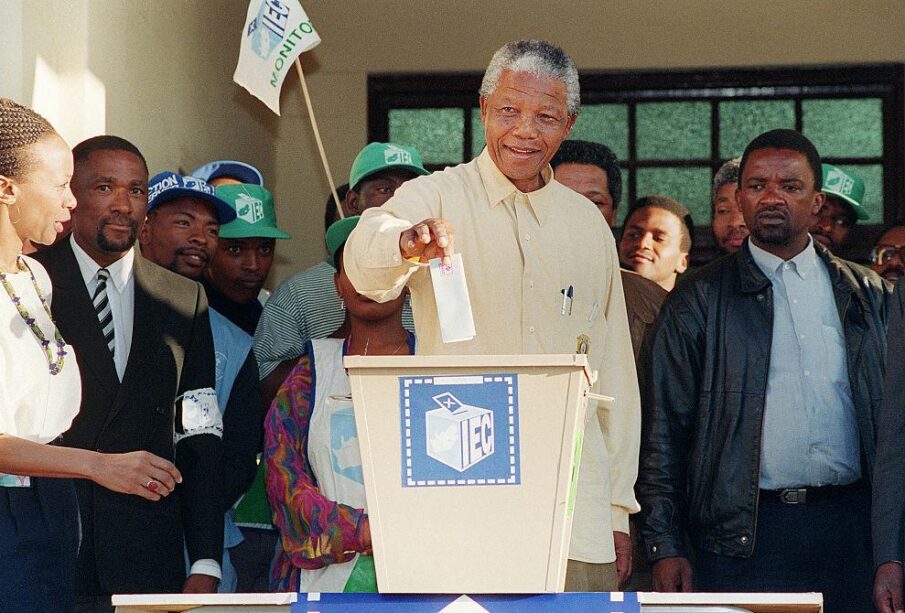
In 1994, South Africa held its first democratic elections based on universal adult suffrage, with Nelson Mandela becoming president.
The transition became one of Africa’s most influential examples of negotiated political transformation.
8. The Accra Comprehensive Peace Agreement – Liberia
Liberia endured two devastating civil wars between 1989 and 2003. The conflict caused massive displacement, loss of life, and the destruction of infrastructure. Regional organizations and international actors became heavily involved in efforts to bring the conflict to an end.
The Accra Comprehensive Peace Agreement was signed in 2003. It established a transitional government and created a framework for disarmament, elections, and political reconstruction.
The agreement helped create the conditions for Liberia’s transition toward democratic government, including the historic election of Ellen Johnson Sirleaf in 2005.
Liberia’s experience demonstrated the importance of combining peace negotiations with disarmament, international support, and institution-building.
9. The Lomé Peace Agreement – Sierra Leone
Sierra Leone’s civil war lasted from 1991 to 2002 and became infamous for atrocities committed against civilians.
The Lomé Peace Agreement, signed in 1999, sought to end the conflict between the government and the Revolutionary United Front (RUF).
The agreement included provisions for power-sharing and amnesty, while also providing a framework for disarmament and political participation.
Implementation was extremely difficult, and fighting continued for some time. However, subsequent international intervention and peacebuilding efforts eventually helped bring the war to an end.
Sierra Leone later became an important example of post-conflict reconstruction and democratic recovery.
10. The Pretoria Agreement – Democratic Republic of Congo
The Democratic Republic of Congo experienced devastating wars during the late 1990s and early 2000s.
The Pretoria Agreement of 2002 was a major step toward ending the Second Congo War. It contributed to the withdrawal of foreign forces and supported the creation of a transitional political framework.
The broader peace process eventually led to the establishment of a transitional government and elections in 2006.
While violence has continued in parts of the DRC, the agreement represented a major attempt to address one of Africa’s most complex regional conflicts.
11. The Algiers Agreement – Ethiopia and Eritrea
The Ethiopia-Eritrea conflict erupted into a major border war in 1998.
The Algiers Agreement, signed in 2000, established a framework for ending the fighting and resolving the border dispute.
A United Nations peacekeeping mission was established to monitor the ceasefire and support implementation.
For years, relations between Ethiopia and Eritrea remained tense. However, the agreement remains an important milestone in the history of the conflict and later efforts to normalize relations between the two countries.
12. The 2018 Ethiopia-Eritrea Peace Declaration
A major breakthrough came in 2018 when Ethiopia and Eritrea agreed to restore diplomatic relations and end their state of war.
The development followed a change in Ethiopia’s political leadership and created significant optimism across the region.
Borders reopened, diplomatic ties were restored, and families separated by the conflict were able to reconnect.
The episode demonstrated that peace processes can sometimes require years before political conditions make meaningful reconciliation possible.
13. The Nairobi and Pretoria Processes – Ethiopia
The peace process that led to the November 2022 cessation of hostilities agreement between the Ethiopian government and the Tigray People’s Liberation Front marked another important development in African conflict resolution.
The Pretoria agreement sought to end the devastating conflict in northern Ethiopia and establish mechanisms for disarmament, humanitarian access, and restoration of services.
Its implementation has faced challenges, but the process demonstrated the growing role of African-led diplomacy in addressing conflicts on the continent.
Why Peace Agreements Matter
Peace agreements are important because they create structured alternatives to continued warfare.
A successful agreement can:
- Stop or reduce armed conflict.
- Create political arrangements for former opponents.
- Establish mechanisms for disarmament.
- Support democratic elections.
- Facilitate humanitarian assistance.
- Enable displaced people to return home.
- Encourage economic reconstruction.
- Provide mechanisms for addressing political grievances.
However, peace agreements are not magic solutions.
An agreement can fail when political leaders refuse to compromise, armed groups remain powerful, institutions are weak, or communities do not trust the peace process. Agreements also require resources and institutions capable of implementing their provisions.
The African Approach to Peacebuilding
Africa has developed a wide range of approaches to conflict resolution. Regional organizations such as the African Union and regional economic communities have increasingly played important roles in mediation and peacebuilding.
The experiences of countries such as South Africa, Liberia, Sierra Leone, Sudan, Mozambique, Ethiopia, and others demonstrate that there is no single formula for achieving peace.
Some agreements rely heavily on power-sharing. Others emphasize regional autonomy, elections, disarmament, constitutional reform, or transitional governments.
What they have in common is the recognition that lasting peace requires political problems to be addressed alongside military ones.
Lessons for the Future
Historical peace agreements provide several important lessons for Africa today.
First, dialogue matters. Even when opposing sides appear unable to compromise, sustained negotiations can create opportunities for progress.
Second, implementation is just as important as signing. A beautifully written agreement means little if its provisions are ignored.
Third, local participation matters. Peace is more durable when communities affected by conflict have a meaningful role in shaping the settlement.
Finally, reconciliation cannot be forgotten. Ending fighting is only one part of peacebuilding. Societies also need justice, economic recovery, institutional reform, and opportunities for former enemies to coexist.
Conclusion
Africa’s history is often told through its wars, political crises, and conflicts. Yet the continent also has a long history of negotiation, mediation, reconciliation, and political compromise.
From the Lancaster House settlement that helped pave the way for Zimbabwe’s independence to the Comprehensive Peace Agreement that preceded South Sudan’s independence, these agreements have changed countries and, in some cases, altered the political landscape of the continent.
Their successes and failures offer an important lesson: peace is not simply the absence of war. It is a continuous process of negotiation, trust-building, reconciliation, and institution-building.
For Africa’s future, understanding these historical peace agreements can help policymakers, communities, and younger generations recognize both the possibilities of diplomacy and the work required to make peace last.




Leave a reply






Africa’s Source for Breaking News | Entertainments | Health | Finance | Sports | Lifestyle and Business News.


