
Africa’s Most Mysterious Historical Legends
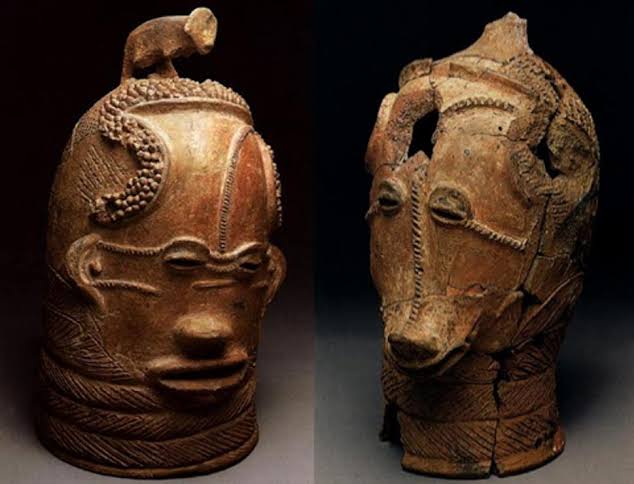
Africa's Most Mysterious Historical Legends
Africa has one of the world’s richest historical traditions.
Long before written records became common, communities across the continent preserved their past through oral storytelling, songs, rituals, and legends. These stories often blend history, spirituality, mystery, and imagination, making it difficult to separate fact from folklore.
From powerful rulers and hidden kingdoms to mysterious cities and unexplained events, Africa’s historical legends continue to capture the imagination. Some stories may contain traces of real events, while others have grown more mysterious with each generation. Here are some of Africa’s most fascinating historical legends.
The Lost City of Great Zimbabwe
The ruins of Great Zimbabwe in modern-day Zimbabwe remain one of Africa’s most impressive historical sites. Built between approximately the 11th and 15th centuries, the settlement once supported a powerful society involved in trade across southern Africa.
For centuries, however, outsiders created myths about who built the enormous stone structures. Some claimed that the ruins belonged to ancient foreigners or even biblical civilizations. Archaeological evidence eventually demonstrated that African societies built and developed Great Zimbabwe.
Even with much of its history understood today, questions about the city’s political organization, daily life, and eventual decline continue to fascinate researchers. Its massive stone walls have helped create an enduring aura of mystery around the site.
The Queen of Sheba
Few African historical figures are surrounded by as much mystery as the Queen of Sheba. She appears in religious and historical traditions associated with Ethiopia and the ancient Middle East.
According to Ethiopian tradition, the queen was known as Makeda. One of the most famous stories says that she traveled to Jerusalem to meet King Solomon after hearing about his wisdom. Their encounter eventually became an important part of Ethiopian historical tradition.
The mystery lies partly in the question of whether the Queen of Sheba was a real historical ruler and, if so, where her kingdom was located. Some researchers connect her story to ancient kingdoms in the Horn of Africa, while others interpret the account primarily through religious and literary traditions.
Her legend has survived for centuries because it combines royalty, wealth, diplomacy, romance, and mystery.
The Mysterious City of Timbuktu
Timbuktu became one of Africa’s most famous cities during the height of the Mali Empire and later West African empires. Located near the Niger River, it developed into an important center of trade, scholarship, and Islamic learning.
For centuries, stories about Timbuktu spread across Europe and other parts of the world. Travelers described it as a distant and extraordinarily wealthy city filled with gold and knowledge.
Its remote location contributed to the mystery. Because few outsiders could easily reach it, exaggerated stories developed around its wealth and culture.
The real history is impressive enough. Timbuktu supported scholars, libraries, universities, merchants, and religious institutions. Its surviving manuscripts provide valuable evidence of Africa’s intellectual traditions.
The Legend of Mansa Musa’s Incredible Wealth
Mansa Musa, the famous ruler of the Mali Empire, is one of Africa’s most legendary historical figures. His pilgrimage to Mecca in the 14th century became famous because of the enormous wealth associated with his kingdom.
Accounts of his journey describe a huge procession involving officials, servants, merchants, and large quantities of gold. His generosity reportedly attracted attention wherever he traveled.
Over time, stories about his wealth became increasingly dramatic. While some accounts may have been exaggerated, historians agree that Mali controlled important gold-producing regions and that Mansa Musa possessed extraordinary economic and political power.
His story remains fascinating because it challenges outdated ideas about medieval Africa and demonstrates the sophistication and wealth of West African civilizations.
The Mystery of the Dogon and Sirius
The Dogon people of Mali have become associated with one of Africa’s most controversial mysteries. Some writers have claimed that Dogon traditions contained detailed knowledge about Sirius, including information about a companion star that cannot easily be seen without advanced astronomical equipment.
This claim has generated considerable debate.
Some researchers have suggested that the astronomical knowledge may have been passed through outside contact, while others argue that later interpretations of Dogon traditions were influenced by Western researchers.
Regardless of which explanation is accepted, the story has become a fascinating example of how traditional knowledge, anthropology, astronomy, and mystery can intersect.
The Curse of the Pharaohs and African Tomb Legends
Ancient Egypt produced some of history’s most famous legends. Stories surrounding royal tombs, curses, hidden chambers, and mysterious deaths have fascinated people for generations.
The discovery of Tutankhamun’s tomb in 1922 helped fuel modern stories about a supposed curse placed upon anyone who disturbed the pharaoh’s resting place. Several deaths associated with people connected to the excavation were later linked to the curse by newspapers and popular culture.
Historians generally find no convincing evidence for a supernatural curse. Nevertheless, the legend remains powerful because ancient Egyptian civilization itself was deeply connected to beliefs about death, the afterlife, and the supernatural.
The Sunken City of Kilwa
Kilwa Kisiwani, off the coast of modern Tanzania, was once an important trading center on the Swahili Coast. Its merchants participated in extensive trade networks connecting East Africa with Arabia, Persia, India, and beyond.
As Kilwa declined, stories and legends grew around its ruins. The remains of palaces, mosques, and other structures have helped preserve the image of a once-powerful city that gradually faded from prominence.
The mystery surrounding Kilwa is not necessarily about a supernatural disappearance. Instead, it reflects the unanswered questions surrounding the rise, prosperity, and decline of many ancient African trading centers.
The Legend of Anansi
Anansi, the clever spider associated with Akan storytelling traditions in West Africa, is another enduring African legend. Unlike historical rulers, Anansi represents a different kind of mystery: the ability of stories to preserve cultural knowledge across generations.
Anansi often defeats stronger characters through intelligence, patience, deception, and creativity. His stories traveled beyond Africa through the African diaspora and influenced storytelling traditions in the Caribbean and the Americas.
The character demonstrates how African legends can survive enormous historical changes while continuing to teach lessons about human behavior.
Why These Legends Still Matter
Africa’s historical legends are more than entertaining stories. They can provide insight into how communities understood power, nature, spirituality, leadership, morality, and the past.
However, it is important to distinguish between legend and established historical evidence. Archaeology, written records, oral traditions, linguistics, and scientific research can help historians investigate the origins of these stories.
Some legends may contain memories of real people or events. Others may have developed through generations of storytelling. Many occupy a space somewhere between history and mythology.
That uncertainty is part of what makes them so compelling.
Preserving Africa’s Mysterious Past
Africa’s legends deserve careful preservation and study. Oral traditions can disappear when older generations pass away, while archaeological sites can suffer from neglect, development, looting, and environmental damage.
Modern researchers, historians, cultural organizations, and local communities all have roles to play in protecting these stories and the places connected to them.
From Great Zimbabwe to Timbuktu, from the legends of ancient rulers to the stories of clever Anansi, Africa’s mysterious past continues to shape its cultural identity.
The greatest mystery may not be whether every legend is literally true. Instead, it may be understanding how these stories survived for centuries, adapted across generations, and continue to influence how people around the world view Africa’s remarkable history.




Leave a reply




Africa’s Source for Breaking News | Entertainments | Health | Finance | Sports | Lifestyle and Business News.


