
Business Opportunities in Waste Recycling
Business Opportunities in Waste Recycling
Waste is often viewed as a problem, but it can also become a valuable business opportunity.
As African cities grow, populations increase, and consumption rises, the amount of waste generated by households, businesses, markets, and industries continues to increase. This creates a growing need for businesses that can collect, sort, process, reuse, and transform waste into useful products.
For entrepreneurs, waste recycling offers opportunities to solve environmental problems while creating jobs and generating income. From collecting plastic bottles to processing electronic waste, there are different entry points depending on available capital, skills, and location.
Why Waste Recycling Is Becoming a Business Opportunity
The growth of urban areas has increased the demand for effective waste management. Many communities still struggle with plastic pollution, poorly managed household waste, overflowing dumpsites, and limited recycling infrastructure.
At the same time, manufacturers and consumers increasingly need recycled materials. Plastics, metals, paper, glass, textiles, used cooking oil, organic waste, and electronic components can often be recovered and processed instead of being discarded.
This creates a market where entrepreneurs can earn revenue while contributing to cleaner communities.
1. Plastic Collection and Recycling
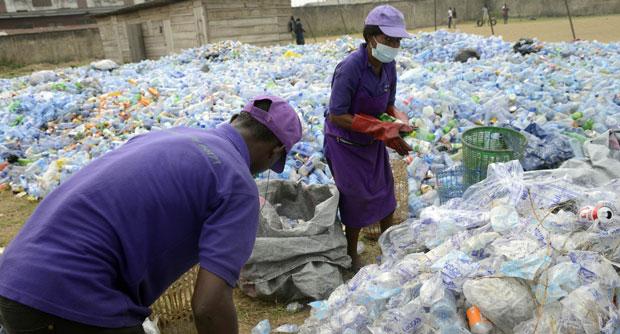
Plastic waste is one of the most visible environmental challenges in many African cities. Entrepreneurs can build businesses around collecting plastic bottles, containers, packaging materials, and other recyclable plastics.
Collected plastics can be sorted, cleaned, compressed, and sold to recycling companies. With additional investment, a business can process the materials into pellets or manufacture new products.
A small entrepreneur can begin by establishing collection points and working with waste pickers, households, schools, restaurants, and businesses.
2. Paper and Cardboard Recycling
Offices, supermarkets, schools, warehouses, and retail businesses generate significant quantities of paper and cardboard waste.
A recycling business can collect these materials, sort them, bundle them, and sell them to paper-processing companies. Entrepreneurs can also explore converting recovered paper into packaging materials, tissue products, cartons, or other useful items.
This opportunity can work particularly well in commercial areas where large volumes of paper waste are produced consistently.
3. Electronic Waste Recycling
Old phones, computers, televisions, printers, batteries, cables, and other electronic devices create a growing waste stream.
Electronic waste can contain valuable materials such as copper, aluminium, and other recoverable components. Businesses can collect unwanted electronics and work with specialized recyclers to safely recover useful materials.
Because electronic waste may contain hazardous substances, entrepreneurs should prioritize proper handling, storage, and processing rather than informal dismantling.
4. Organic Waste and Composting
Not all waste needs to become a manufactured product. Food scraps, leaves, agricultural residues, and other organic materials can be converted into compost.
Entrepreneurs can collect organic waste from restaurants, markets, households, farms, and food-processing businesses. The material can then be processed into compost for farmers, gardeners, landscaping companies, and urban agriculture projects.
This model can also reduce the amount of organic waste sent to landfills.
5. Used Cooking Oil Collection
Restaurants, hotels, food vendors, and households generate used cooking oil. Instead of allowing the oil to enter drains or become improperly discarded, entrepreneurs can collect it for appropriate recycling or processing.
Depending on local regulations and available technology, recovered cooking oil can become an input for industrial products, including biodiesel and other materials.
A collection business can earn revenue by establishing regular pickup arrangements with food businesses.
6. Glass Recycling
Glass bottles and containers can be collected from restaurants, hotels, bars, households, and events.
After collection, glass can be sorted by type and colour, cleaned, and supplied to recycling facilities or manufacturers. Reusable bottles can also create opportunities through return-and-refill systems.
Entrepreneurs should identify reliable buyers before investing heavily in collection and storage.
7. Textile Waste Recycling
Old clothing, damaged fabrics, leftover materials from tailors, and textile manufacturing scraps can become valuable inputs.
Entrepreneurs can collect and sort textile waste for resale, upcycling, reuse, or recycling. Some materials can be transformed into bags, rugs, cleaning cloths, fashion accessories, insulation materials, or other products.
Upcycling can be especially attractive because it allows businesses to turn low-value waste into products with higher retail value.
8. Waste Collection Services for Businesses
Recycling does not always require owning a processing factory. Entrepreneurs can create waste collection services that help businesses separate and manage recyclable materials.
A company could offer scheduled collection to offices, restaurants, supermarkets, schools, hotels, and residential estates. The collected materials can then be sold to established recycling facilities.
This service-based model can provide a relatively accessible entry point for entrepreneurs with limited capital.
9. Manufacturing Products From Recycled Materials
Another opportunity is to move beyond collection and create finished products.
Recycled plastic, wood waste, textiles, paper, and other materials can be used to manufacture items such as furniture, packaging, construction materials, household products, fashion accessories, and decorative items.
The key advantage is that entrepreneurs can potentially capture more value by selling finished products rather than raw recyclable materials.
10. Digital Platforms for Waste Recycling
Technology can also improve the recycling industry. Entrepreneurs can develop platforms that connect households and businesses with waste collectors and recycling companies.
A digital platform could allow users to request pickups, identify nearby collection points, track recyclable materials, receive payment for certain waste items, or learn how to separate household waste.
Such platforms can make recycling more convenient while helping recycling companies access more consistent supplies.
How to Start a Waste Recycling Business
Entrepreneurs should begin by identifying the type of waste that is abundant in their target area and determining whether there is a reliable market for it.
The basic process can include:
- Research the local waste stream.
- Identify recyclable materials with commercial value.
- Find reliable buyers or recycling partners.
- Start with a manageable collection area.
- Develop a system for sorting and storing materials.
- Invest gradually in equipment as demand grows.
- Build relationships with households and businesses.
- Follow relevant environmental, health, safety, and business regulations.
Starting small can reduce financial risk while allowing the entrepreneur to understand the market before expanding.
Challenges to Consider
Waste recycling can be profitable, but it also comes with challenges. These may include inconsistent waste supply, transportation costs, limited public awareness, inadequate infrastructure, fluctuating material prices, and difficulties accessing recycling equipment.
Businesses may also need to educate customers about separating recyclable materials from general waste.
Strong partnerships can help overcome some of these challenges. Working with local businesses, community organizations, recycling facilities, municipalities, and environmental groups can create a more reliable operating system.
The Future of Waste Recycling in Africa
As African cities continue to expand, waste recycling has the potential to become an increasingly important part of the circular economy. Instead of treating waste as something that simply needs to be thrown away, businesses can recover materials and return them to productive use.
The opportunity extends beyond environmental protection. Recycling can support entrepreneurship, create employment, reduce pressure on landfills, improve public spaces, and supply industries with locally recovered materials.
For aspiring entrepreneurs, the biggest opportunity may be to identify a waste problem in their community and develop a practical business around solving it. With good planning, reliable markets, responsible operations, and a focus on innovation, waste recycling can become both a sustainable business and a meaningful contribution to Africa’s environmental future.




Leave a reply






Africa’s Source for Breaking News | Entertainments | Health | Finance | Sports | Lifestyle and Business News.


