
Forgotten African Inventors and Their Contributions
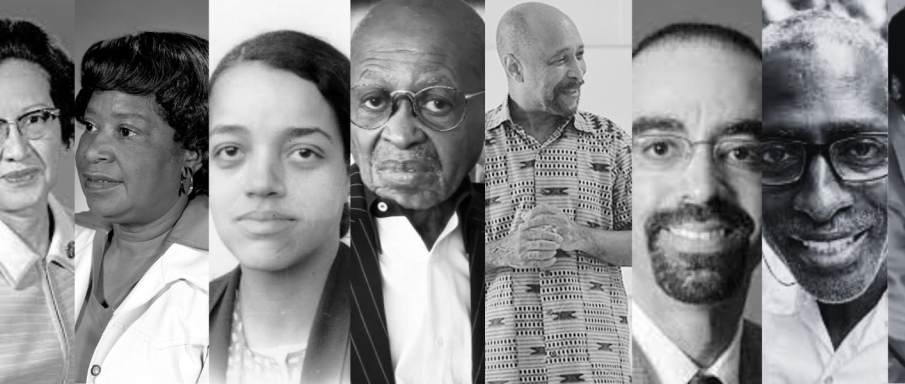
Forgotten African Inventors and Their Contributions
Africa has produced remarkable inventors, scientists, engineers, and innovators whose ideas have influenced technology, medicine, agriculture, communication, and everyday life.
Yet many of these individuals remain relatively unknown outside their countries or fields. When people discuss major inventions, African contributions often receive less attention than they deserve.
Some inventors developed practical solutions to problems in their communities. Others created technologies that gained international recognition but are rarely connected with African innovation.
Remembering these inventors matters. Their stories challenge the idea that innovation is something imported into Africa. They also show that African societies have long produced creative responses to complex problems.
Here are some African inventors and innovators whose contributions deserve greater recognition.
1. Philip Emeagwali and Parallel Computing
Philip Emeagwali, a Nigerian-born computer scientist, became known for his work involving massively parallel computing.
His research explored how large numbers of processors could work together to solve complex computational problems. This approach became important in areas such as scientific modelling, weather prediction, petroleum research, and large-scale calculations.
Emeagwali’s story is particularly significant because it demonstrates the potential of African-born scientists in advanced computing and engineering.
Although discussions about his work sometimes contain competing interpretations of the extent of his contribution to modern computing, his career remains an important part of the history of African participation in computer science.
2. Dr. Thomas Mensah and Fibre-Optic Technology
Dr. Thomas Mensah, a Ghanaian-American chemical engineer, made important contributions to fibre-optic manufacturing and high-speed communication technology.
Fibre-optic cables transmit information using pulses of light. They support modern telecommunications, internet infrastructure, television transmission, and other forms of high-speed communication.
Mensah worked on technologies that helped improve the manufacturing and performance of fibre-optic cables.
His achievements demonstrate how African scientists have contributed to technologies that now form part of the global communication system.
3. Louis L. Hayward and the Development of Agricultural Technology
Across Africa, many innovators have developed agricultural tools designed around local conditions. These contributions do not always receive the same international attention as inventions created in large research institutions.
One important area has been the development of agricultural machinery and processing equipment suited to African farming communities.
Local inventors have created solutions for planting, harvesting, food processing, irrigation, and storage. These technologies can reduce manual labour while improving productivity and reducing post-harvest losses.
The broader lesson is important: innovation does not always require sophisticated laboratories. Sometimes it begins with identifying an everyday problem and designing a practical solution.
4. Dr. James E. Kwegyir Aggrey and African Scientific Education
James Emman Kwegyir Aggrey of Ghana was primarily an educator and intellectual rather than an inventor in the conventional technological sense. However, his contribution to African education helped promote the development of scientific and technical knowledge.
Aggrey strongly supported education and argued for the development of African intellectual capacity.
His legacy reminds us that innovation depends on more than physical inventions. Schools, research institutions, scientific training, and access to knowledge create the environment in which future inventors can emerge.
5. Arthur Zang and the Cardio Pad
Cameroonian engineer Arthur Zang developed the Cardio Pad, a touchscreen medical device designed to help healthcare professionals perform cardiac examinations remotely.
The technology was created with healthcare challenges in mind, particularly the shortage of cardiologists in many parts of Africa.
A healthcare worker can use the device to collect cardiac information from a patient and transmit the data to a specialist for assessment.
This innovation illustrates the value of designing technology around local needs. Instead of simply importing solutions developed elsewhere, African innovators can create tools that respond directly to challenges within their communities.
6. Askia Mohamed and Early African Scientific Knowledge
Long before modern laboratories and universities, African societies developed sophisticated systems of knowledge.
During the Songhai Empire, Askia Muhammad supported scholarship and education in Timbuktu. The city became an important centre of intellectual activity, with scholars studying subjects including astronomy, mathematics, medicine, law, and literature.
While Askia Muhammad was not an inventor in the modern sense, the scholarly traditions associated with his period demonstrate that scientific inquiry and intellectual innovation have deep roots in African history.
7. The African Innovators Behind Traditional Engineering
Some of Africa’s most important inventors remain difficult to identify because their innovations were passed from one generation to another rather than patented under individual names.
Traditional African societies developed sophisticated techniques for:
- Metalworking
- Textile production
- Pottery
- Architecture
- Irrigation
- Food preservation
- Boat construction
- Medicine
- Agriculture
For example, African ironworking traditions developed independently in several regions and supported tools, weapons, farming equipment, and other technologies.
These innovations were often community-based. As a result, historians may find it difficult to attach a single inventor’s name to them.
That does not make the innovations less significant.
Why Many African Inventors Remained Unknown
Several factors have contributed to the limited visibility of African inventors.
Limited Access to Global Research Networks
For many decades, African researchers had fewer opportunities to participate in international scientific networks. This affected funding, publishing, collaboration, and global recognition.
Colonial History
Colonial education systems often prioritised European knowledge and institutions. Indigenous African technologies and knowledge systems were frequently overlooked, dismissed, or insufficiently documented.
Lack of Documentation
Many innovations were never formally documented or patented. Some existed within communities and were passed down through practice.
Without written records, the names of individual creators can disappear over time.
Funding Challenges
Research and development require resources. African scientists and inventors have often worked with limited access to laboratories, equipment, investment, and research funding.
Global Visibility
Even when an African inventor develops an important technology, gaining international attention can be difficult.
Media coverage, academic publishing, patent systems, investment networks, and international partnerships can all influence how widely an invention becomes known.
Why Africa Needs to Remember Its Inventors
Recognising African inventors is not simply about celebrating the past. It can influence the future. Young Africans need examples that show them they can participate in science, engineering, technology, and creative problem-solving.
When students learn about African scientists and inventors, innovation becomes more relatable. A young Nigerian can see a Nigerian engineer solving a problem. A Ghanaian student can learn about a Ghanaian scientist contributing to global technology. A Cameroonian student can discover how an African engineer used technology to address a healthcare challenge.
These stories can inspire further exploration.
African Innovation Is Still Growing
The continent’s history of innovation continues today. African entrepreneurs and researchers are developing technologies in areas such as fintech, renewable energy, artificial intelligence, healthcare, agriculture, transportation, telecommunications, and education.
From mobile payment systems to digital healthcare platforms, African innovators continue to demonstrate that local challenges can generate globally relevant ideas.
The future may produce even more inventors whose names become recognised around the world.
Preserving Africa’s Innovation History
Governments, universities, museums, schools, journalists, and technology organisations all have a role to play in documenting African innovation.
Schools can introduce students to African scientists and engineers. Universities can preserve research records and oral histories. Museums can document indigenous technologies. Media organisations can tell stories about innovators from different African countries.
Digital platforms can also make these stories accessible to younger generations.
Preserving this history creates a stronger record of Africa’s contribution to global knowledge.
Conclusion
Africa’s history of innovation extends far beyond the inventions commonly discussed in textbooks. Scientists such as Arthur Zang and Thomas Mensah demonstrate how African-born innovators have contributed to modern technology and medicine. At the same time, the continent’s traditional agricultural, engineering, architectural, and scientific knowledge shows that innovation existed in African societies long before modern research institutions.
Some inventors became internationally recognised. Others remained relatively unknown because their work was poorly documented or received limited global attention.
Remembering these innovators gives Africa a more complete history of science and technology. More importantly, it reminds the next generation that invention is not limited by geography.
African innovation has a long history, and its next chapter is still being written.




Leave a reply




Africa’s Source for Breaking News | Entertainments | Health | Finance | Sports | Lifestyle and Business News.


