
Historical Leaders Who Inspired National Unity
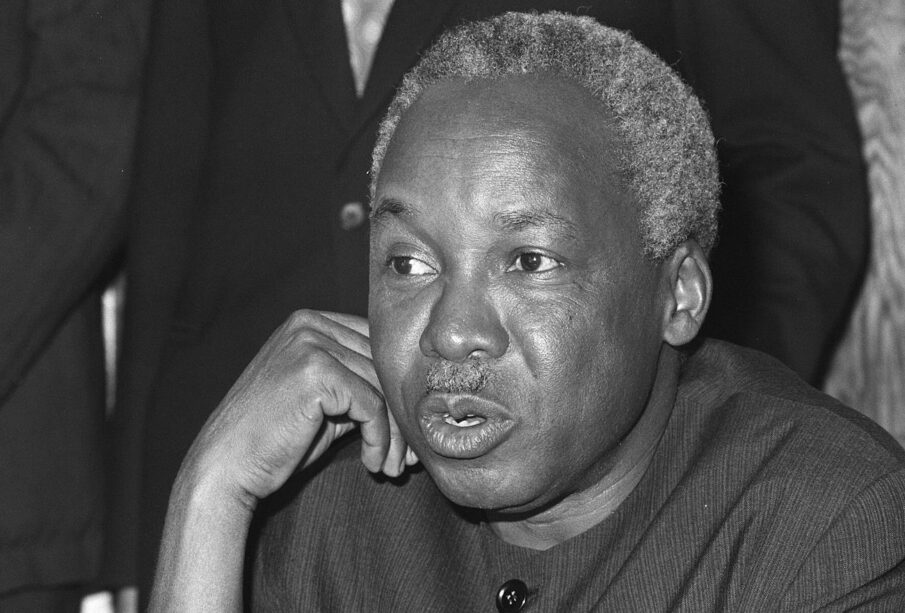
Historical Leaders Who Inspired National Unity
National unity has played an important role in the development of countries across the world.
Throughout history, nations have faced divisions caused by ethnicity, religion, language, colonialism, political disagreements, and economic inequality. In many cases, influential leaders have helped bring people together around shared goals, including independence, peace, equality, and national development.
Although unity does not require everyone to share the same beliefs, it encourages citizens to recognise their common identity and work towards a better future. From Africa’s independence movements to the struggles for civil rights in other parts of the world, several historical leaders have inspired people to look beyond their differences. Their experiences offer valuable lessons about leadership, reconciliation, patriotism, and the challenges of building a united nation.
1. Nelson Mandela – South Africa
Nelson Mandela remains one of the most recognised symbols of national reconciliation and unity in modern history. As a leading figure in the struggle against apartheid, he spent 27 years in prison for his opposition to South Africa’s system of racial segregation and white minority rule.
Following his release in 1990, Mandela supported negotiations to establish a democratic South Africa. Rather than encouraging revenge against those responsible for apartheid, he emphasised reconciliation and the need to build a country where people of different racial backgrounds could live together.
In 1994, Mandela became South Africa’s first democratically elected Black president. His government faced the difficult task of addressing historical injustices while preventing further racial conflict. The Truth and Reconciliation Commission, established during his presidency, provided a platform for investigating human rights abuses committed under apartheid.
Mandela’s leadership demonstrated that national unity requires more than political change. It also demands a willingness to confront painful history, acknowledge injustice, and create opportunities for peaceful coexistence. However, persistent economic inequality in post-apartheid South Africa also illustrates how reconciliation must be accompanied by meaningful social and economic progress.
2. Kwame Nkrumah – Ghana
Kwame Nkrumah was a central figure in Ghana’s independence movement and an influential advocate for African unity. Under his leadership, Ghana gained independence from British colonial rule on 6 March 1957, becoming the first sub-Saharan African country to achieve independence under majority African government in the post-war period.
Nkrumah believed that political independence would have limited value if African countries remained economically dependent and politically divided. He therefore promoted Pan-Africanism, an ideology that encouraged African people and nations to cooperate in addressing shared challenges.
In 1963, Ghana became a founding member of the Organisation of African Unity (OAU), established to promote cooperation among African states and support the liberation of territories still under colonial rule. Nkrumah advocated a more integrated continent, including stronger political and economic cooperation.
His vision helped inspire generations of African leaders and activists. Nevertheless, his domestic administration became increasingly authoritarian, and Ghana adopted a one-party system under his rule. His legacy therefore presents an important lesson: national unity can be strengthened by a common purpose, but it should not come at the expense of political freedom, democratic participation, or respect for opposing views.
3. Julius Nyerere – Tanzania
Julius Nyerere, Tanzania’s first president, is widely associated with efforts to promote national cohesion in a country with numerous ethnic communities and linguistic traditions.
Before independence in 1961, Nyerere led the Tanganyika African National Union (TANU), which mobilised support across different communities against British colonial rule. Rather than organising the independence movement primarily around a single ethnic group, TANU promoted a shared national identity.
After independence, Nyerere encouraged the use of Swahili as a common national language. This policy helped people from different linguistic backgrounds communicate and participate in national life. His government also promoted Ujamaa, a form of African socialism that emphasised collective responsibility, social equality, and community development.
Tanzania became known for its relative political stability and the development of a shared national identity. However, Nyerere’s socialist policies, including compulsory villagisation, also attracted criticism because of their economic consequences and the coercive methods used in some cases.
His experience demonstrates how common languages, inclusive national institutions, and shared civic values can encourage unity. It also shows the importance of ensuring that national development policies respect individual rights and the needs of local communities.
4. Abraham Lincoln – United States
Abraham Lincoln led the United States through one of the most divisive periods in its history: the American Civil War, which lasted from 1861 to 1865.
When Lincoln became president in 1861, several Southern states had seceded from the Union, largely because of disputes over slavery and its expansion. The resulting war threatened the continued existence of the United States as a single country.
Lincoln maintained that the Union should be preserved. During the war, he issued the Emancipation Proclamation, which took effect on 1 January 1863 and declared enslaved people in areas then in rebellion to be free. The proclamation changed the character of the conflict by making emancipation a central Union war aim, although it did not immediately free every enslaved person.
Lincoln’s Gettysburg Address in 1863 also presented the war as a struggle to preserve a nation founded on liberty and equality. His leadership contributed to the Union victory and the eventual abolition of slavery through the Thirteenth Amendment, ratified after his death in 1865.
Lincoln’s historical significance lies in his efforts to preserve the Union while confronting the institution of slavery. His legacy also highlights a central challenge of national unity: a country cannot fully realise its founding ideals while denying fundamental rights to part of its population.
5. Mahatma Gandhi – India
Mahatma Gandhi played a major role in India’s struggle for independence from British colonial rule. Through nonviolent resistance, civil disobedience, and mass mobilisation, he encouraged millions of Indians to participate in the independence movement.
Gandhi believed that people from different religious, social, and cultural backgrounds could unite around the common objective of ending colonial rule. His campaigns, including the 1930 Salt March, challenged British authority and drew international attention to India’s independence struggle.
He also advocated Hindu-Muslim cooperation and opposed untouchability, seeking to challenge discriminatory practices within Indian society. His approach encouraged ordinary citizens to view political change as a collective responsibility rather than an undertaking reserved for political elites.
India achieved independence on 15 August 1947. However, independence coincided with the partition of British India into India and Pakistan, which triggered widespread communal violence and mass displacement. Gandhi’s efforts to promote peace could not prevent this tragedy.
His life illustrates both the possibilities and limitations of unity movements. Shared resistance can bring diverse populations together, but historical grievances, religious tensions, and political disagreements may persist even after a common objective has been achieved.
6. Ahmed Sékou Touré – Guinea
Ahmed Sékou Touré was a prominent figure in Guinea’s independence struggle. In 1958, Guinea became the only French territory in West Africa to reject Charles de Gaulle’s proposed French Community in a referendum, choosing immediate independence instead.
Touré presented independence as an expression of national dignity and self-determination. His political movement mobilised citizens around the goal of ending colonial rule and establishing an independent Guinean state.
Following independence on 2 October 1958, his government sought to build national institutions and reduce the influence of colonial structures. His emphasis on sovereignty contributed to wider debates about African independence and the right of nations to determine their own futures.
However, Touré’s presidency was also marked by authoritarian rule, political repression, and serious human rights abuses. His history demonstrates why national unity must be distinguished from unquestioning loyalty to a government. A truly cohesive nation needs institutions that protect citizens, allow peaceful disagreement, and encourage participation.
Lessons from Historical Leaders Who Promoted Unity
The experiences of these leaders reveal several principles that remain relevant to countries facing division today.
First, a shared national identity can bridge differences. Common civic values, inclusive institutions, and accessible education can help citizens recognise their responsibilities towards one another.
Second, unity requires fairness and justice. Mandela’s reconciliation efforts and Lincoln’s role in ending slavery demonstrate that lasting cohesion cannot be separated from the protection of fundamental rights.
Third, inclusive leadership matters. Leaders who engage different communities and recognise their concerns can create opportunities for cooperation. However, governments should not use national unity as an excuse to silence criticism or suppress minority groups.
Finally, economic and social inclusion strengthen national cohesion. Where communities experience persistent poverty, discrimination, or unequal access to opportunities, calls for unity may have limited impact unless those problems are addressed.
Conclusion
Historical leaders such as Nelson Mandela, Kwame Nkrumah, Julius Nyerere, Abraham Lincoln, Mahatma Gandhi, and Ahmed Sékou Touré shaped important debates about national identity, independence, equality, and political cooperation. Their achievements and shortcomings reveal that building a united nation is a complex and continuous process.
For modern African countries, including Nigeria, their experiences offer useful lessons. Ethnic, religious, and cultural diversity need not prevent citizens from working towards common goals. By promoting justice, responsible leadership, equal opportunities, and respect for democratic rights, nations can build stronger relationships among their people. Ultimately, national unity becomes meaningful when citizens feel that they belong, that their voices matter, and that their country’s future offers opportunities for everyone.




Leave a reply




Africa’s Source for Breaking News | Entertainments | Health | Finance | Sports | Lifestyle and Business News.


