
Historical Leaders Who Unified Communities Across Africa
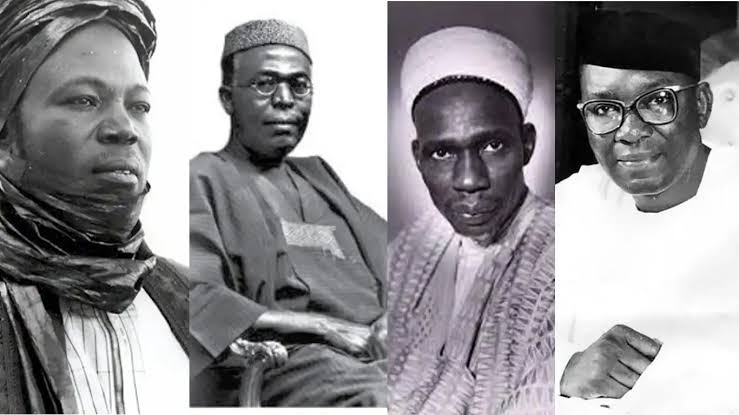
Historical Leaders Who Unified Communities Across Africa
Africa’s history is filled with leaders who understood that strong communities are built through cooperation, shared identity, and a sense of common purpose.
Long before the creation of modern African states, communities were often divided by language, clan, religion, geography, or competing political interests. Yet, at different points in history, remarkable leaders succeeded in bringing people together around shared goals. These leaders did more than govern. They created institutions, negotiated alliances, defended communities, encouraged trade, and developed systems that allowed different groups to coexist and work toward a common future.
Understanding their stories offers valuable lessons about leadership, unity, and community building in Africa today.
Shaka Zulu and the Unification of Communities
Shaka Zulu is one of the most widely recognized leaders in southern African history. During the early 19th century, he transformed the Zulu Kingdom and brought several communities under a stronger political and military structure.
His leadership was controversial and often associated with warfare and territorial expansion. However, his ability to organize people into a more centralized kingdom demonstrated how leadership could transform previously separate groups into a larger political community.
Shaka also introduced military innovations and organizational structures that strengthened the Zulu state. His story illustrates both the possibilities and complexities of unification through centralized authority.
Sundiata Keita and the Mali Empire
Sundiata Keita is remembered as the founder of the Mali Empire, one of medieval West Africa’s most influential empires.
According to oral traditions surrounding the epic of Sundiata, he brought together different Mandinka communities and allied groups after defeating the Sosso ruler Sumanguru Kanté. His leadership helped establish the political foundations of the Mali Empire.
One of the most important lessons from Sundiata’s story is that unity was not based solely on military strength. Alliances, agreements, cultural traditions, and political cooperation were also important to maintaining the empire.
The famous Manden Charter, traditionally associated with Sundiata’s era, is often presented as an early example of principles concerning social organization, rights, responsibilities, and peaceful coexistence. Although historians debate aspects of its historical transmission and dating, it remains an important part of West African oral heritage.
Menelik II and the Ethiopian State
Emperor Menelik II played a major role in shaping modern Ethiopia during the late 19th and early 20th centuries.
Through diplomacy, military campaigns, political alliances, and territorial expansion, Menelik brought numerous territories and communities into a larger Ethiopian state. His reign also became closely associated with Ethiopia’s successful resistance against Italian invasion at the Battle of Adwa in 1896.
The victory at Adwa became an important symbol of African resistance to European colonial expansion. It demonstrated how diverse groups could mobilize around a shared political objective.
Menelik’s legacy is complex, particularly because state expansion sometimes involved conflict and coercion. Nevertheless, his period remains significant in understanding the formation of modern Ethiopia.
Queen Nzinga and the Power of Diplomacy
Queen Nzinga of Ndongo and Matamba, in present-day Angola, was a skilled diplomat, military strategist, and political leader who resisted Portuguese expansion during the 17th century.
Nzinga understood that survival required more than military confrontation. She built alliances, negotiated with rivals, adapted her political strategies, and worked to strengthen resistance against Portuguese influence.
Her ability to work across political divisions made her an important example of strategic leadership. Rather than treating diplomacy and military strength as separate tools, she used both to protect the interests of her people.
Today, Queen Nzinga is remembered as one of Africa’s most prominent historical female leaders.
Askia the Great and the Songhai Empire
Askia Muhammad, often known as Askia the Great, became one of the most influential rulers of the Songhai Empire during the late 15th and early 16th centuries.
He reorganized the empire’s administration and strengthened its political institutions. His government included officials responsible for different areas of administration, helping create a more organized system across a large territory.
Askia also promoted education and supported centers of Islamic scholarship, particularly in cities such as Timbuktu.
His reign demonstrates that unifying communities requires more than bringing people under one political authority. Effective administration, education, trade, and institutions can help maintain unity across diverse populations.
Samory Touré and Resistance Through Organization
Samory Touré was a prominent West African military and political leader who resisted French colonial expansion during the late 19th century.
He built the Wassoulou Empire and organized different communities into a centralized political and military structure. His resistance lasted for years and required significant organizational ability.
Although his methods and campaigns were shaped by the conflicts of his time, Samory’s story demonstrates how leadership, organization, and collective identity could help communities respond to external threats.
Nelson Mandela and Reconciliation in South Africa
In modern African history, Nelson Mandela provides one of the clearest examples of leadership centered on reconciliation.
After decades of apartheid, South Africa faced enormous social and political divisions. Mandela became a key figure in the country’s transition toward democracy and emphasized reconciliation rather than widespread retaliation.
As South Africa’s first democratically elected president, he promoted the idea that the country’s future depended on people from different racial and political backgrounds finding ways to live and work together.
Mandela’s leadership showed that unity does not necessarily mean eliminating differences. Sometimes it means creating institutions and attitudes that allow differences to coexist peacefully.
Julius Nyerere and the Idea of National Unity
Julius Nyerere, Tanzania’s first president, placed national unity at the center of his political vision.
At independence, Tanzania contained numerous ethnic and linguistic communities. Nyerere promoted a strong sense of Tanzanian national identity and emphasized the importance of Kiswahili as a common language.
His approach helped distinguish national identity from ethnic competition and contributed to Tanzania’s reputation for political stability during its early post-independence years.
Although his economic policies remain debated, his emphasis on national identity and social cohesion continues to influence discussions about leadership in Africa.
What These Leaders Teach Us About Unity
The experiences of African leaders across different periods reveal several important lessons about community building.
1. Unity Requires a Shared Purpose
Communities are more likely to cooperate when they have something meaningful to work toward. Whether the goal was defending territory, building a state, achieving independence, or creating peace, shared objectives helped bring people together.
2. Leadership Requires Communication
Successful leaders understood the importance of communicating with different groups. Diplomacy, negotiation, public speeches, traditional institutions, and cultural practices all played roles in building relationships.
3. Institutions Matter
Personal leadership alone cannot sustain unity forever. Strong administrative, legal, educational, and social institutions help communities maintain cooperation beyond the lifetime of a particular leader.
4. Unity Does Not Mean Uniformity
Africa’s historical communities were rarely identical. They spoke different languages, practiced different traditions, and followed different political systems.
Effective forms of unity often involved finding ways for different groups to participate in a broader community without completely abandoning their individual identities.
5. Historical Legacies Can Be Complex
It is important to avoid portraying historical leaders as entirely heroic or entirely negative. Many leaders who unified communities also participated in warfare, territorial expansion, political repression, or other actions that affected different groups differently.
Studying their complete histories provides a more useful understanding of leadership than simply celebrating their achievements.
Lessons for African Communities Today
Modern African societies continue to experience challenges involving ethnic divisions, political competition, economic inequality, religious differences, and rapid urbanization.
The experiences of historical leaders demonstrate that sustainable unity requires more than powerful individuals. It depends on institutions, trust, communication, fairness, and a willingness to recognize common interests.
Today’s community leaders can apply these principles at local and national levels. Schools, businesses, civil society organizations, religious institutions, governments, and neighborhood associations can all contribute to stronger social connections.
Technology has also created new opportunities for people across Africa to communicate and collaborate. From digital communities to regional businesses and youth-led initiatives, today’s generation has tools that earlier leaders could never have imagined.
Conclusion
From Sundiata Keita and Queen Nzinga to Julius Nyerere and Nelson Mandela, African history contains many examples of leaders who attempted to bring divided communities together. Their methods differed dramatically. Some relied on military organization, others on diplomacy, political institutions, cultural identity, or reconciliation. Their legacies were also complex and should be examined within their historical contexts.
Nevertheless, their stories reveal an enduring truth: communities become stronger when people can identify shared interests and build structures that encourage cooperation.
As Africa continues to change, the lessons of its past can provide valuable guidance for building more inclusive, peaceful, and cooperative communities in the future.



Leave a reply







Africa’s Source for Breaking News | Entertainments | Health | Finance | Sports | Lifestyle and Business News.


