
Fully Funded Scholarships For Nigerians
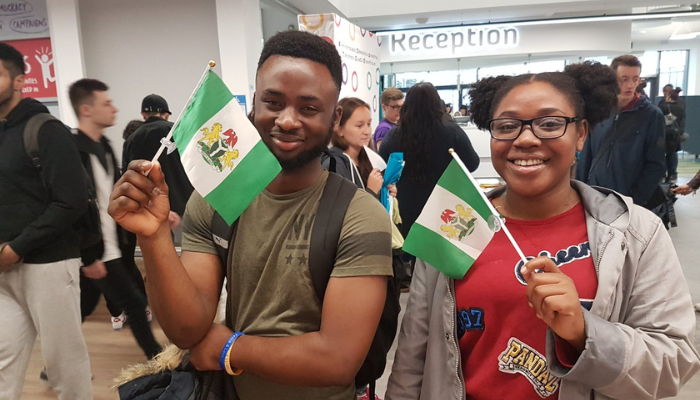
Fully Funded Scholarships For Nigerians
12 Fully Funded Scholarships Nigerians Can Still Apply For Before the Year Runs Out.
Every year, thousands of qualified Nigerian students miss scholarships worth tens of millions of naira not because they were not good enough, but because they found out about the deadline three days after it passed. The scholarships below all have windows that are either open right now or opening in the coming months, and every one of them is fully funded, meaning tuition, and in most cases living costs, travel, and health insurance, are covered. You will not pay a naira in fees to apply for any program on this list. If anyone asks you to pay to “process” a scholarship application, that is not a scholarship, it is a scam.
What “fully funded” actually means before you get excited
Not every scholarship that calls itself generous actually covers everything. A genuine fully funded scholarship covers tuition, a monthly stipend for living costs, and usually flights and health insurance. Some programs only cover tuition and leave you to fund the rest, which can quietly become a $15,000 a year problem once you are already abroad. Every program below is confirmed fully funded in the sense that matters: you should not need personal or family money to complete it.
1. Chevening Scholarship (United Kingdom)
The UK government’s flagship scholarship for future leaders covers full tuition at any UK university, a monthly stipend, return flights, and an arrival allowance. It is one of the most competitive programs on this list, and Nigerians make up a significant share of applicants every year. Applications for the 2026/2027 cycle open later in 2026, so this is one to start preparing your personal statement for now rather than waiting for the portal to open.
2. Commonwealth Scholarships (United Kingdom)
As a Commonwealth member, Nigeria has guaranteed access to this program, which funds master’s and PhD study in the UK for students from developing countries. It covers tuition, a living allowance, and return airfare, and it specifically prioritizes fields connected to development, which is worth keeping in mind when choosing your course.
3. Joint Japan/World Bank Graduate Scholarship Program (JJ/WBGSP)
This program funds master’s study for professionals from developing countries, including Nigeria, at partner universities worldwide, with a focus on development related fields. The 2026 deadline falls in late February, which means the window is closing fast, so if you already have a few years of relevant work experience, this is worth prioritizing over programs with later deadlines.
4. Islamic Development Bank (IsDB) Scholarship
Open to students from IsDB member countries, this program funds undergraduate, master’s, and PhD study, with particular strength in science and technology fields. Its deadline typically falls at the end of January, ahead of most of the programs on this list, so it needs to be near the top of your application calendar.
5. DAAD Scholarships (Germany)
Germany’s DAAD runs multiple scholarship tracks for Nigerian students, covering master’s and PhD programs at German universities with a monthly stipend, health insurance, and often a travel allowance. Germany’s public universities already charge little to no tuition for many programs, which means a DAAD stipend can stretch further than an equivalent scholarship in the UK or US.
6. Mastercard Foundation Scholars Program
This program has expanded its partnerships with African universities significantly, funding undergraduate and graduate study for academically talented students, particularly those facing financial constraints, with a strong focus on students who intend to return and contribute to their communities. It covers tuition, accommodation, and a living stipend, and unlike many programs on this list, it has partner universities inside Africa as well as abroad.
7. MEXT Scholarship (Japan)
Japan’s government scholarship covers tuition, a monthly stipend, and airfare for undergraduate and graduate study, and it is one of the few fully funded programs on this list that regularly accepts undergraduate applicants rather than only postgraduates. Nigerian applicants typically apply through the Japanese embassy in Abuja, and strong WAEC or NECO results matter for undergraduate eligibility.
8. Chinese Government Scholarship (CSC)
China funds a large number of scholarships annually for African students across undergraduate, master’s, and PhD levels, covering tuition, accommodation, a stipend, and health insurance. Competition varies significantly by field and university, and technical and engineering fields tend to have more available slots than humanities.
9. Australia Awards Scholarships
Australia’s government funds full scholarships for students from partner countries including Nigeria, covering tuition, living costs, and health cover, with a focus on fields linked to development priorities. Deadlines for the following year’s intake typically fall around the middle of the current year, so timing matters here.
10. Türkiye Bursları (Turkey)
Turkey’s national scholarship program is one of the more accessible fully funded options for undergraduates, covering tuition, accommodation, a monthly stipend, health insurance, and a year of Turkish language preparation before your program begins. It accepts a wide range of academic backgrounds and does not require Turkish language ability at the point of application.
11. Queen Elizabeth Commonwealth Scholarships (QECS)
This program funds master’s study across Commonwealth countries with a focus on students working on the UN Sustainable Development Goals. Its January deadline is one of the earliest on this list, so if this fits your field, treat it as an early priority rather than something to circle back to later.
12. NELFUND and Nigerian Law School Scholarship Programme (studying at home)
Not every fully funded opportunity requires leaving Nigeria. NELFUND now offers interest free loans for university students, effectively removing tuition as a barrier for eligible students studying locally, and the Nigerian Law School Scholarship Programme covers bar training costs for qualifying law graduates. If travel, visas, or being away from family are real obstacles for you, these domestic options are worth just as much consideration as the international list above.
How to actually give yourself a real shot
Start your documents now, not two weeks before a deadline. Every program above requires some combination of a personal statement, academic transcripts, and reference letters, and reference letters in particular take your recommenders time to write properly, so asking early is not optional if you want a strong one. Apply through the correct channel for each program: some go through the university you are applying to directly, others go through a national portal or embassy, and using the wrong route is one of the most common reasons a genuinely strong Nigerian application never gets seen. And apply to more than one. The students who win these scholarships are rarely the ones with the single highest grade average, they are the ones who treated the application itself as seriously as the exam that got them eligible to apply in the first place.




Leave a reply





Africa’s Source for Breaking News | Entertainments | Health | Finance | Sports | Lifestyle and Business News.


