
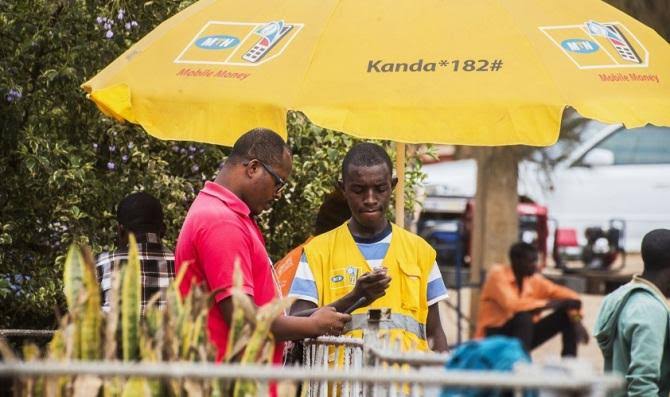
Mobile Money in Rwanda
Mobile Money in Rwanda: How It Is Changing How Africans Save and Spend
Across Africa, the way people handle money is changing rapidly. Cash remains important, but millions of people now send, receive, save and spend money through their mobile phones. Rwanda is one of the clearest examples of this transformation.
In a country where digital services have become an important part of everyday life, mobile money is changing more than how people make payments. It is influencing how families save, how businesses operate, how workers receive income and how consumers pay for everyday goods.
Rwanda’s experience also offers a glimpse into where financial services could be heading across the wider African continent.
What Is Mobile Money?
Mobile money allows people to perform financial transactions using a mobile phone. Depending on the service and country, users can deposit cash with an agent, transfer money, pay bills, purchase goods, receive salaries and access other financial services without visiting a traditional bank.
The concept is particularly important in countries where access to conventional banking has historically been limited.
Instead of travelling to a bank branch, a person can use a mobile phone to send money to a family member in another city. A small business owner can receive payments electronically. A customer can pay a merchant without carrying a large amount of cash.
This convenience has helped mobile money become an important part of Africa’s financial ecosystem.
Why Mobile Money Has Grown in Rwanda
Rwanda has invested heavily in digital transformation. The country’s relatively strong telecommunications infrastructure and focus on digital services have created an environment where mobile financial services can grow.
For many ordinary people, convenience is one of the biggest attractions.
Consider a market trader in Kigali. Instead of keeping all daily earnings as physical cash, the trader can receive digital payments from customers and transfer money to suppliers using a phone.
A student can receive money from family without waiting for a bank transfer. A worker can send money home without making a long journey. A small business can collect payments while keeping a clearer record of transactions.
These small changes can have a significant impact when repeated across thousands or millions of people.
Mobile Money Is Changing How Africans Spend
One of the most visible effects of mobile money is the gradual reduction in dependence on physical cash.
Cash is still widely used across Africa. However, digital payments are becoming increasingly normal in many urban communities.
A customer may buy food, pay for transportation, settle a utility bill or purchase airtime directly from a mobile device. Businesses can also accept electronic payments without investing in expensive traditional banking infrastructure.
This changes consumer behaviour.
When payments become easier, people can make transactions at almost any time. A customer does not necessarily need to find an ATM or carry enough cash before leaving home.
For businesses, digital payments can also reduce some of the risks associated with handling large amounts of cash.
It Is Also Changing How People Save
Perhaps one of the more important effects of mobile money is its influence on saving.
For people who previously kept money under a mattress, in a drawer or with a trusted family member, having a digital wallet can provide another way to store money.
Mobile financial services can also make saving more convenient because people can transfer small amounts regularly.
Someone may decide to put aside a portion of their earnings after each day’s work. Another person may save whenever they receive a payment. Over time, these small contributions can become meaningful.
This is especially relevant for informal workers, market traders and small entrepreneurs whose incomes may not arrive in a predictable monthly salary.
Mobile technology makes it possible to build financial habits around irregular income.
Small Businesses Are Major Beneficiaries
Small businesses are at the centre of Africa’s economy, and mobile money is helping many of them operate more efficiently.
A small shop can accept digital payments from customers. A food vendor can receive money without needing to provide change. A freelance worker can receive payments remotely.
Digital transaction records can also help business owners understand their cash flow.
This does not automatically solve every financial problem. However, having a record of transactions can make it easier for entrepreneurs to track sales and expenses.
Over time, digital financial histories may also help some users demonstrate their economic activity when seeking formal financial services.
Mobile Money Is Connecting Urban and Rural Communities
Another important advantage is the ability to move money across distances quickly.
In many African countries, families are financially connected even when members live in different towns or regions.
A worker in Kigali may support relatives elsewhere. A young person working in a city may send money to parents in a rural community. A business owner may pay suppliers who live far away.
Mobile money makes these transactions faster and more convenient.
This is particularly important in countries where travelling to physically deliver money can cost both time and transportation expenses.
The broader effect is greater economic connectivity.
Women and Financial Inclusion
Mobile financial services can also contribute to financial inclusion, particularly for people who have historically faced barriers to traditional banking.
Women operating small businesses, for example, may use mobile payments to receive money from customers and manage business income.
The ability to control and access money through a personal mobile device can provide greater independence.
However, access should not be confused with complete financial inclusion. People still need affordable services, financial education, reliable networks and protection from fraud.
Digital finance works best when people understand how to use it safely.
The Challenges Behind the Convenience
Mobile money is not without problems.
Fraud and scams remain major concerns. Criminals may attempt to trick users into revealing PINs, passwords or verification codes.
There are also concerns about transaction fees. Small charges may appear insignificant, but frequent transactions can become expensive for people living on limited incomes.
Network failures can create another problem. When a digital payment system depends on mobile connectivity, technical disruptions can prevent people from accessing their money when they need it.
Digital literacy is equally important. People who are unfamiliar with mobile financial services may be vulnerable to mistakes or manipulation.
For mobile money to deliver its full benefits, security and consumer education must grow alongside adoption.
Rwanda’s Bigger Lesson for Africa
Rwanda’s mobile money experience is part of a much larger African transformation.
Countries across the continent are developing their own digital payment ecosystems. From East Africa to West Africa, mobile phones are increasingly becoming tools for everyday financial activity.
The important lesson is that financial innovation does not always have to begin with traditional banks.
A mobile phone can become a payment tool, a wallet and, increasingly, a gateway to other financial services.
This matters because Africa has a large population of young people, entrepreneurs and informal workers who need financial services that match the realities of their daily lives.
For someone earning money in small amounts, flexibility can matter more than a conventional monthly banking structure.
What the Future Could Look Like
The next stage of mobile money is likely to go beyond simple transfers. Digital wallets could become increasingly connected to savings products, insurance, credit, business tools and other financial services.
Artificial intelligence and improved financial technology could also help providers create more personalised services.
However, the future should not be measured only by how many transactions happen digitally. The real question is whether these technologies help people manage money better.
Can a market trader save more consistently? Can a small business reduce payment problems? Can families send money home more cheaply? Can people build financial resilience?
Those are the outcomes that matter.
Conclusion
Rwanda’s mobile money story demonstrates how quickly technology can change everyday financial behaviour. The mobile phone is no longer simply a communication device. For millions of Africans, it is becoming a financial tool used to save, spend, transfer and manage money.
The transformation is particularly powerful because it reaches beyond large corporations and financial institutions. It affects market traders, students, families, farmers, freelancers and small business owners.
There are still challenges, including fraud, transaction costs, network reliability and digital literacy. Yet the direction is clear.
As mobile money continues to evolve, Rwanda offers an important example of how digital finance can reshape everyday economic life. Across Africa, the future of money may not be held in a wallet or stored inside a bank branch.
Increasingly, it may simply be held in the device already sitting in someone’s hand.




Leave a reply






Africa’s Source for Breaking News | Entertainments | Health | Finance | Sports | Lifestyle and Business News.


